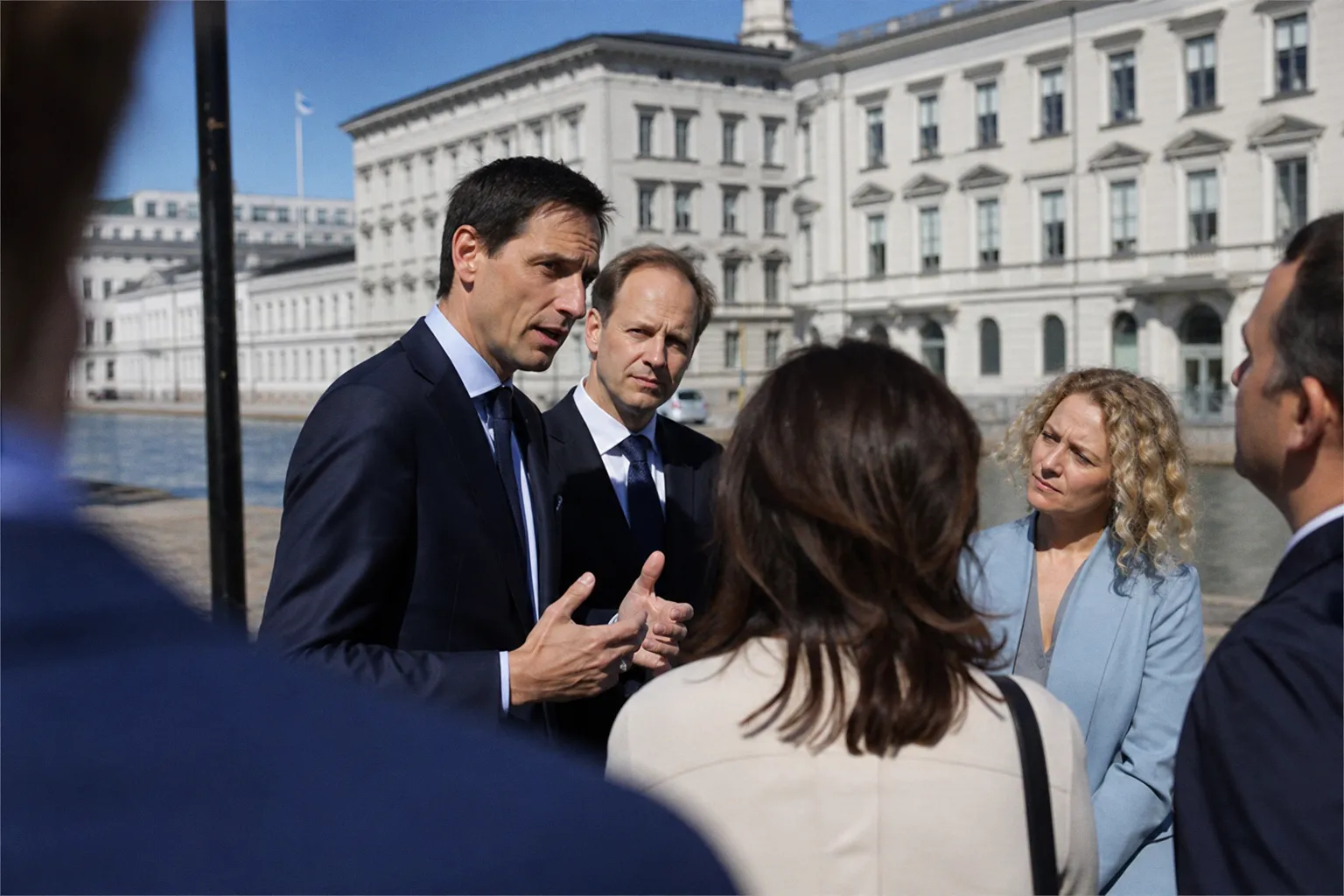
The official script, per the Commission, centers on decarbonizing international shipping and preserving industrial competitiveness. The subtext, as ever with Brussels climate diplomacy, runs somewhere between reassurance and a quiet scramble for political cover.
The ETS makes another lap
The ETS — the bloc's flagship carbon market, now in its second decade of patchwork reforms — is once again being hawked across northern Europe as the engine room of the "clean transition." Hoekstra's itinerary, according to the Commission, places him in meetings with government and industry leaders in both capitals, ostensibly to align Nordic governments on the updated proposal. What that proposal actually contains, beyond broad framing, remains the kind of detail Brussels tends to parcel out in technical annexes that nobody outside the trade press reads in full.
The timing matters. Maritime transport has sat awkwardly at the edge of EU climate policy for years — gradually dragged into carbon pricing via sectoral tweaks, and now being asked to absorb a larger share of the decarbonization burden under the updated framework. Every revision invites the same choreography: industry warns of competitiveness damage, the Commission promises "targeted" measures, and the final text lands somewhere that satisfies no constituency entirely.
The competitiveness word, again
Two themes dominate the announced agenda: decarbonizing international maritime transport and — inevitably — "industrial competitiveness." That second phrase has become the diplomatic lifeboat of European climate policy, invoked whenever a heavy-emitting sector warns of carbon leakage, relocation, or simply the inconvenience of paying for pollution. The visits to Copenhagen and Helsinki are notable because both countries have clear stakes in how the Commission resolves the tension between pricing shipping emissions and protecting the industries that move goods across borders for a living.
The "competitiveness" framing is, in practice, an invitation for every sector with a lobbying budget to argue for exemptions, free allocation, or transition allowances. Whether the Commission treats it as a constraint or as a blank check will say more about the policy's actual bite than any communiqué from this week's meetings.
What to watch
The first test of these Nordic consultations is whether the Commission's "updated" ETS proposal, once released, narrows or widens the loopholes for international shipping. The second, quieter test is whether "competitiveness" ends up functioning as a guardrail on the carbon price — or as a convenient tunnel through the entire architecture. Until the text appears, the trip reads less as a decisive policy moment and more as the familiar choreography of a Commission hoping to convert its own rhetoric into someone else's signature.