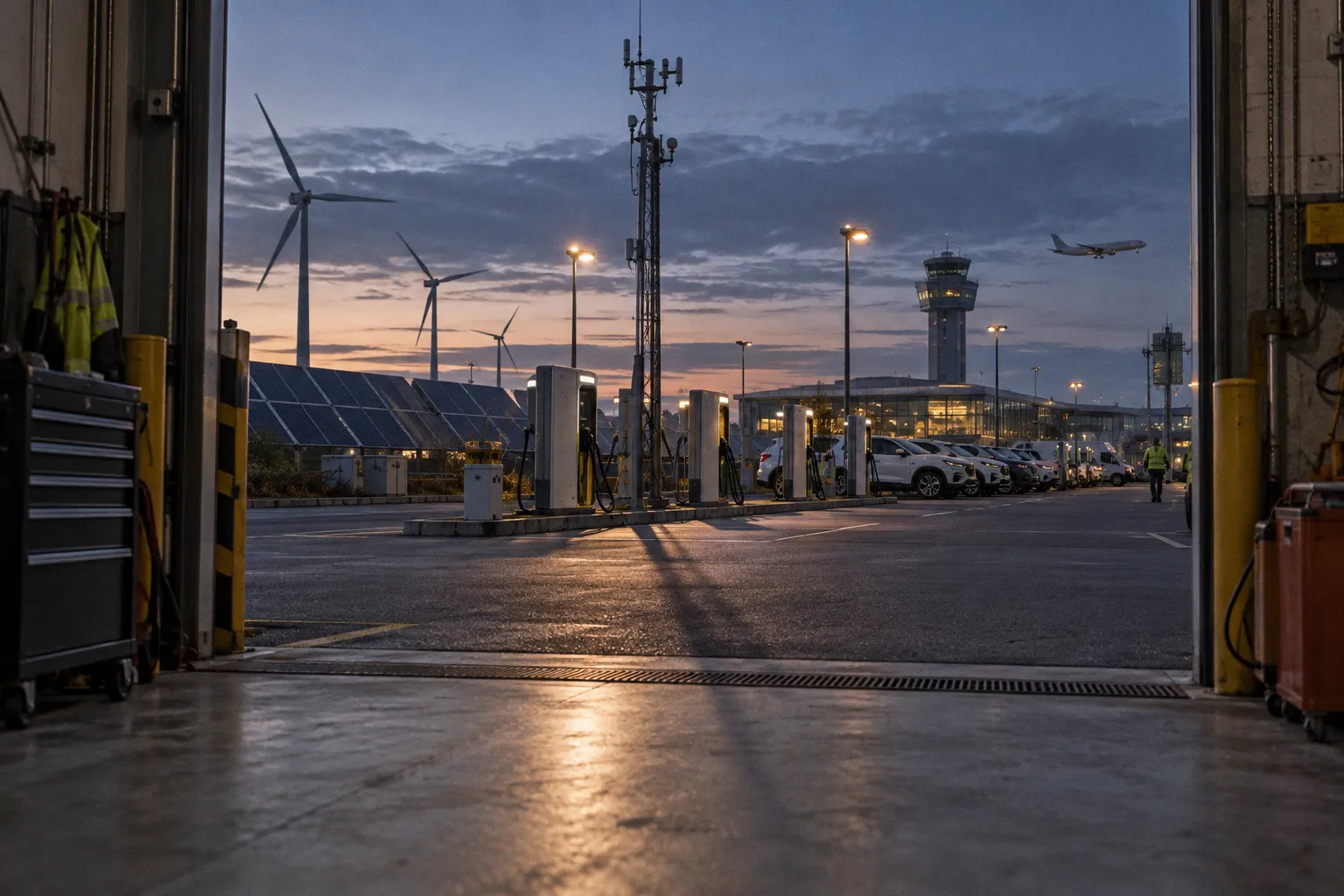
The timing is uncomfortable. As that research appeared, India's prime minister stood before an international audience to claim a non-fossil installed capacity figure now above 50%, reached five years ahead of schedule.
The engineering reality behind the headline
The Nature study, titled "Flash energy droughts in solar and wind resources under climate change," pushes intermittency into the center of grid reliability analysis. Variable renewables do not fail gradually; they fail in correlated clusters when atmospheric regimes shift. Each additional gigawatt of solar and wind installed on a grid expands the surface area exposed to those synchronized drop-offs. Baseload planning, historically a fuel-logistics problem, is becoming a weather-pattern problem under non-stationary climate forcing.
The scale problem in raw numbers
India offers a useful stress test. Narendra Modi, speaking at the International Conference on "The Future of Environment and Climate Dynamics," stated that solar capacity had grown from roughly 2 GW to more than 160 GW over twelve years. Wind power capacity, by his figures, had roughly tripled in the same window. Non-fossil installed power capacity overall had grown about fourfold.
The official line frames this as climate leadership. The grid math frames it as exposure management. Solar alone, Modi claimed, had prevented around 200 million tonnes of carbon emissions — a figure that only holds if displaced thermal generation is actually displaced, not merely shadowed by a solar peak that vanishes at dusk or during a flash drought event.
What to watch from here
Three pragmatic indicators will determine whether the buildout translates into system reliability:
- Storage round-trip efficiency and duration. Without material declines in capex per kilowatt-hour of installed battery capacity, flash droughts translate into curtailment or fossil fallback during peak deficit hours.
- Geographic diversification of wind and solar assets. A single flash drought event compounds when resources are co-located in one weather regime.
- Grid interconnector capacity. India's cross-regional transmission buildout is the operational answer to localized resource collapse.
The Nature paper should be read less as a cautionary tale and more as a procurement specification. Decarbonization is a scaling problem; scaling without solving the intermittency premium simply transfers the baseload burden to gas peakers, coal must-runs, or — eventually — rationing.