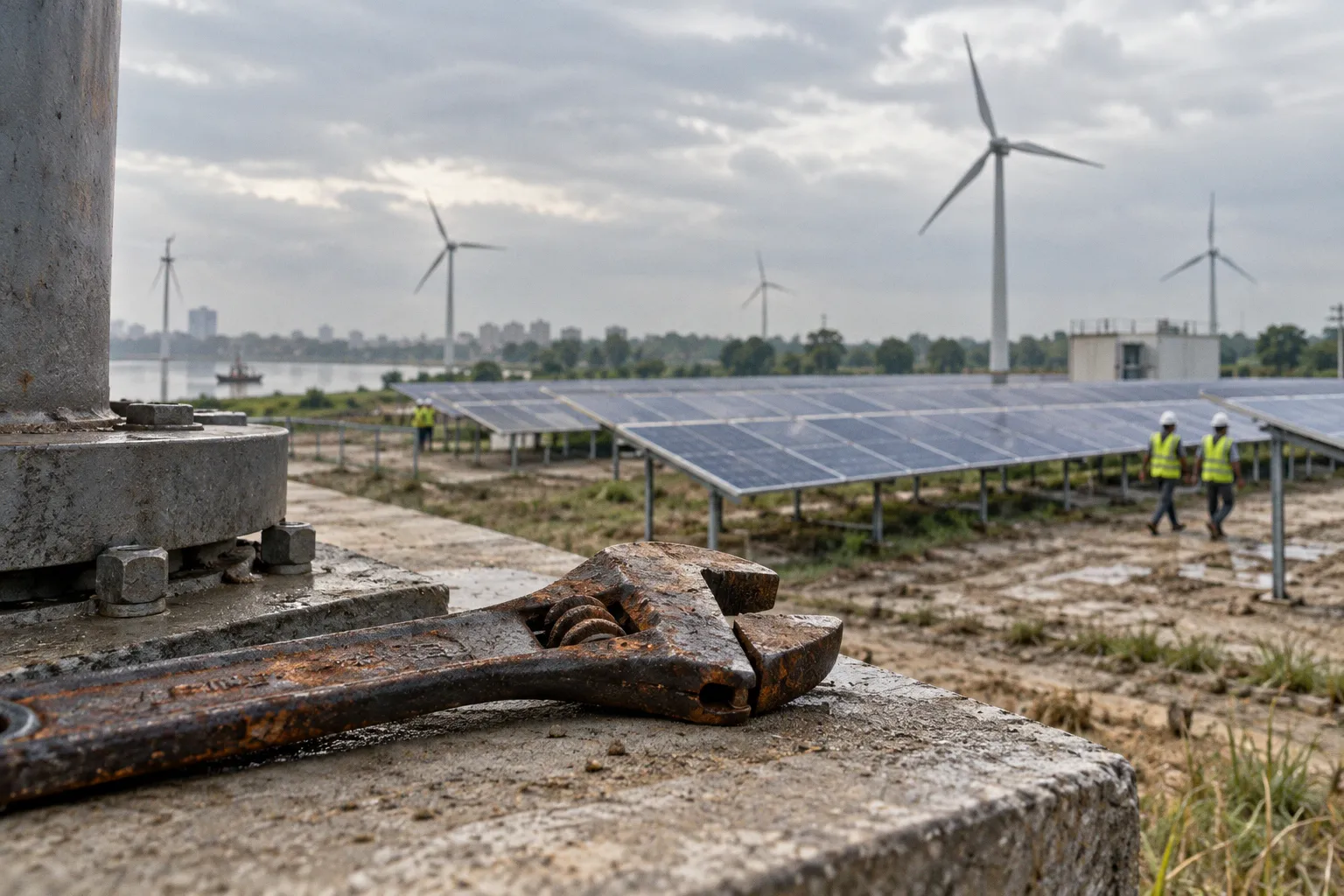
Bangladesh's grid is getting a new entrant. According to New Age BD, SCUBE Technologies is now driving the country's green energy transition — though the report's headline offers no deployment figures, capacity targets, or project pipeline. For an infrastructure analyst, that's the first yellow flag: a transition claim without the megawatts.
The SCUBE signal, stripped to what is verifiable
The only direct reference to SCUBE is a headline-level notice in New Age BD. No body text, no project specifics, no commissioning timeline. That leaves a vacuum where the engineering reality should sit — generation mix, capex commitments, interconnection plan, baseload contribution. Without those, "drives" is a directional verb, not a metric.
In the wider South Asian picture, energy cooperation is already shifting. Global Times reports that China National Petroleum Corporation chairman Dai Houliang met India's petroleum minister Hardeep Singh Puri in New Delhi on September 11 to discuss deeper collaboration across conventional oil, new energy, and green development. That bilateral framing matters: Bangladesh's grid sits adjacent to both systems, and any cross-border supply chain for solar modules, battery storage, or hydrogen feedstock will eventually route through this corridor.
Hydrogen as the parallel question
Two adjacent developments frame what SCUBE's role could become. Pv magazine Global covers green hydrogen's growing share in chemical production — relevant because industrial offtake is what makes electrolyzer projects bankable, not residential or transport demand alone. Separately, finance.biggo.com tracks China's hydrogen push moving from demonstration to industrialization, with South Korea countering on production and urban ecosystems. The geography is converging on South and Southeast Asia precisely where Bangladesh sits.
For a grid analyst, the open question is straightforward: does SCUBE's Bangladesh pipeline tie into the hydrogen-to-chemicals offtake model, or is it a solar-plus-storage play? The two have radically different capex profiles, dispatch characteristics, and intermittency management requirements. Ammonia and methanol offtake changes the unit economics entirely compared to a merchant solar build.
Three data points would convert this from announcement to project: installed or contracted capacity in megawatts with commissioning dates; financing structure, since concessional debt versus vendor financing determines grid tariff impact; and offtake arrangement, whether utility-scale PPA, captive industrial load, or export hydrogen. Without them, "drives Bangladesh's green energy transition" reads as positioning, not procurement. The infrastructure math that actually moves a grid — capex per MW, round-trip efficiency, dispatchable yield — is still missing from the public record.