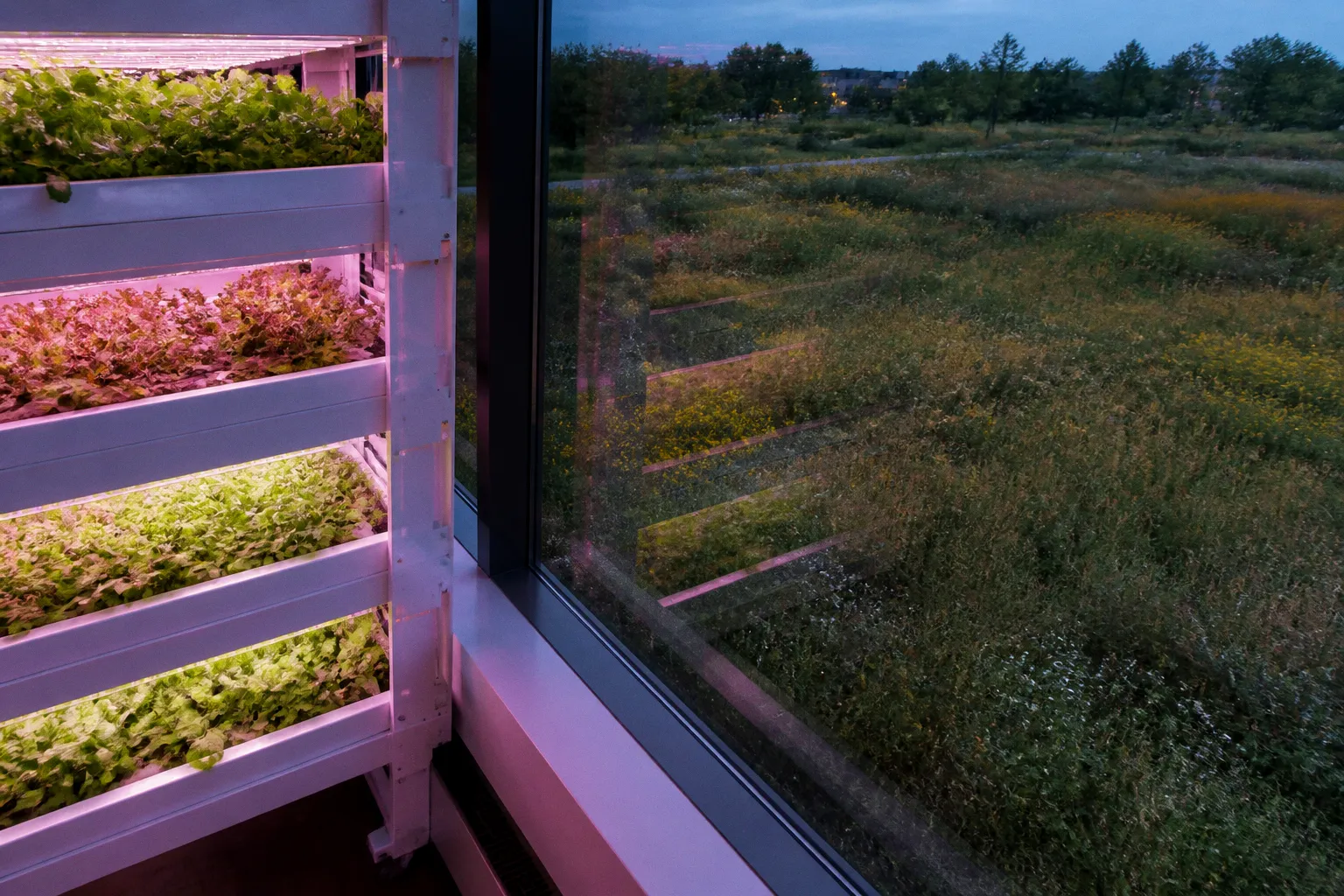
Or do we farm more gently across a wider landscape, allowing hedgerows, shade trees, ponds, and wild edges to remain woven into production?
Compare car rental deals in United Kingdom
See available offersPartner link — DiscoverCars comparisonThat is the central question behind the debate over land sparing vs land sharing conservation. It sounds like a contest between two neat models, but the ground beneath them is rarely neat. A coffee farm can be both a productive business and a refuge for some species, while still being a poor substitute for an old-growth forest. A highly productive field may release pressure on surrounding habitat, but only if the land that is spared is actually protected rather than later cleared for another commodity.
The evidence increasingly points away from a universal winner. In a 2025 synthesis of 17 comparative studies, 52% of the cases found that combining land sharing and land sparing at the landscape level offered the strongest outcome for biodiversity. That does not make the debate irrelevant. It makes the question more useful: which parts of a landscape should we reclaim for nature, which can support farming, and how do we keep the whole system from quietly becoming another route to habitat loss?
The evolution of the land sparing and sharing framework
The formal land sharing–land sparing framework was popularised by researchers Balmford, Green, and Phalan in the mid-2000s. Their work gave conservationists and agricultural planners a common way to examine a problem that had often been discussed in broad moral terms: how can we produce enough food and commodities without converting every remaining patch of natural habitat?
The two approaches begin with different uses of the same landscape.
Land sparing concentrates agricultural production on dedicated land, often through higher yields, with the intention of leaving other areas intact or restoring them for nature. The logic is straightforward. If a farm can produce the same amount of food from less land, the remaining area might be protected as forest, wetland, grassland, or another habitat. This model is particularly attractive where habitat specialists are at risk — species that depend on particular forest structures, undisturbed soils, old trees, deep wetlands, or other conditions that ordinary farmland cannot reproduce.
Land sharing, sometimes called wildlife-friendly farming, takes a different route. It integrates biodiversity into the production landscape through lower-intensity farming and features such as tree cover, uncultivated margins, mixed crops, watercourses, and reduced disturbance. The farm remains part of the habitat network, rather than becoming a sharply defined block of production surrounded by a separate conservation area.
Neither model is simply a label for good or bad farming. The outcome depends on what is being produced, how intense production becomes, what habitat exists nearby, and whether protected land is genuinely secured for the long term.
A useful way to see the contrast is to follow the product rather than the slogan. A commodity does not stop affecting biodiversity when it leaves the farm gate. Its footprint includes the land cleared to grow it, the roads and storage systems built around it, the water and soil it draws on, and the decisions made when demand rises. Land sparing can reduce the area needed per tonne, but it requires credible protection elsewhere. Land sharing can keep more ecological fabric within farmland, but the lower yields may mean that more land is needed overall if demand remains unchanged.
| Question | Land sparing | Land sharing |
|---|---|---|
| Basic idea | Produce more on a smaller farming area and protect the land released from production | Farm across a wider area while maintaining habitat features within the productive landscape |
| Strongest ecological case | Protecting habitat specialists that do not tolerate regular human disturbance | Supporting species able to use mixed, semi-natural, or farm-associated habitats |
| Main risk | Higher yields may encourage expansion, and spared land may not remain protected | Wildlife-friendly measures may not replace intact habitat, while lower yields can increase land demand |
| What it depends on | Yield gains, enforcement, land-use planning, and durable conservation rules | Farm design, local ecology, market incentives, and the quality of habitat retained |
| Best scale for judging results | The whole region, not only the intensified farm | The whole region, not only the individual wildlife-friendly field |
The distinction matters because a single farm can appear successful while the wider landscape continues to lose habitat. Biodiversity does not read farm boundaries. Birds, insects, mammals, seeds, and water move through connected systems, and a conservation strategy that works in one field may fail when viewed at the scale of a watershed or forest frontier.
Why habitat specialists struggle in shared landscapes
The strongest argument for the land sparing model comes from species that need conditions farming cannot easily provide.
A wildlife-friendly farm may retain trees, but that does not make it an old forest. It may have flowering margins, but those margins cannot necessarily support a species that nests only in mature woodland. A wet pasture may hold water and insects while still lacking the stable, undisturbed soils required by a specialist plant. Shared landscapes can be valuable, but they are not interchangeable with intact habitats.
Early empirical studies in Ghana and India made this distinction particularly visible. Researchers examined how bird and tree species responded along gradients of agricultural intensity. For many habitat specialists, population densities fell sharply even under low-intensity farming. In other words, making agriculture gentler did not prevent the loss of species that depended on natural habitat. At the target yield levels considered in those studies, concentrating production and sparing larger areas for intact nature was more effective at preventing those losses.
This is where everyday language can mislead us. “Wildlife-friendly” sounds as though it should be sufficient for all wildlife, but a farm is a designed environment. It has harvest dates, fences, machinery, grazing patterns, drainage channels, pesticide decisions, and repeated disturbance. Those conditions may suit generalist species — adaptable birds, pollinators, small mammals, and plants that can live alongside people — while remaining unsuitable for species with narrower needs.
The distinction between generalists and specialists is not an argument against land sharing. It is an argument against treating all biodiversity as one category.
A landscape with shade trees and flowering strips may support pollinators and provide movement routes between habitat patches. It may protect soil structure, reduce erosion, and improve water retention. Those are substantial benefits. Yet if the surrounding forest is cut down, the remaining farm features may become a thin fabric stretched over an ecological gap that is too large to mend.
The same principle applies to forestry. Production forests cover more than 2 billion hectares globally, around 55% of the world’s forest area. Managed forests can provide timber and may retain some ecological functions, but their value for biodiversity depends on what remains within them: the age and variety of trees, dead wood, understory vegetation, streams, connected habitat, and the presence of less disturbed areas. A plantation that looks green from above may carry a very different ecological load from a diverse natural forest.
A productive landscape can carry biodiversity, but it cannot automatically replace the habitat that biodiversity has lost.
For conservation planning, the practical lesson is to start with the species and habitat, not with the preferred model. If the goal is to protect a forest specialist, an intact block of forest may be indispensable. If the goal is to sustain pollinators across an agricultural region, the arrangement of flowering resources and nesting sites may matter just as much as the yield of individual fields.
Why sharing still matters for biodiversity
The land sharing model is sometimes dismissed as a softer alternative to the supposedly harder logic of sparing. That is too simple, and it overlooks what happens between protected areas.
Even the most carefully defended nature reserve sits inside a wider landscape. Rivers cross its borders. Dust, nutrients, fire, and pesticides do not always stop at a fence. Animals need routes between habitats, and many species use more than one environment during their life cycle. Farmland that includes tree lines, ponds, vegetated margins, and low-disturbance areas can form part of that connective tissue.
Land sharing also deals with the ecological processes that make farms resilient. Healthy soils hold water and organic matter. Vegetation along streams can filter runoff. Diverse field edges provide food and shelter for insects. Shade can change local temperatures and reduce stress on crops or livestock. These effects are not a substitute for protecting intact habitat, but they can make production landscapes less hostile to wildlife and less damaging to neighbouring ecosystems.
This is especially important where it is unrealistic to draw a sharp line between nature and production. In many regions, farms, villages, grazing areas, forests, and wetlands form a continuous working landscape. A conservation strategy that ignores people’s livelihoods may fail politically and practically, even if its ecological theory is sound. Land sharing can bring biodiversity measures into the ordinary decisions of production: where a farmer leaves a tree, how a stream is buffered, when grazing occurs, or whether a field margin is allowed to recover.
The model also gives conservation more than one place to happen. A protected reserve may safeguard the most sensitive species, while farms around it provide corridors, feeding areas, and stepping stones. The result is not a single perfect habitat but a more connected landscape in which different pieces do different work.
That difference in function is crucial. We should not ask whether a farm can become a forest. We should ask what the farm can contribute, and whether that contribution sits alongside — rather than in place of — properly protected habitat.
Beyond the binary: conservation works at landscape scale
The most useful shift in the land sparing vs land sharing conservation debate is to stop treating the two approaches as mutually exclusive instructions for every hectare.
The 2025 synthesis published in PNAS Nexus examined 17 comparative empirical studies from a broader dataset and found that 52% of the evaluated cases favoured a combination of sharing and sparing at the landscape level. That result does not erase the studies supporting one approach in particular settings. It shows instead that biodiversity outcomes often depend on how different land uses are arranged together.
A combined strategy might include:
1. Strict protection for the most irreplaceable habitats. Old forests, intact wetlands, breeding sites, and other areas with highly specialised species need conservation measures that do not depend on their ability to coexist with intensive production.
2. Productive zones where yield gains are carefully governed. Intensification can reduce pressure on land, but only when the spared area is mapped, protected, monitored, and kept out of future expansion.
3. Wildlife-friendly farming around and between protected areas. Hedgerows, riparian buffers, shade trees, fallows, and mixed habitats can help connect larger conservation areas and support species that use agricultural landscapes.
4. Restoration where the landscape has already been fragmented. Reclaiming wetlands, rebuilding soil health, and restoring native vegetation can make shared and spared areas function as part of one ecological system rather than as isolated projects.
5. Commodity planning that follows the full supply chain. If demand for a crop or timber product rises, efficiency at the farm level is not enough. Buyers, governments, and planners must track where expansion is likely to occur and whether land protection will hold.
The spatial pattern can matter as much as the total area. A large, connected habitat block may protect species that cannot survive in scattered patches. Smaller habitat features may be more valuable when they form a corridor or sit beside a protected area. A farm with strong wildlife measures can still be isolated from other habitat, while a modest intervention may be highly effective when it closes a gap between two larger natural areas.
This is why a conservation strategy comparison should examine whole regions rather than awarding a medal to one field practice. The question is not simply how many hectares are farmed intensively or extensively. It is where those hectares sit, what they replace, what they connect, and what happens to the land that production leaves behind.
There is also a timing issue. Land sparing may appear attractive because it promises a clean future division: productive land here, nature there. But if protection arrives after the forest has been cleared, the opportunity has already been discarded. Likewise, land sharing may look progressive when a farm adds habitat features, but those measures cannot compensate for the loss of a nearby ecosystem that took centuries to develop.
The strongest plans therefore make the trade-offs visible before expansion begins. They identify high-value habitat, areas suitable for production, ecological corridors, water systems, and the social conditions required for farmers and local communities to remain part of the solution.
The same landscape can look different to different people
Conservation priorities are not only ecological. They are also shaped by how people experience a landscape and what they need from it.
Stakeholder analyses in boreal forests have found a clear difference in emphasis. Conservation organisations and regional administrations generally favour land sparing when the priority is to protect species according to ecological theory. Recreational groups and local municipalities are more likely to prefer land sharing because it can deliver visible ecosystem services across the working landscape.
Neither position is automatically more practical. A regional authority may focus on retaining habitat for species with strict requirements. A municipality may be thinking about clean water, recreation, local jobs, and the continued viability of rural communities. A recreational group may value access to a forest that is managed but still diverse, shaded, and pleasant to move through.
These priorities can conflict when one benefit is counted and another is treated as background. A forest may be measured as timber production, habitat, carbon storage, recreation, or a source of clean water, depending on who is asking. The land sharing model often makes these overlapping services more visible because they remain close to where people live and work. The land sparing model may deliver stronger protection for particular species while concentrating other pressures into the production zone.
The answer is not to force every group into the same vocabulary. It is to make the choices legible. If intensification is proposed, communities need to know which habitat will be protected, for how long, and who will enforce that promise. If lower-intensity farming is proposed, planners need to understand what yield changes mean for land demand, farm income, and the possibility of production moving elsewhere.
This is where supply chains become part of conservation rather than a separate commercial concern. A claim that a product is efficient or sustainable is incomplete unless we can follow the material back to the land. Where did the crop grow? What habitat was present before it? Which farming practices shaped the soil and water? If production becomes more intensive, what prevents the saved land from being reclaimed for another use?
A genuine conservation gain should remain a gain when we trace the product from field to processor, retailer, and household. Otherwise, we may simply be moving the discard point of ecological damage out of sight.
What current biodiversity research still misses
The evidence base is growing, but it is not evenly built. A review of 52 conservation studies found that research comparing land sharing and land sparing has focused heavily on birds. Birds are valuable indicators, and their responses can reveal how habitat structure and disturbance affect ecosystems. But they are not the whole system.
The research has less often measured carbon storage, economic outcomes, and the wider set of ecosystem services that determine whether a landscape remains healthy and socially viable. Soil organisms, insects, plants, amphibians, fungi, water quality, flood regulation, and long-term livelihood effects may respond differently to the same land-use pattern.
That gap matters because a strategy can succeed for one group and fail for another. A landscape may retain bird diversity while losing soil functions. A protected forest may store carbon and shelter specialist species while restricting local access to resources without offering an alternative livelihood. A wildlife-friendly farm may support pollinators but require more land to produce the same commodity volume. These are not reasons to abandon any one approach; they are reasons to measure the whole system.
Future research also needs longer time horizons. A newly planted corridor may look promising before its trees mature. A high-yield farming system may appear efficient until soil degradation, water scarcity, or pest pressure changes the calculation. Conservation is not only about what is present this season. It is about whether the ecological fabric can be maintained through droughts, fires, market shifts, policy changes, and changing demand.
The economic side deserves the same care. The formal land sparing model depends on yield improvements, but yield is not the only variable that shapes land use. Prices, tenure, infrastructure, subsidies, enforcement, and commodity demand can all influence whether intensification actually reduces expansion. A farm that produces more per hectare does not automatically create a protected forest. That outcome requires institutions capable of holding the boundary.
The central unknown remains the same: there is no universally optimal percentage split between spared and shared land across all terrestrial ecosystems. The right balance will differ between a tropical forest frontier, a boreal production landscape, a wetland basin, and a heavily farmed region with little remaining natural habitat.
Choosing the approach without losing the landscape
So, which saves more biodiversity: land sparing or land sharing?
For habitat specialists that cannot tolerate regular disturbance, land sparing often offers the stronger protection, particularly when it preserves large, intact areas at the level needed by those species. For biodiversity that can use farms, pasture, agroforestry, or mixed landscapes, land sharing can provide important habitat, movement routes, and ecosystem services. Neither conclusion is enough on its own.
The more reliable answer is a landscape-level combination: protect the places that farming cannot replace, improve the ecological quality of the places where farming must remain, and govern production so that efficiency does not become an excuse for expansion.
For consumers, this changes the question we should ask about sustainable products. It is not enough to look for a claim that a farm is low-intensity or high-yield. We need to know what kind of habitat the system protects, whether that protection is permanent, and whether the wider supply chain respects ecological limits. For companies and policymakers, the task is even clearer: map the landscape before making production promises, measure more than one species group, and treat restoration and protection as part of the production system rather than as decorative extras.
Land sharing and land sparing are best understood as tools in the same conservation toolbox. One helps keep nature woven through the places where we produce. The other can give the most sensitive habitats room to remain themselves. The work is to decide where each tool belongs — and to make sure that, once land has been spared for nature, it is not quietly reclaimed and discarded at the next turn of the market.