Mike Umiker, Managing Director of the Energy Efficiency Movement, argues in a Siemens contribution to Climate Week NYC 2026 that the IEA's own net-zero pathway assigns energy efficiency a larger decarbonization role in industry than electrification does. The technology question is settled; the implementation question is not. Most enterprises still run efficiency and electrification as separate workstreams with separate budgets, competing for the same capital instead of compounding each other.
The math behind the multiplier
Electrification moves end uses such as heat and transport onto a grid that can, in principle, be decarbonized. Efficiency determines how much new generation, transmission, and balance-of-plant capex actually has to be procured to make that shift deliverable. Every kilowatt-hour of demand removed through efficiency is a kilowatt-hour of infrastructure that no longer needs to be built under permitting pressure.
The framing matters because it converts efficiency from a sustainability line item into a strategic industrial lever. It protects margins from fuel-price volatility, safeguards output when supply is constrained, and creates the operational flexibility to electrify on business schedules rather than grid timelines. Run the two together and the capex curve flattens; run either alone and the other half of the problem gets more expensive.
The 40% gap
The Energy Transitions Commission's annual Energy Transition Monitor, reported this week by Manila Times and EQS News, puts a number on the deployment deficit. Clean electricity supplied 40% of new energy demand in 2025, with fossil fuels covering the remainder as consumption in buildings, heavy industry, and long-distance transport continued to climb. Electricity itself remains roughly a fifth of total final energy use, which means the clean-power build is chasing a moving target.
Roughly 60% of global emissions, concentrated in power generation and road transport, can be abated through clean electrification at little or no extra cost. The remaining 40% — high-temperature industrial heat, aviation, shipping, and parts of agriculture — sits behind a green cost premium or remains at early commercial scale. Of about 1,000 clean industrial projects announced globally, fewer than 20% have reached a final investment decision.
Where the bottleneck actually sits
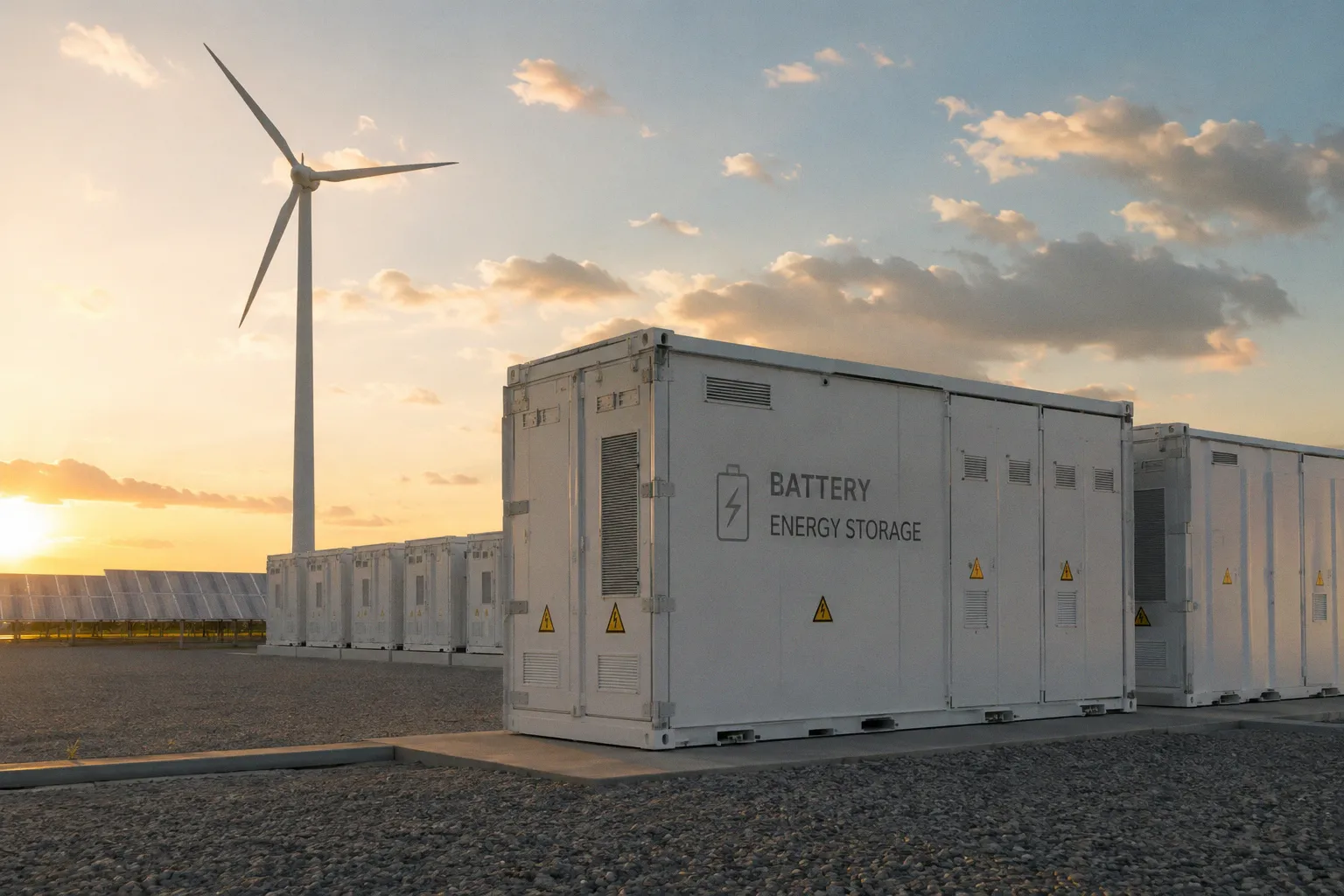
The ETC treats permitting and interconnection queues as the binding constraint on the transition. Around 375 GW of renewables and 455 GW of battery storage are stuck in European connection and permitting backlogs. In the United States, roughly 2,300 GW await grid connection. In China, nearly 10% of wind and solar output was curtailed in the first half of 2026 due to grid constraints.
Adair Turner, Co-Chair of the ETC, noted that clean energy is now outpacing fossil growth but deployment speed alone will not cut emissions. Without removing grid bottlenecks, securing firm offtake for clean industrial products, and achieving cost breakthroughs in shipping and aviation, emissions will plateau rather than fall. Jules Kortenhorst, the commission's other Co-Chair, pointed to four levers that remain largely unaddressed: coal use, methane, deforestation, and the scale-up of carbon removals. Jon Creyts, CEO of RMI, framed the challenge as a deployment race rather than a technology race.
What to watch
The commercial-viability question is now upstream of the technology question. Firm offtake agreements for green hydrogen, sustainable aviation fuel, and near-zero-carbon steel and cement remain the missing link between announced projects and final investment decisions. Carbon pricing is strengthening, but not fast enough to close the gap on its own. The Global South's role, increasingly framed through distributed storage, is positioned as a flexibility asset that can complement rather than replicate the centralized grid build-out in advanced economies — a thesis The Africa Report raised this week, though the full data set behind it remains to be published.