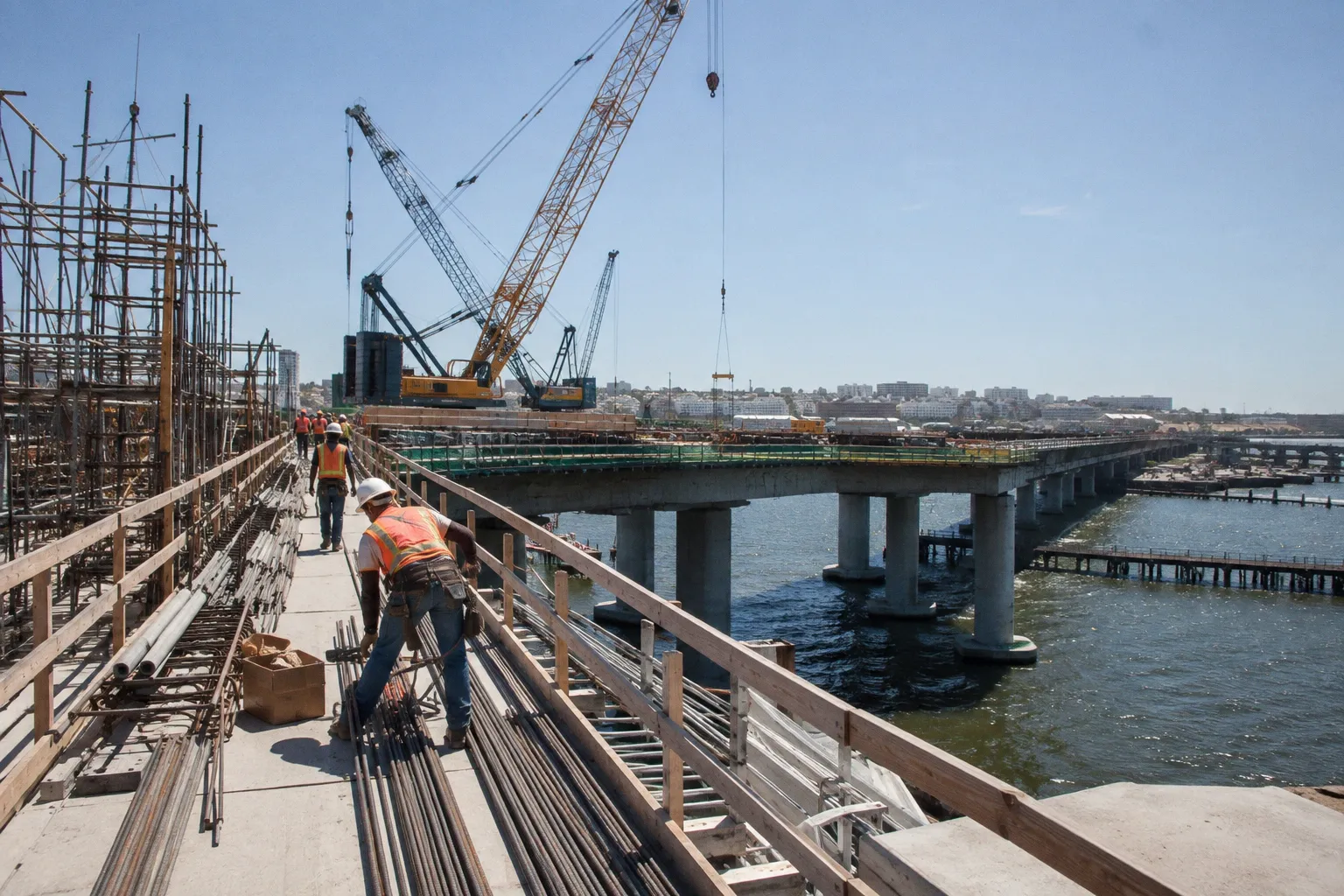
The practical reality is more granular: the package ties capital expenditure to specific engineering upgrades — tunnel ventilation, drainage, LED conversion — that determine whether the network holds under stress or fails at predictable chokepoints.
The allocation, stripped of framing
The California Transportation Commission's latest round brings Newsom-era transportation allocations to roughly $81.1 billion since 2019. Of that cumulative figure, about $1.6 billion traces back to the federal Infrastructure Investment and Jobs Act, with another $542 million sourced from Senate Bill 1. The remainder is state-funded, a split that matters for cost-benefit accounting because IIJA money carries different procurement timelines and federal matching conditions than SB 1 road-repair dollars.
The administration's stated tally — 800,000 jobs supported since 2019 — is a cumulative headline figure, not a marginal employment claim tied to this specific $2.7 billion tranche. Treat it accordingly.
Where the engineering sits
The line items reveal the bottlenecks. A $267 million allocation to the Caldecott Tunnel in Orinda covers ventilation rehabilitation across three of four bores, structural pavement replacement, drainage upgrades, and electrical conversion to LED. That is a baseload reliability project dressed as a climate-resilience announcement. Tunnel ventilation systems degrade on predictable curves, and LED retrofits cut both energy draw and maintenance frequency — a straightforward capex-to-opex trade.
Across the portfolio, the emphasis on "resilience to climate-driven extreme weather" translates concretely into drainage hardening, pavement redesign for thermal stress, and electrical systems rated for higher temperature exposure. Whether that holds depends on design specifications the announcement does not disclose.
What to verify
Two metrics determine whether this round performs. First, bid-to-estimate ratios on the tunnel and bridge-class projects — if they trend above 20% over original engineering estimates, the $81.1 billion cumulative figure starts eroding quickly. Second, IIJA disbursement pace: roughly $1.6 billion federal share across a multi-year window signals slow drawdown, which shifts real cost onto state balance sheets.
California Transportation Secretary Toks Omishakin characterized the package as preparation against "current and future effects of climate change." Caltrans Director Dina El-Tawansy pointed to long-term safety objectives. Both framings are defensible — but the test is in the as-built performance, not the press release.