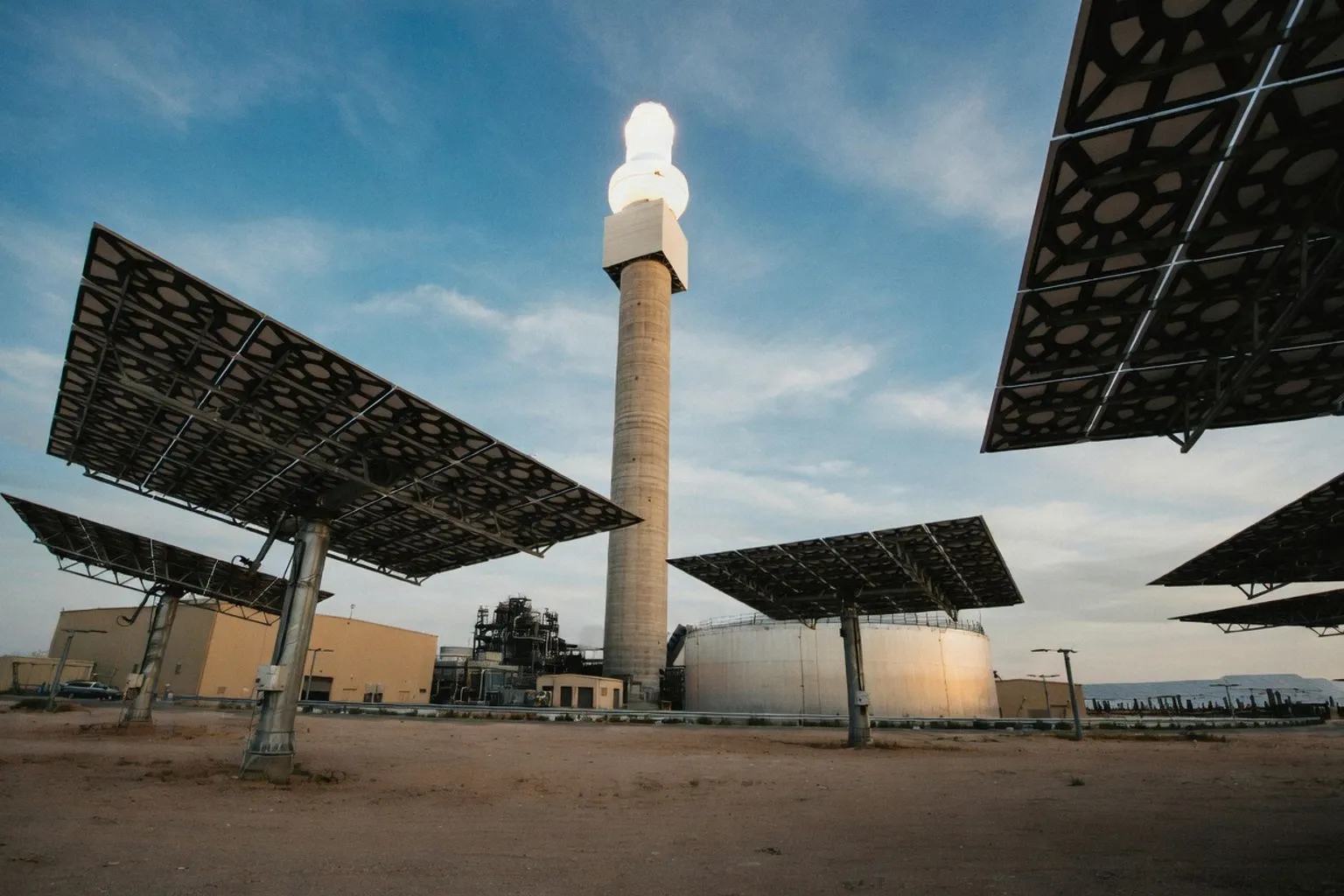
U.S. Department of Energy's Solar Energy Technologies Office has opened a request for information on receivers and reactors used in concentrating solar-thermal power plants, with a parallel track for concentrating solar-thermal systems supplying industrial process heat. Issued on January 22, 2024, the RFI targets the component that absorbs concentrated sunlight and converts it into thermal energy — the upstream bottleneck in any attempt to push CSP down its cost curve.
What SETO is asking for
The office is soliciting input across three categories, grouped by receiver exit temperature, from renewable energy developers, academic researchers, national laboratories, and other agencies. The scope is deliberately broad: higher-temperature power towers engineered for high-efficiency power cycles, solar reactors built for thermochemical production of fuels and chemicals, and concentrating solar-thermal configurations delivering industrial process heat at low and high temperatures. In effect, SETO is reframing the receiver as a multi-use asset rather than a single-purpose block inside a power plant.
Engineering constraints behind the temperature tiers
CSP economics rest on a narrow set of variables — solar multiple, storage hours, turbine inlet temperature — but the receiver sits upstream of all three. Higher exit temperatures lift cycle efficiency and reduce the levelized cost of electricity; they also escalate material stress, optical losses, and capital expenditure on heat-transfer media and containment. The three-band structure of the RFI is a practical attempt to separate the near-term commercial frontier from the longer-horizon thermochemistry work, and to price the remaining technical gaps at each step.
How to respond, and what to watch
Submissions go to [email protected] as Microsoft Word attachments, with files larger than 25 megabytes to be compressed beforehand. The deadline is February 20, 2024, at 5 p.m. Eastern Time. SETO has stated it will not reply to individual respondents or publish a consolidated response set, and that nothing in a submission constitutes a binding commitment to develop or pursue the ideas described. That disclaimer is standard procurement language, but the signal is not: an RFI of this scope at this temperature resolution generally precedes a targeted funding solicitation, and the banded question structure is a reasonable indicator of where the next program announcement will set its technical baselines.