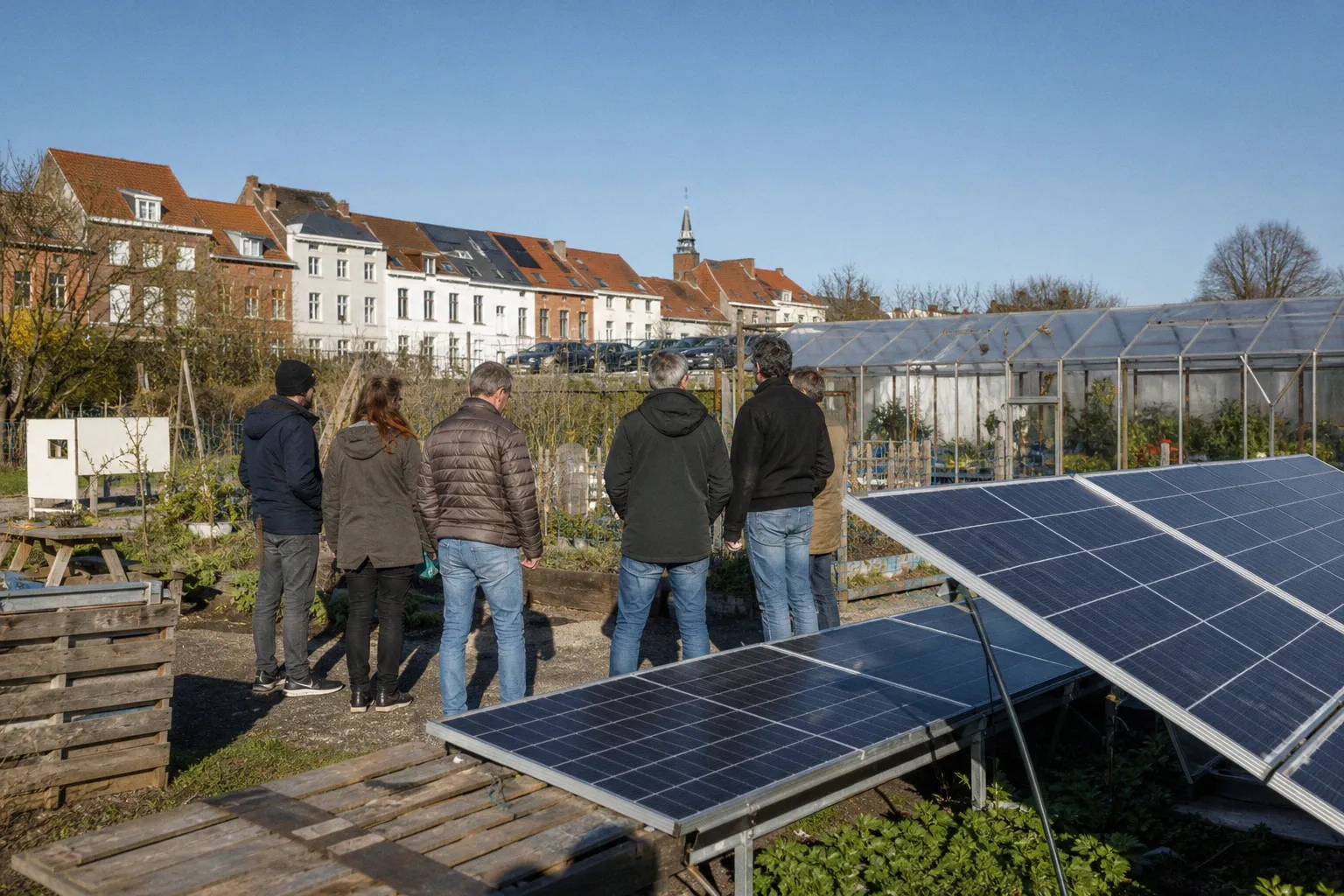
According to the European Climate, Infrastructure and Environment Executive Agency, three years of grassroots tinkering across five European pilot regions have been condensed into a single "Whitebook" — a thick, earnest artefact that finally admits what Renewable Energy Communities have been muttering into the void for the better part of a decade: the so-called framework, however commendable, remains half-built scaffolding.
CINEA, which funded the effort through the ECOEMPOWER consortium of local governments, researchers and assorted regional energy agencies, this week released the report documenting field research from Greece, France, Italy, the Czech Republic and Germany. Its stated purpose is to translate "lived experience" into something Brussels can file under policy guidance — though one suspects the translators worked rather more overtime than the acknowledgements suggest.
What the document actually says
The Whitebook pairs policy recommendations with interviews from volunteers and local authorities involved in each pilot, an unusual gesture in EU reporting that more commonly treats citizens as decorative footnotes to a directive. It walks through the lifecycle of a Renewable Energy Community — founding, financing, scaling, long-term operation — and catalogues the practical, financial and social obstacles encountered at each stage. None of it will surprise anyone who has tried to register a community solar project, but there is genuine value in seeing the obstacles tabulated rather than buried in the usual labyrinthine annexes.
The headline recommendation is the now-familiar One-Stop Shop — a regional administrative clearing house where a fledgling REC can, in theory, file permits, secure grants and access technical advice without playing bureaucratic ping-pong across half a dozen agencies. Targeted funding mechanisms and structured knowledge-sharing between established and nascent communities complete the proposed trio. The recommendations are graded by stage of development, which is at least a nod to the inconvenient fact that a co-operative in Crete and a Bürgerenergie in Brandenburg face rather different winters.
The uncomfortable backdrop
The Whitebook lands at a moment when the rhetoric around decentralised, citizen-led energy has rarely been louder — nor the lived reality more precarious. Earlier this month, a senior researcher at Macquarie Business School pointed to the closure of the Strait of Hormuz and the consequent upheaval in global energy markets as evidence that the clean transition cannot be designed only for households wealthy enough to install solar panels, home batteries and electric vehicles. Roughly one in three Australian homes now carry rooftop PV, yet adoption stalls well before it reaches renters, low-income families and the rural poor. The same pattern, predictably, shadows Europe's RECs, where access to capital, grid-connection queues and uneven regulatory interpretation continue to favour the already-organised.
What to watch
Whether the Whitebook's recommendations migrate from paper to practice will depend, as ever, on whether implementing ministries treat them as binding obligation or, more comfortably, as non-binding inspiration. The European Commission's preference for the latter is well documented. CINEA, for its part, has done the diligent work of writing everything down. The grid, as ever, is waiting to see who actually picks the document up.