The Trillion-Dollar "Liftoff"
The Department of Energy's Loan Programs Office, however, has helpfully put a price tag on the gap between rhetoric and reality: somewhere between $700 billion and $1 trillion in public and private investment will be required to decarbonize eight industrial sectors that, taken together, account for roughly 14% of U.S. emissions. That figure appears in the agency's recently published Industrial Decarbonization Liftoff Report — "liftoff" being a generous metaphor when most of the hardware in question is still tethered to the launchpad.
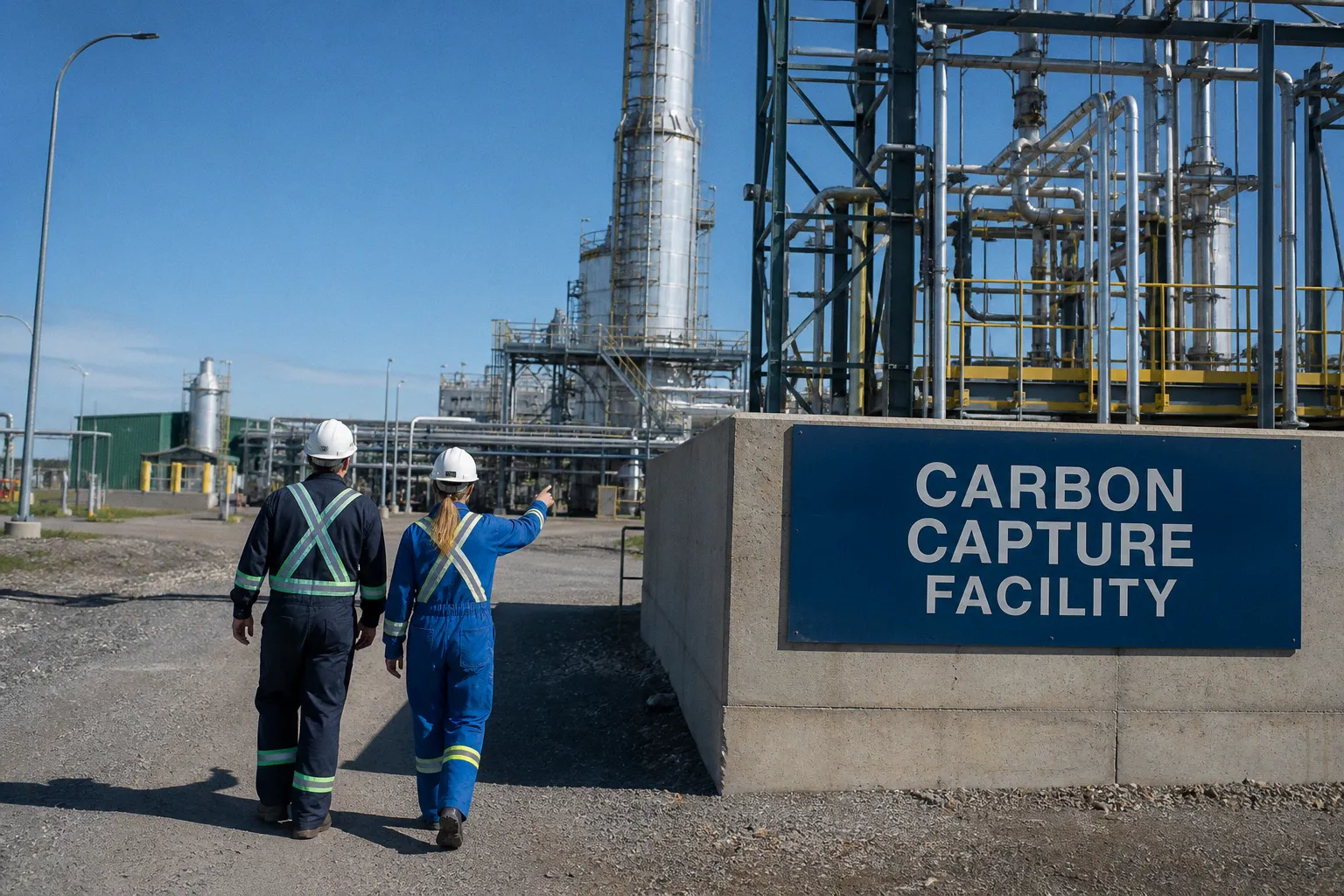
According to the DOE, the relevant sectors are chemicals, refining, iron and steel, food and beverage, cement, pulp and paper, aluminum, and glass. Most of their emissions come from three activities as old as the industrial revolution itself: producing heat for processes, processing materials that release CO₂, and generating electricity. The proposed countermeasures — electrification, efficiency gains, and, where unavoidable, carbon capture, utilization, and storage — are described in the report as "emerging," which in regulatory parlance usually means "not yet bankable."
Follow the Incentives
The federal architecture underwriting this ambition is, of course, the familiar double-act: the Bipartisan Infrastructure Law and the Inflation Reduction Act. Layered on top is the 48C Advanced Manufacturing Tax Credit, tens of billions in funding for research, development, demonstration, and deployment, and a portfolio of so-called "Energy Earthshots" — including the Industrial Heat Shot and the Clean Fuels & Products Shot category. The DOE frames LPO's role as a "bridge to bankability," a phrase that, parsed carefully, means the taxpayer absorbs the early-stage risk so that private capital can collect the later-stage rewards.
The agency is candid about the barriers. The portfolio of commercially deployable technologies is small; implementation is costly and complex; capital is expensive; short-term returns are uncompetitive; enabling infrastructure is, in many regions, simply absent. LPO's pitch is that it can finance "early deployments" to lower costs and "de-risk" projects — a tidy euphemism for socializing the losses while privatizing the gains.
Outside the heavy-industry perimeter, the UNFCCC-adjacent Fashion Industry Charter for Climate Action has released its own pair of reports on carbon-market solutions and financing mechanisms for fashion supply chains, focused on mobilizing capital for upstream manufacturers. Whether a sector whose business model depends on selling more things every year can credibly align itself with offsets and market-based mechanisms is, charitably, an open question.
What to Watch
The DOE's "liftoff" framing presupposes that what is being launched is, in fact, ready for flight. Two signals will determine whether the trillion-dollar estimate is a ceiling or a floor: the share of LPO financing that flows to projects using technologies already proven at commercial scale versus those still chasing maturity, and whether the 48C credit, once monetized, ends up rewarding genuine process change or simply subsidizing the paperwork of it. Until then, the net-zero by 2050 target remains less a commitment than a framework — and frameworks, as any seasoned observer knows, are the preferred residence of promises that do not yet have to keep themselves.