Those amounts can rival the discounted online admission price for a single day, especially after an online processing fee is added. For visitors driving in, one trip can cost almost as much in access and parking as it does in admission, before anyone buys food, rents a locker, or boards a ride.

Tickets and prices
Six Flags Over Texas
I
entry ticket
Entry ticket · Over 100 rides and attractions
This ticket grants admission to over 100 rides, shows, and attractions, including year-round events.
USD48.70
Check availabilityII
Box office and online booking
- Adult USD39
USD39
Official websiteThat fixed-cost problem is the useful way to think about Arlington ticketing. The question is not simply where to buy tickets to Six Flags Over Texas. It is whether the visit is being priced as one isolated day, a return trip, a group outing, or a seasonal pattern that makes parking and passholder benefits more important than the headline admission price.
What follows is a working analysis of how admission, parking, season-pass tiers, cashless transactions, and event dates interact at the original Six Flags property in Arlington. The aim is operational clarity: how to buy tickets Six Flags Over Texas visitors can actually use, where the hidden costs sit, and how to make the calculation without treating every calendar day or every pass benefit as interchangeable.
The Hidden Costs of Single-Day Admission
Single-day tickets operate on a date-based structure that penalizes the least flexible buyer. Online advance purchase can bring admission down into the high-$30 to mid-$40 range on selected calendar days, while gate pricing may approach $90 before tax. Online orders can also carry a processing fee of up to roughly $10, depending on the transaction. The final checkout screen matters more than the promotional starting price, because that is where the selected date, ticket type, taxes, and fees become one payable total.
The structural problem is not the admission ticket by itself. It is the bundle.
For a driver buying one online ticket and one general parking space, a simple working estimate looks like this:
- Admission: approximately $39–$45 on a lower-priced date
- Processing fee: up to approximately $10 per order
- General parking: approximately $39 per vehicle
- Base total before food, lockers, upgrades, and tax: roughly $78–$94
That estimate is intentionally conditional. The admission range applies to selected dates, not every operating day, and the processing fee may depend on the order. A visitor should use the total displayed at checkout rather than multiply a promotional starting price across an entire calendar.
Preferred parking changes the calculation again. If the parking-only line item rises above $50, the upgrade may be convenient, but it does not become a better admission deal. It is still a separate access cost attached to the vehicle. For a solo visitor, that can make an apparently inexpensive ticket feel disproportionate. For a group sharing one car, the same parking fee is spread across several people, which is why the number of passengers matters more than the parking sign initially suggests.
The admission ticket itself is a dynamic product. Weekend, holiday, and event dates may cost more than quieter midweek dates, but the exact difference depends on the dates selected and the ticket inventory shown at that time. It is not reliable to claim that a particular September weekend will cost a fixed amount more than a particular October Tuesday without checking both dates in the same booking flow. The defensible rule is simpler: compare the actual dates you can attend, then compare the complete checkout totals.
This is where the practical value of six flags arlington online booking tips becomes clear. A visitor who fixes the date first and only then searches for a ticket may have fewer low-priced options. Someone with a flexible schedule can start with the calendar, identify the lower-priced operating days, and decide whether the savings justify shifting the trip. That is not a trick or a hidden fare class. It is the basic consequence of date-based pricing.
There is a second-order effect. Dynamic pricing rewards flexibility, while school calendars, work schedules, and event preferences reduce it. A visitor who must attend on a Saturday evening during a seasonal event is buying a specific experience, not merely a ride on the Titan. A visitor who can move the trip to a quieter weekday is buying the same park with a different price attached. The ticket strategy begins with recognizing which of those two visitors you are.
The cheapest ticket is rarely the one you started looking for—it is the one attached to the cheapest available day you can actually use.
What belongs in the first estimate
A realistic first-pass budget should separate costs that scale by person from costs that scale by vehicle or order:
- Admission scales with the number of people entering.
- Parking is generally charged once per vehicle, not once per passenger.
- Processing fees belong to the order and should not automatically be multiplied by every guest.
- Preferred parking is a vehicle upgrade, not a second admission product.
- Food, lockers, games, and line-access products are discretionary but can materially change the final spend.
- Event add-ons need to be checked against the selected date and ticket type.
That distinction prevents the most common budgeting error: taking the price of one driver's trip and multiplying the entire amount by the number of people in the car.
Why Season Passes Outperform Gate Tickets
The Gold and Prestige season-pass tiers are designed to absorb the line items that distort single-day economics. Depending on the tier and the current terms, parking may be included as general or preferred parking. That benefit can be more important than a modest difference in admission pricing for visitors who plan to drive back to Arlington.
The break-even calculation needs to be stated carefully. If a Gold Pass is advertised from approximately $89 during a promotional period, that price is not automatically the final price for every buyer or every date. Taxes, fees, the purchase window, and the terms attached to the pass can change the amount. Still, the basic comparison is useful.
For one passholder driving to the park:
- At two visits, an $89 pass works out to about $44.50 per visit before considering passholder discounts.
- At three visits, the same pass works out to about $29.67 per visit.
- Parking is included when the pass terms provide that benefit, so the passholder is not adding approximately $39 in parking on each return trip.
- Admission for the passholder is covered according to the pass's valid-use terms, while guest admission is a separate cost.
Against a lower-priced single-day visit costing approximately $78–$94 for one driver after admission, a pass can approach its own price on the first visit once parking and fees are included. That does not mean every visitor should buy one. It means the break-even point must be calculated from the total trip cost, not from the ticket line alone.
For a solo visitor who does not drive, the calculation is less decisive. A rideshare visitor may pay approximately $39–$45 for admission plus any applicable processing fee, with no parking charge. In that case, the pass's parking benefit has no value on that visit. The pass may still make sense after a second or third trip, but the answer depends on the actual pass price, the dates used, and whether the visitor values dining, retail, or other passholder discounts.
For a driver, the useful question is not whether the pass beats a single ticket. It is whether the pass beats the complete cost of the visits the driver already expects to make.
The group calculation is different
Parking is shared. That changes the economics sharply.
Assume one vehicle, general parking at approximately $39, one online order, and admission priced at approximately $39–$45 per person. Before tax and with a processing fee of up to approximately $10 per order, the rough group totals look like this:
| Cost component | One person in one car | Two people in one car | Three people in one car |
|---|---|---|---|
| Admission at $39–$45 each | $39–$45 | $78–$90 | $117–$135 |
| General parking, one vehicle | ~$39 | ~$39 | ~$39 |
| Processing fee | Up to ~$10 per order | Up to ~$10 per order | Up to ~$10 per order |
| Approximate group total before tax | ~$78–$94 | ~$117–$139 | ~$156–$184 |
| Approximate cost per person | ~$78–$94 | ~$58.50–$69.50 | ~$52–$61.33 |
These are planning figures, not a quote. They exclude tax and assume one vehicle and one order. The important correction is structural: the $39 parking charge appears once in the two-person and three-person columns. It does not become $78 for two people or $117 for three.
The same logic applies when comparing a season pass with a day ticket. If one person buys a pass and two friends join the trip, the friends are not automatically covered. They may be eligible to purchase tickets at a promotional passholder rate on qualifying dates, but those tickets remain paid guest tickets. The passholder is contributing the credential and, where applicable, the parking benefit; the guests still need valid admission.
A more honest passholder example is therefore:
- One Gold Pass at an assumed promotional starting price of approximately $89
- One vehicle with parking included under the applicable pass terms
- One or more guests paying either the qualifying promotional rate or the regular online rate
- Any guest-ticket limits, date restrictions, and promotion conditions checked before purchase
If the passholder makes two visits, the pass itself contributes roughly $44.50 per visit. At three visits, it contributes roughly $29.67 per visit. Guest tickets must be added separately to each outing. That is the calculation a group should make instead of describing the guests as included.
Passholder Bring-A-Friend or Duo promotions can still be valuable. Historically, qualifying offers have placed additional guest tickets somewhere from the mid-$20s to around $50 on selected dates, but the offer is not universal and the price is not guaranteed for every event day. The right wording is promotional eligibility, not free admission. Check the terms in the passholder account, the applicable date, and whether the offer is limited by quantity or ticket type.
The pass can also include discounts on dining, retail, and selected ride-experience products such as THE FLASH Pass, a reservation-based line-access system. Those discounts vary by tier and season. They should be treated as secondary value rather than used to force a break-even result. A visitor who would never buy a line-access product should not count its discount as money saved.
The pass is a bundle, and the bundle rewards commitment. It is strongest for people who drive, return on more than one date, and can use the included benefits. It is weaker for a one-time visitor with no car and no intention of returning.
Navigating the Cashless Park Experience
Six Flags Over Texas uses a cashless payment model for purchases inside the park. Food and beverage counters, retail locations, game kiosks, lockers, and other in-park transactions generally require a credit card, debit card, or mobile payment method.
That does not mean physical cash has no possible use on the property. The park provides a cash-to-card conversion option at designated locations, allowing visitors to convert cash into a prepaid payment card for use where cards are accepted. Availability, locations, and any applicable limits should be confirmed through the current park information before arrival. The practical conclusion is not that cash is useless; it is that cash should not be the only payment method a visitor brings.
For guests traveling from outside the United States, the card setup deserves attention before the trip. Foreign transaction fees, declined international transactions, prepaid-card restrictions, and mobile-wallet compatibility can all create friction at a busy counter. A visitor who checks the issuing bank's fee structure and prepares a backup payment method has solved most of the problem before entering the park.
The most reliable setup is:
1. Carry a primary credit or debit card that is enabled for the trip.
2. Add a compatible card to a mobile wallet if that is the preferred payment method.
3. Bring a second payment method in case the first card is declined or lost.
4. Treat cash-to-card conversion as a backup or budgeting tool rather than assuming every register accepts paper currency.
5. Keep track of the prepaid card balance if a fixed daily spending limit matters.
That last point is useful for families. A parent can convert a defined cash amount to a card before or during the visit and use that balance as the day's in-park budget. The system is not the same as paying cash at every counter, but it can recreate some of the discipline of a cash envelope without requiring a visitor to leave the park.
The lockers follow the same cashless logic. Guests storing bags, jackets, or souvenirs should expect to pay at the kiosk with an accepted electronic method. Locker pricing varies by size and location, and a rental can become a recurring expense for a group that arrives with more belongings than the rides allow. The practical move is to decide what must be stored before the first major coaster rather than discover the need after reaching the ride entrance.
Electronic payment also changes the mid-day fallback plan. A visitor does not need to walk back to a vehicle, search for an ATM at a nearby hotel, or exit the property to obtain spending capacity. If the original card works, it can be used for additional purchases. If cash is the available resource, the designated cash-to-card conversion option may provide another route. The exact locations and terms can change, so visitors should confirm them through the park's current guest-services information.
Cashless is not a feature for every visitor; it is a friction tax when the payment plan is treated as an afterthought.
The cashless model also affects group coordination. One person paying for everyone may be convenient, but it makes reimbursements harder and obscures how much each guest has spent. Separate cards, a shared digital wallet arrangement, or a pre-agreed contribution can prevent the familiar end-of-day argument over who paid for lunch, drinks, lockers, and souvenirs.
Alternative Transportation and Parking Strategies
The parking surcharge is the largest controllable variable in a single-day driving budget. Admission prices change by date, but parking can be avoided altogether if the group chooses a different way to reach the park.
The first option is the Arlington Trolley. A free shuttle service operates between participating hotels in the Arlington entertainment district and nearby attractions, including the theme-park area. Routes and participating properties can change, so visitors booking a hotel specifically for trolley access should confirm the current stop and schedule when making the reservation. A shuttle is most useful when the hotel location already fits the trip. Booking a more expensive room solely to avoid one parking charge may not create a saving.
The second option is rideshare or taxi drop-off. Visitors without a personal vehicle can use the designated drop-off and pickup arrangements near the entrance. The parking line item disappears, but the cost moves into transportation. Arrival is usually straightforward; departure requires more planning because demand can rise when the park closes or when evening entertainment ends.
The return trip is the variable to price honestly. A rideshare that costs little on arrival may cost more during the post-closing rush. Visitors can reduce the risk by arranging a pickup point in advance, monitoring the app before leaving the park, or leaving before the largest crowd. There is no guarantee that departing 30 or 45 minutes before a show will produce a lower fare, but it may avoid the most concentrated queue and surge period.
The third strategy is season-pass parking. For drivers, a pass that includes parking turns a recurring vehicle charge into part of the pass's fixed cost. That is particularly valuable when the visitor expects at least two trips. It is less valuable for a one-time passenger arriving by rideshare, because there is no parking fee to absorb.
A fourth strategy is vehicle consolidation. A group arriving in two cars pays two parking charges. If the group can travel in one vehicle, the parking cost is paid once. The trade-off is practical rather than mathematical: fewer seats, a longer pickup plan, and less independence for people who want to leave at different times. For a family or friend group departing from the same area, however, the saving is immediate and does not depend on finding a cheaper admission ticket.
Parking strategy should be settled before tickets are bought. If the group later decides to split into two vehicles, the original per-person estimate changes. If a rideshare visitor later rents a car, the parking fee appears as a new fixed cost. These are simple changes, but they are the reason ticket-only comparisons often produce misleading conclusions.
A practical comparison
| Travel pattern | Main advantage | Main risk | When it tends to make sense |
|---|---|---|---|
| Personal vehicle with general parking | Flexibility and predictable arrival | Parking adds a fixed cost to the trip | Groups sharing one car or visitors carrying supplies |
| Personal vehicle with preferred parking | Shorter or more convenient parking experience | Higher vehicle cost without changing admission | Visitors who value convenience more than minimum spend |
| Arlington Trolley from a participating hotel | Avoids parking and driving stress | Routes and schedules require confirmation | Hotel guests whose itinerary already fits the service |
| Rideshare or taxi | No parking charge and no designated driver | Return fares may rise after closing | Visitors without a car or groups splitting transport |
| Season pass with included parking | Reduces the cost of repeat driving visits | Upfront purchase and pass conditions | Drivers expecting multiple visits |
No transportation option wins universally. The right comparison is the complete door-to-door cost, including the number of people, the return plan, and how much flexibility the group has.
Maximizing Value During Seasonal Events
Seasonal events change the character of a Six Flags visit and can change the ticket calculation as well. Fright Fest is scheduled to run from September 11 through November 1, 2026, according to the event calendar referenced for this planning cycle. Holiday in the Park follows in the later part of the year, generally occupying the late-November and December holiday window. Dates, operating hours, entertainment, and ticket inclusions should be checked against the current calendar before booking.
Event dates are not automatically interchangeable with ordinary operating days. A ticket may provide general park admission while a maze, haunted house, special experience, or other event element requires an additional purchase. Some attractions or event features may be included on particular dates or with particular ticket types. The only safe assumption is that the checkout description and event terms control.
The price question also needs conditional language. It is reasonable to expect higher demand around event openings, weekends, holidays, and heavily promoted nights. It is not reasonable to promise a fixed premium without comparing the selected dates. A September opening weekend may be priced differently from a later September weekday, and a late-November holiday date may not match a December weekend. The visitor should put the intended dates side by side in the official booking calendar and compare the total, not rely on a general claim about how much an event day costs.
The order of decisions matters:
1. Decide whether the group wants ordinary rides, seasonal entertainment, or a specific event feature.
2. Check whether the selected date includes the desired feature in the base ticket.
3. Compare at least one weekday and one weekend date if the schedule allows.
4. Add parking, processing fees, and any event upcharges to the admission price.
5. Compare that total with the cost of a qualifying season pass and any paid guest tickets.
6. Buy only after confirming the date, ticket type, and validity conditions.
A passholder visiting during a qualifying Fright Fest promotion may receive a lower price on an eligible guest ticket and may have parking included under the pass terms. That can make the group economics attractive, but it is not the same as two guests being included with the pass. The guests still pay for their admission, and the promotion may be limited by date, quantity, or eligibility.
The pass is most persuasive when it covers more than one distinct visit window. Fright Fest plus a summer return is a different use case from one event night. Fright Fest plus Holiday in the Park may be appealing to someone who wants two different seasonal experiences, but only if the pass remains valid for both and the benefits apply on those dates. A single visit during a promotional pass window may not justify the upfront cost once taxes, fees, and the visitor's transportation are included.
Event planning also changes the value of time. A guest paying for a maze or special experience needs enough hours to use it. A ticket that looks inexpensive becomes poor value if the group arrives late, spends the evening waiting for one feature, and skips the attractions that motivated the visit. Conversely, a higher-priced date may be rational if it delivers the specific entertainment the group actually wants. The cheapest admission is not always the cheapest way to obtain the desired day.
Official booking or third-party flexibility
Tickets are commonly available through the official Six Flags channel and authorized third-party booking platforms, but the products may differ in date flexibility, refund terms, promotional eligibility, and the point at which a date must be selected. Those differences matter more than a small headline-price gap.
The official channel is usually the cleaner choice when the date is fixed and the visitor wants to see the current calendar, add-ons, passholder terms, and event details in one place. A reputable third-party platform may be useful when flexibility or a different booking flow matters, but the visitor should confirm whether the ticket is date-specific, whether the date must be reserved separately, and whether it can be used for the intended event.
A lower advertised price is not automatically a lower final cost. Compare:
- the ticket's valid date or date range;
- whether the ticket includes the intended event access;
- processing or service fees;
- parking, if driving;
- cancellation or change conditions;
- eligibility for passholder or promotional benefits.
That is the useful version of a buy tickets Six Flags Over Texas decision: not a search for one universal cheapest link, but a comparison of the product that matches the trip.
The Cost Stack That Actually Matters
The Arlington visit becomes easier to price when every expense is assigned to the person, the vehicle, the order, or the optional experience.
| Expense type | Usually scales with | Why it changes the decision |
|---|---|---|
| Single-day admission | Each guest | Date and demand can change the base price |
| Processing or service fee | The order, sometimes the ticket transaction | It can make a low starting price look different at checkout |
| General or preferred parking | The vehicle | One car can carry several guests, so the fee should not be multiplied per person |
| Season pass | The passholder | Upfront cost may be spread across multiple visits |
| Guest promotion | Each qualifying guest ticket | Promotional tickets are discounted, not included |
| Food and drinks | Each person or group | Small purchases become material over a long day |
| Lockers | Each rental | Bags and loose items can create an avoidable add-on |
| Event experiences | The selected ticket or add-on | Fright Fest and holiday features may have different inclusion rules |
| Line-access products | The purchaser | Discounts matter only if the visitor would otherwise buy the product |
This is also where six flags over texas ticket pricing should be read with caution. A starting price is a calendar signal, not a promise that every day has the same rate. The useful number is the final total for the chosen date and party, with parking and order fees included.
For a one-day group sharing a car, admission is the dominant variable once parking is paid only once. For a repeat driver, parking and the pass's validity become central. For a rideshare visitor, transportation and return timing replace parking as the main variable. For a seasonal-event visitor, the feature inclusions and date-specific terms can matter more than a small difference in base admission.
A More Defensible Buying Strategy
The most reliable sequence is less complicated than the park's pricing architecture suggests.
Start with the calendar. Identify the dates that fit the group's schedule and mark whether each is an ordinary operating day, a Fright Fest date, or a Holiday in the Park date. Then compare the displayed admission totals for those dates. Do not use an off-peak starting price as a proxy for a date that has not been selected.
Next, decide how the group is traveling. If one car carries three people, the approximately $39 parking charge is distributed across that group. If two cars are needed, it is charged twice. If the group uses a hotel shuttle or rideshare, parking may be zero but transportation is not.
Then calculate the pass option for the person who would buy it. An approximately $89 promotional pass spread over two visits is approximately $44.50 per visit; spread over three visits, approximately $29.67. Add the actual cost of any guest tickets, including qualifying promotional rates where available. Do not count a guest as included merely because the passholder is eligible to buy that guest's ticket at a discount.
Finally, prepare for payment and optional spending. A card, mobile wallet, and backup method remove most cashless friction. Visitors carrying cash can investigate the park's cash-to-card conversion option rather than assuming they must leave the property to access their money. A pre-set balance can also help control food, retail, and game spending without pretending that the park itself operates on cash.
The winning ticket strategy is not the lowest admission price in isolation. It is the lowest complete cost for the date, vehicle, group, and experience you actually intend to buy.
Six Flags Over Texas rewards planning because its fixed costs are visible once the ticket is treated as part of a larger system. An online advance ticket may be the right answer for a flexible weekday. A season pass may be the better tool for a repeat driver. A shuttle or rideshare may beat parking for a visitor without a car. A cash-to-card option may solve the payment problem for someone arriving with paper currency. A passholder guest promotion may reduce the group total, but it does not erase the guests' admission charges.
The rides—Titan, New Texas Giant, and the rest of the catalog—deliver the entertainment. The ticket strategy determines how much of the day is spent paying for access rather than using it. For an Arlington trip, that distinction is the difference between a price that merely looks low and a cost that holds up when the final receipt arrives.
FAQ
How much does a single-day visit to Six Flags Over Texas cost with parking?
Is parking at Six Flags Over Texas charged per person or per vehicle?
When does a Six Flags Over Texas season pass make sense?
Are guests included with a Six Flags Over Texas season pass?
Can I use cash inside Six Flags Over Texas?
What should I compare when buying Six Flags Over Texas tickets?
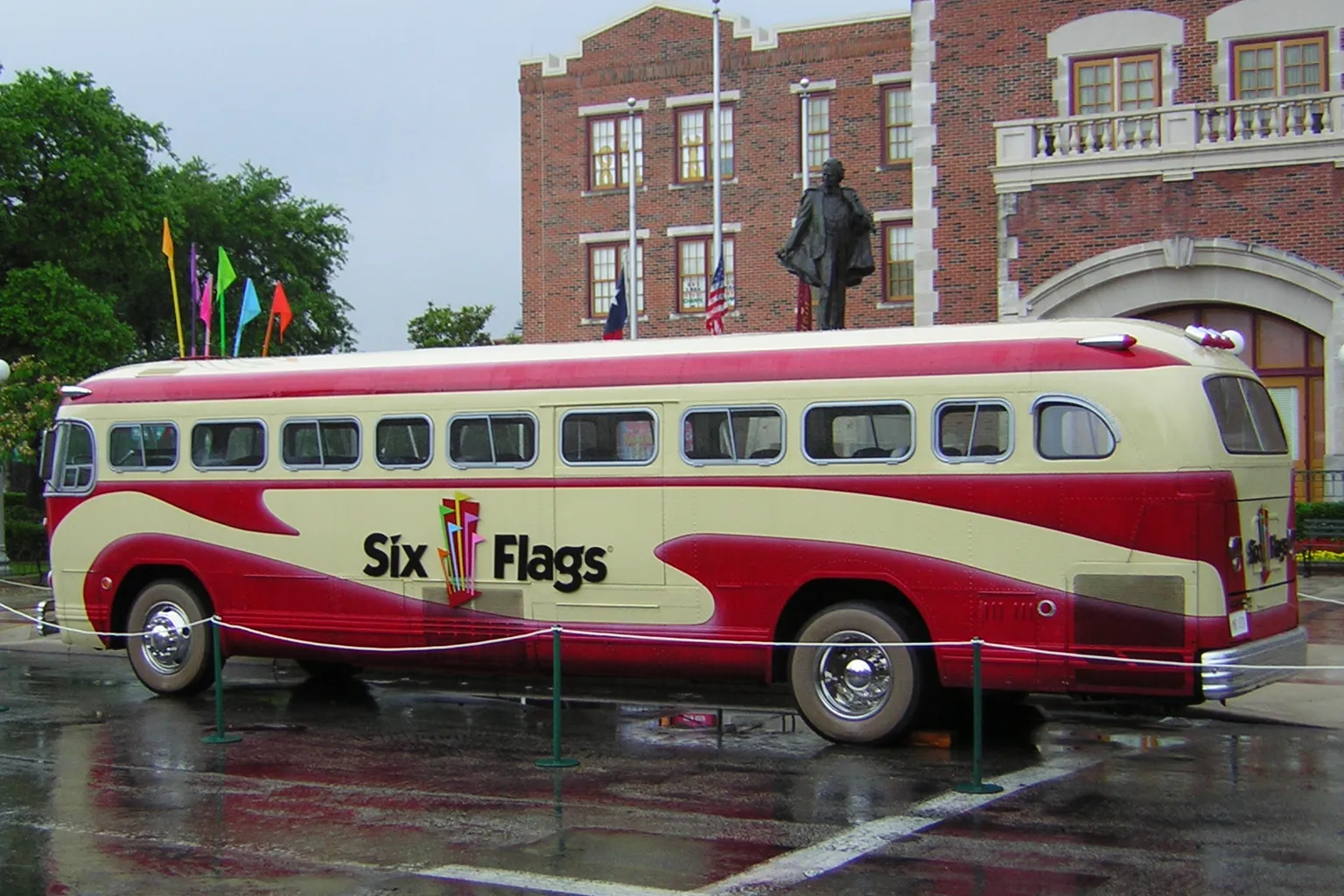
Photo: Chris Hagerman from New Port Richey, FL, US / CC BY 2.0 — Wikimedia Commons