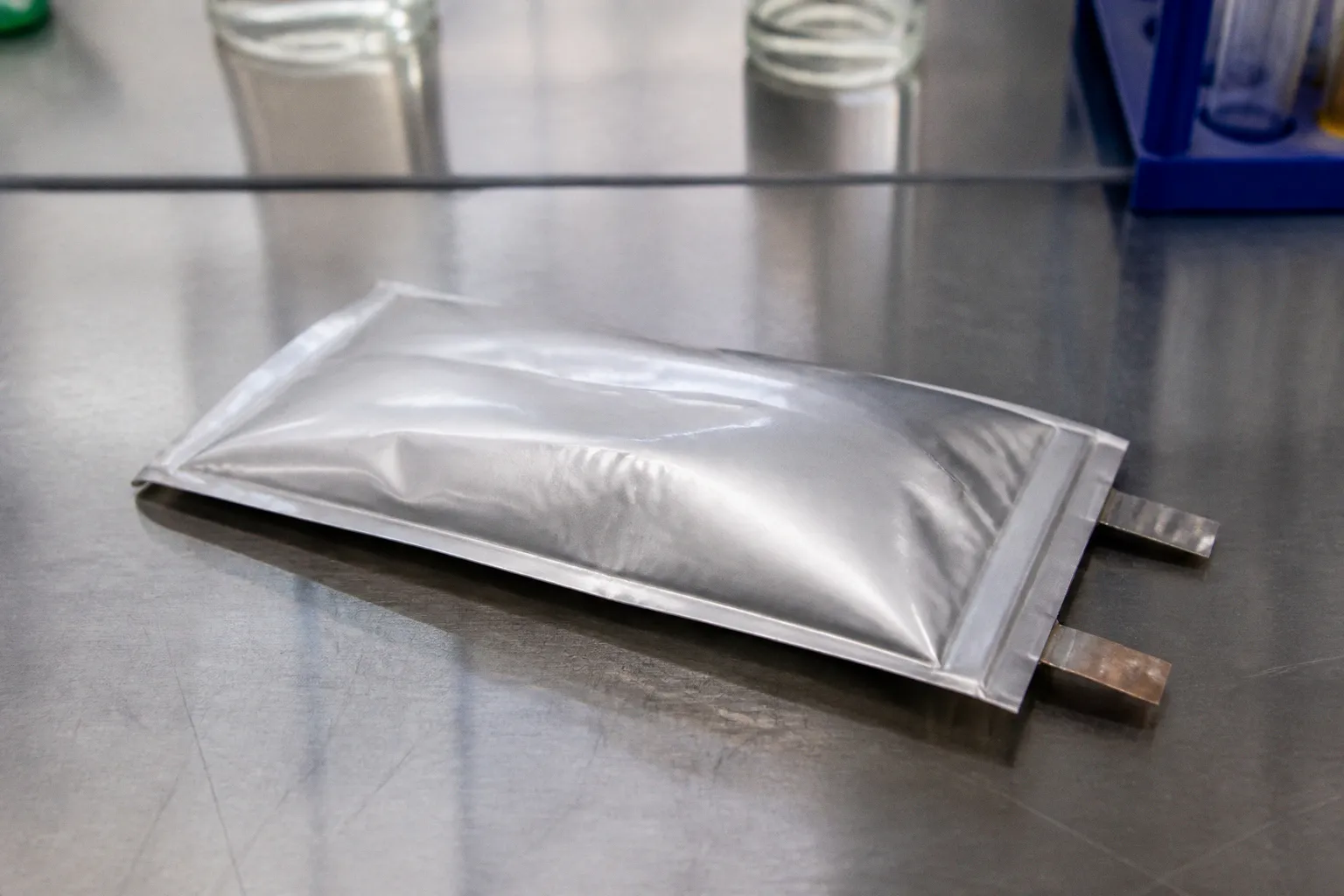
In the electrode, however, the advantage arrives with a violent mechanical cost: silicon can expand by more than 300%—and in some conditions by 400%—as lithium enters its structure.
That expansion is the central problem in silicon anode battery degradation chemistry. The issue is not simply that a particle becomes larger during charging. It swells, contracts, cracks, loses contact with the conductive network, repeatedly tears apart its protective interphase, and consumes lithium and electrolyte in the process. A material with extraordinary theoretical capacity becomes an unstable part of a working battery unless its movement is carefully contained.
The difference between promise and failure is therefore structural. Silicon does not need to be persuaded to store lithium. It needs to survive storing it thousands of times.
The theoretical promise meets a moving electrode
Conventional lithium-ion batteries use graphite as the dominant anode material because graphite offers a workable balance of capacity, conductivity, cost, and cycle stability. Its theoretical specific capacity is 372 mAh/g. Pure silicon, by comparison, can theoretically reach up to 4,200 mAh/g. At room temperature, the commonly cited capacity associated with the Li₁₅Si₄ phase is about 3,579 mAh/g—still many times higher than graphite.
That number explains why silicon continues to attract battery researchers and manufacturers. More lithium stored per gram of active material could help increase cell-level energy density without enlarging the entire pack. For an electric vehicle, that might mean greater range at the same mass, or a smaller battery for the same range. Neither outcome is guaranteed, because the anode is only one part of the cell, but the attraction is clear.
The problem begins when the silicon is actually lithiated. Unlike graphite, which accommodates lithium between relatively stable carbon layers, silicon forms lithium-silicon compounds and undergoes a major change in volume. The active material is not a passive container. Its morphology shifts under electrochemical load.
In a laboratory description, this may appear as a change in particle dimensions from roughly 150 nanometres to more than 500 nanometres during a single charge cycle for unconstrained silicon structures. Inside an electrode, the consequence is more consequential than the size change itself. Every particle sits within a composite of silicon, conductive carbon, binder, current collector, pores, and electrolyte. When one component expands dramatically, the stresses travel through the entire local architecture.
Graphite electrodes also experience structural change, but on a far smaller scale. Their relative stability allows the conductive network and binder system to remain connected over many cycles. Silicon repeatedly asks that same network to stretch, compress, and recover without losing electrical pathways. Eventually, something gives way.
Silicon’s advantage is not defeated by its capacity. It is defeated by the mechanical price of reaching that capacity repeatedly.
What lithiation does to the silicon structure
Lithiation is the process in which lithium ions move from the cathode through the electrolyte and into the anode during charging. Electrons arrive through the external circuit, and the silicon reacts with lithium to form increasingly lithium-rich phases.
At the beginning of the process, lithium enters the silicon structure and changes its atomic arrangement. Silicon’s original crystalline order can become progressively disordered as lithiation advances. The transformation is accompanied by substantial expansion, creating stress inside the particle and at its interface with the surrounding electrode.
The stress is not uniform. Surface regions may react before the interior. Particle corners, defects, and areas constrained by neighbouring material can carry higher local loads. In larger particles, the outer lithiated shell and less-reacted core may expand differently, producing gradients that encourage cracking. During delithiation, the reverse movement does not simply restore the original structure. The particle has already been altered by fracture, surface reactions, and local loss of contact.
This is why silicon anode swelling is better understood as a repeated mechanical cycle than as a single expansion event:
1. Lithium enters silicon and drives a large volumetric increase.
2. The expanding material generates internal and interfacial stress.
3. Cracks form in particles or along the electrode structure.
4. Delithiation causes contraction, opening and enlarging damaged regions.
5. The next charge exposes the weakened structure to another expansion cycle.
The process can occur at several scales at once. A silicon nanoparticle may fracture internally. A cluster of particles may lose contact with conductive carbon. The electrode coating may develop pores, delamination, or regions where the active material no longer presses effectively against the current collector.
The result is not necessarily an immediate catastrophic failure. More often, capacity declines progressively. Some silicon remains chemically capable of storing lithium, but it is no longer electrically or ionically accessible in the same way. The battery still charges and discharges; it simply carries less of its original load.
Why the particle size does not solve everything
Nanostructuring is one of the main strategies used to reduce fracture. Smaller particles have shorter diffusion paths and can sometimes accommodate strain more effectively than large, brittle particles. Silicon nanowires, hollow particles, porous structures, and other engineered forms have all been investigated for this reason.
But reducing particle size introduces other trade-offs. Smaller particles present more surface area to the electrolyte. That can accelerate the formation of the solid electrolyte interphase, or SEI, and increase the amount of electrolyte and active lithium consumed in side reactions. A structure designed to survive expansion may therefore become more reactive simply because more surface is exposed.
There is no universal particle geometry that eliminates silicon anode degradation. The engineering task is to balance mechanical compliance, electrical connectivity, ionic transport, surface stability, manufacturability, and material loading. A beautiful nanoscale structure that cannot be produced consistently or packed into a practical electrode is not yet a battery solution.
Pulverization breaks the electrode’s electrical map
Particle pulverization is one of the most visible failure pathways in silicon-containing anodes. As the material expands and contracts, fractures can divide a particle into fragments. Those fragments may remain chemically active, but they can lose their connection to the conductive carbon matrix or to the current collector.
A functioning anode requires more than active material. Electrons must travel from each reacting region through conductive additives and into the current collector. Lithium ions must also reach the reaction sites through the electrolyte-filled pore network. When a silicon fragment becomes electrically isolated, it may still be physically present in the coating while contributing little or nothing to reversible capacity.
The electrode then develops an uneven internal geography:
- some silicon remains well connected and continues to cycle;
- some fragments are connected only intermittently as the electrode breathes;
- some material becomes isolated from the conductive network;
- newly exposed surfaces continue reacting with the electrolyte;
- cracks and voids alter local paths for lithium-ion transport.
This is the physical meaning of capacity fade. The nominal mass of silicon has not necessarily disappeared, but the portion that can participate reversibly in the cell has been reduced.
Delamination compounds the problem. Repeated expansion can weaken adhesion between the active coating and the current collector, or between particles and the binder phase. Once sections of the electrode lose intimate contact, resistance rises and the current distribution becomes less uniform. The battery may then experience more localized stress during subsequent charging.
The silicon-carbon composite anode is an attempt to preserve this electrical map. Carbon can provide a conductive scaffold and, depending on the design, space into which silicon can expand. The composite may use carbon coatings, amorphous carbon, graphite blends, porous carbon frameworks, or other architectures. The exact structure matters because a simple mixture of silicon and carbon does not automatically create a durable network.
A useful comparison is between an unconstrained silicon particle and a composite structure designed to manage its movement:
| Electrode architecture | Mechanical behaviour | Main degradation risk | Engineering purpose |
|---|---|---|---|
| Unconstrained silicon particles | Large expansion with direct stress on the particle and surrounding binder | Cracking, pulverization, electrical isolation, rapid capacity loss | High theoretical capacity, but poor structural tolerance |
| Silicon-carbon composite | Carbon matrix can buffer strain and maintain conductive pathways | Composite fracture, surface reactions, loss of contact over time | Combine silicon capacity with carbon’s conductivity and resilience |
| Coated or hollow silicon structures | Internal space and protective layers can accommodate some expansion | Coating failure, electrolyte penetration, complex manufacturing | Limit direct exposure and reduce mechanical stress |
| Silicon blended with graphite | Graphite stabilizes electrode behaviour and adds established conductivity | Lower total silicon contribution, uneven expansion within the blend | Use silicon without requiring a fully silicon-based anode |
The table does not describe four fixed commercial categories. Real electrodes combine several strategies, and their performance depends on loading, binder chemistry, electrolyte formulation, particle distribution, electrode thickness, and operating conditions. It does show the basic constraint: silicon must be given somewhere to move, while the electron pathway must remain intact.
The SEI turns cracking into chemical consumption
The solid electrolyte interphase forms at the boundary between the electrode and the liquid electrolyte. It is created by electrolyte decomposition during early cycling and can act as a protective layer. A stable SEI allows lithium ions to pass while limiting further reaction between the electrolyte and the anode.
Silicon makes that boundary unusually difficult to stabilize.
When silicon expands, the surface beneath the SEI moves. When the particle contracts, the interphase is placed under another kind of strain. Cracks can open through the SEI, exposing fresh silicon to the electrolyte. That surface then participates in further reactions, producing new interphase material. The cycle repeats as the silicon continues to breathe.
This rupture-regeneration process consumes active lithium ions and electrolyte. Lithium locked into irreversible side products is no longer available to shuttle between the two electrodes. Electrolyte consumed at the anode is also unavailable to support normal ion transport. The degradation therefore has a chemical cost as well as a mechanical one.
The SEI problem is sometimes described as if the interphase were merely a coating that needs to be made thicker. Thickness alone is not the answer. A thick layer can increase resistance and impede ionic transport, while a brittle layer may still fail when the underlying silicon changes volume. What matters is the interphase’s composition, elasticity, adhesion, ionic conductivity, and ability to remain intact across repeated expansion and contraction.
Electrolyte additives and binder systems are studied partly for this reason. They can influence the chemistry and physical properties of the interphase, while binders can help hold fractured particles within the conductive structure. Neither approach removes the underlying volume change. They alter how the electrode absorbs and distributes the resulting stress.
The degradation pathways also interact. A crack can expose new silicon. The new surface can consume lithium and electrolyte. The resulting chemical changes can weaken the surrounding structure. A weakened structure can fracture again. Treating pulverization, SEI damage, and lithium loss as separate problems misses the feedback loop that controls silicon anode lithium-ion battery lifespan.
Every new silicon surface is an electrochemical liability unless the electrode can protect it, reconnect it, or prevent it from forming.
Why silicon-carbon composites are the practical centre of the field
The most credible path toward silicon-rich anodes is not to make the entire anode from unconstrained pure silicon. It is to engineer a composite in which silicon supplies additional capacity while carbon, binders, coatings, and electrode geometry manage the damage.
Carbon performs several roles. It can improve electronic conductivity, distribute mechanical stress, and create a framework that keeps silicon fragments close to conductive pathways. A carbon shell may reduce direct contact between silicon and electrolyte. A porous carbon host may provide internal void space for expansion. Graphite can contribute a more dimensionally stable active phase, though adding silicon still changes the overall stress profile of the electrode.
The difficult part is maintaining those advantages at realistic material loadings. A structure with a generous carbon buffer may tolerate expansion well but devote too much mass or volume to inactive support. From an energy-density perspective, that can reduce the benefit of using silicon in the first place. A thin coating may add little mass but fail after repeated cycling. A dense electrode may store more active material per unit area while leaving less room for expansion and electrolyte movement.
Commercial performance is therefore governed by more than the headline capacity of the silicon. Engineers must work with:
- the silicon fraction within the composite;
- particle size and distribution;
- carbon type and connectivity;
- binder elasticity and adhesion;
- electrode porosity and thickness;
- first-cycle lithium loss;
- electrolyte and additive chemistry;
- charging rate and operating temperature;
- pressure and mechanical restraint at the cell level.
These variables are coupled. Increasing silicon content can raise capacity but also increase expansion and irreversible lithium consumption. Increasing porosity may provide expansion space but reduce volumetric energy density. Adding more binder can improve cohesion while diluting the active material. A protective coating can improve surface stability but introduce resistance or manufacturing complexity.
The practical objective is not zero swelling. That is not a realistic description of how silicon behaves in a working lithium-ion cell. The objective is controlled swelling: expansion that the composite architecture can accommodate without losing the electrical network or repeatedly destroying the interphase.
The hidden cost of first-cycle lithium loss
Silicon’s high capacity is often discussed as though all of it becomes useful capacity in the finished cell. In practice, the first cycle can impose a significant penalty because new silicon surfaces and interphase formation consume active lithium. This is especially important in a full cell, where the lithium inventory is limited by the cathode and the cell design.
A material can therefore have an impressive half-cell capacity while delivering a less dramatic improvement at full-cell level. The anode must first become electrochemically conditioned, and the lithium consumed in that process cannot simply be recovered during later cycling.
This is one reason cell manufacturers may use approaches such as pre-lithiation, altered electrode balancing, or carefully selected electrolyte formulations. The details vary by chemistry and design, but the underlying issue is consistent: silicon’s capacity advantage must be measured against the lithium it irreversibly consumes and the structure it damages while achieving it.
What degradation looks like inside a battery pack
The effects of silicon anode wear do not remain at the particle scale. As the anode loses active material and resistance rises, the cell’s usable capacity falls. Charging may become more constrained because the battery-management system must protect the cell from voltage and temperature limits. Power performance can also suffer if internal resistance increases.
A pack-level observer sees range reduction or altered charging behaviour. Beneath that, the electrode has undergone a sequence of local failures: swelling, cracking, loss of contact, interphase growth, and lithium inventory loss. The connection between the driver’s experience and the particle’s fracture is not immediate, but it is real.
The most severe results occur when multiple degradation pathways reinforce one another. A mechanically damaged region may carry current unevenly. Local current concentration can intensify side reactions and heating. Further electrolyte decomposition can increase impedance. Higher impedance changes how the electrode responds under load, creating still more unevenness.
This does not mean every silicon-containing battery follows the same trajectory or loses capacity at the same rate. The research record shows that unmitigated silicon particles can suffer up to 80% capacity loss within 100 cycles, but that figure describes a vulnerable structural condition, not a universal prediction for every silicon-carbon design. Actual durability depends on how the material is engineered and operated.
Nor is particle fracturing the sole degradation mechanism. Atomic-scale stress during delithiation, changes in surface morphology, interphase instability, loss of active lithium, and electrical disconnection all contribute. Battery degradation is a network of interacting failures, not a single crack moving through a particle.
The engineering choices that determine whether silicon survives
Silicon anode development has moved away from asking whether silicon can store lithium. It plainly can. The harder question is whether the storage reaction can be repeated without exhausting the electrode’s structural and chemical reserves.
Several strategies are being developed in parallel:
1. Carbon encapsulation and conductive scaffolds
Carbon layers or frameworks can limit direct electrolyte exposure and preserve electron transport after partial cracking. Their effectiveness depends on whether the structure remains intact during repeated swelling.
2. Void-space engineering
Hollow particles and porous hosts create room for silicon expansion. The challenge is to provide enough free volume without sacrificing too much electrode density or allowing the structure to collapse.
3. Elastic and adhesive binders
A binder must do more than hold powder together during coating. It must retain contact as particles expand and contract, resist chemical attack, and adhere to the current collector over many cycles.
4. Particle and electrode-scale control
Smaller or differently shaped particles can reduce some fracture modes, but greater surface area may intensify SEI formation. The electrode must be designed as a complete porous architecture, not as a collection of isolated particles.
5. Electrolyte and interphase design
Additives can encourage the formation of a more durable SEI, reducing repeated exposure of fresh silicon. The protective layer must remain sufficiently conductive to lithium ions while tolerating movement.
6. Blending with graphite
Graphite can moderate the overall expansion and supply established conductivity. The compromise is that the more graphite replaces silicon, the smaller the theoretical capacity gain becomes.
7. Cell-level operating control
Charge rate, temperature, pressure, and voltage limits affect how quickly stress and side reactions accumulate. A silicon-rich electrode cannot be separated from the conditions imposed by the complete cell.
No single intervention solves the problem because no single failure causes it. The best-performing designs are likely to be layered systems in which particle morphology, carbon architecture, binder chemistry, electrolyte formulation, and battery controls support the same mechanical objective.
Silicon’s battery future depends on containing motion
Silicon remains one of the clearest examples of a green technology whose promise is inseparable from its material limits. Higher-energy batteries could support vehicle electrification, reduce the mass required for stored energy, and improve the efficiency of devices that currently depend on heavier or larger packs. But those benefits are not delivered by a theoretical capacity printed beside a material name.
They are delivered by an electrode that survives.
The central lesson of silicon anode battery degradation chemistry is therefore straightforward: swelling is not an isolated inconvenience. It initiates a chain that links mechanics to electrochemistry. Expansion creates stress; stress creates fractures; fractures break electrical contact and expose new surfaces; new surfaces rebuild the SEI while consuming lithium and electrolyte. Capacity fades because the battery’s internal geography is being rewritten cycle by cycle.
The field’s progress will be measured not by whether engineers eliminate silicon’s expansion, but by whether they can make that expansion predictable, contained, and economically manufacturable. Silicon-carbon composites are important because they accept the material’s behaviour instead of pretending it can be engineered away. They give the active particles a conductive environment, some mechanical accommodation, and a better chance of remaining part of the cell rather than becoming electrically stranded debris.
At the scale of a particle, the problem is a few hundred nanometres of movement. At the scale of an electric vehicle, it becomes range, service life, material demand, and confidence in electrification. The climate case for better batteries rests on all of those layers at once. A high-capacity anode matters only when its chemistry can endure the road beyond the laboratory.