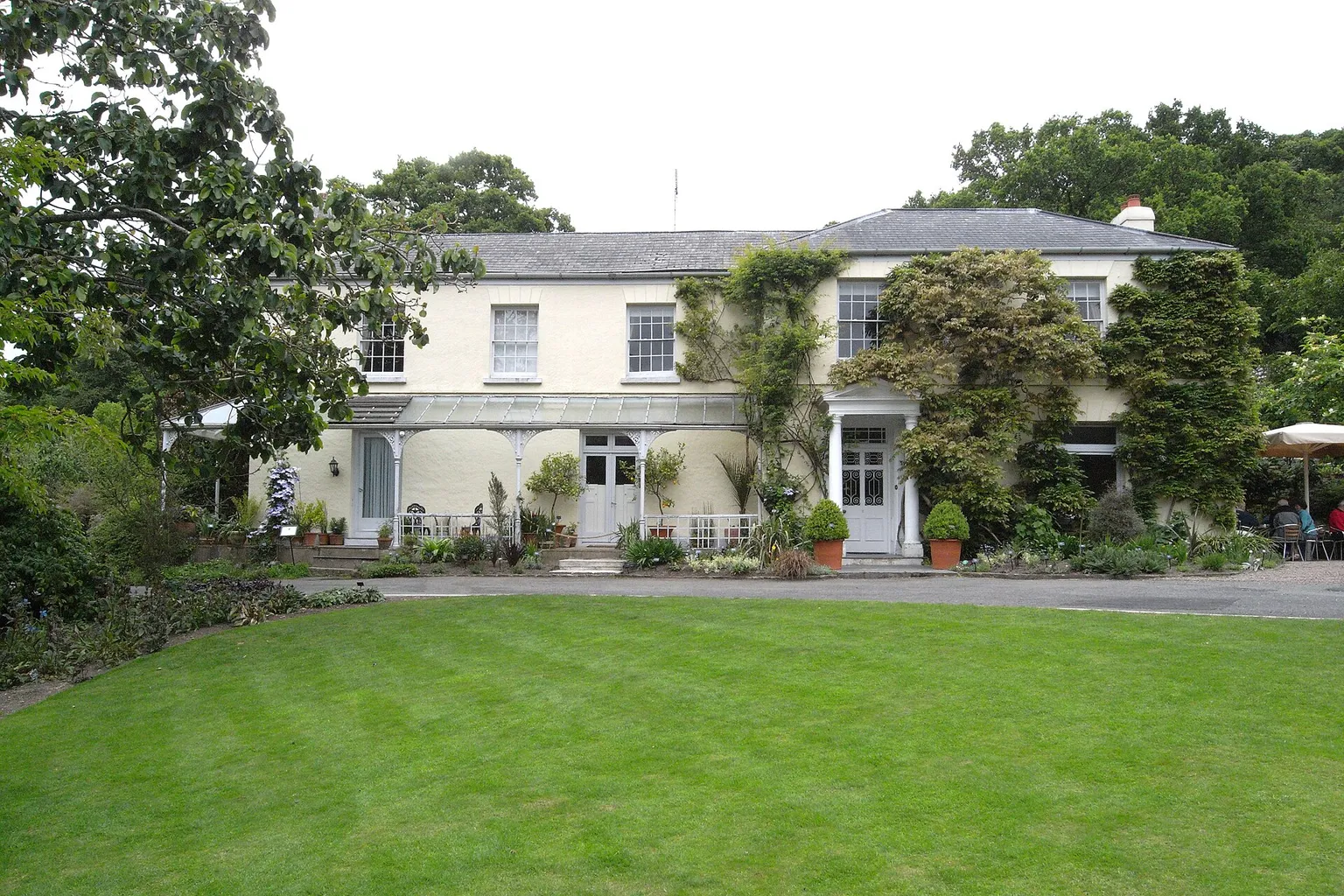
RHS Garden Rosemoor is not simply a garden with one entrance price. Access changes according to how you arrive, whether you belong to the Royal Horticultural Society, whether you book ahead, and whether you are visiting the garden itself or a separately ticketed seasonal event.
Tickets and prices
RHS Garden Rosemoor
I
Save
Box office and online booking
- Adult GBP12.20
- Child GBP6
- Reduced GBP1
GBP12.20
Official websiteII
entry ticket
Entry ticket — Access to 65 acres of gardens
This entry ticket allows you to explore 65 acres of flower and fruit gardens and seasonal displays set in a steep wooded valley.
GBP13.72
Check availabilityThat distinction matters at Rosemoor because the garden is more than a formal collection of borders. It occupies a complex Devon landscape of woodland, cultivated valleys, water, and exposed ground. A visit can begin with ticket selection but quickly becomes a question of time, transport, season, and what kind of access the ticket actually provides.
For most visitors, the central comparison is straightforward: RHS members receive free, unlimited admission to the garden, while non-members usually pay for entry. But the non-member system has several routes to a lower rate, including online booking, car-free arrival, and concessionary access. The best option depends less on a single headline price than on the circumstances of the visit.
Membership changes the economics of a Rosemoor visit
RHS membership is the clearest route to regular access. Members receive free, unlimited admission to RHS Garden Rosemoor, and general garden entry does not require mandatory advance booking for members.
That is a meaningful difference for a garden of Rosemoor’s scale. A single visit can be planned around seasonal change: early spring growth, the expansion of herbaceous borders, summer displays, autumn colour, or the quieter structure of the winter garden. Unlimited entry allows those visits to remain exploratory rather than compressed into one carefully scheduled day.
Membership also includes guest privileges, although the allowance depends on the type of membership. An Individual member can bring one adult family guest or up to two children without an additional garden admission charge. Joint membership extends the arrangement to two members, one adult guest, and up to four children.
The wording matters. These benefits concern general admission to the garden, not every activity held on the site. A special event may have its own ticketing system, entry window, and member rate. Visitors planning around an evening installation or another seasonal programme should treat event access separately from ordinary garden admission.
For a household that expects to return, membership can therefore function as an access pass rather than a one-off discount. It is particularly useful for visitors living within practical driving distance of North Devon, for people who already visit other RHS gardens, and for those who want to see Rosemoor under different weather and light rather than treating it as a single annual destination.
The useful distinction is not simply member versus non-member. It is one visit versus repeated access to a living landscape.
Non-member tickets: why booking ahead matters
Non-members need a ticket for general admission, but the amount paid depends on when and how the ticket is obtained. On-the-day admission at the gate is the least flexible route. Advance online booking generally offers a lower rate, with the saving varying by season and day of the week.
The practical lesson is uncomplicated: if the visit is already planned, booking online is usually the better starting point. The RHS Garden Rosemoor booking online system can offer a saving of up to roughly a quarter compared with the gate rate, but the precise amount is not fixed across every date. A Saturday in a busy period may not be treated in the same way as a quieter weekday outside peak season.
This dynamic structure is common at major gardens, but it has particular consequences at Rosemoor. Devon travel often involves longer journeys, and visitors may already have committed time, fuel, or accommodation before reaching the entrance. An online ticket can reduce the cost of admission, but it also turns the visit into a date-specific plan. Check the booking conditions before paying, especially if local weather, transport connections, or mobility needs make the day uncertain.
A booking should also be checked for what it includes. Ordinary garden admission is not automatically the same as entry to a ticketed event, guided experience, or evening programme. If the purpose of the trip is RHS Glow or another seasonal attraction, the relevant event ticket must be selected rather than assuming that a daytime garden ticket will carry through.
The main routes into Rosemoor
| Visitor situation | Most relevant access route | What to keep in mind |
|---|---|---|
| RHS member visiting the garden | Free general admission | Unlimited entry applies to the garden; guest allowances depend on membership type |
| Non-member with a fixed date | Advance online booking | Rates vary by season and weekday; online booking is generally cheaper than paying at the gate |
| Visitor arriving without a car | Car-free admission rate | Proof of arrival by public bus, bicycle, or on foot is required |
| Visitor receiving qualifying benefits | Concessionary admission | Proof is required on arrival; the concession can cover the eligible visitor and a limited number of companions |
| Disabled visitor accompanied by an essential personal assistant or carer | Free admission for the assistant or carer | The provision applies to essential support accompanying the disabled visitor |
| Visitor attending a special seasonal event | Event-specific ticket | Member and non-member rates may differ from ordinary garden admission |
The table is best read as a decision map, not as a promise that every ticket type can be combined. Discounts and concessions are tied to particular eligibility conditions, and some apply only at the entrance rather than through the online booking path.
Car-free travel is part of the admission system
Rosemoor’s ticket structure recognises something that is often left outside visitor pricing: how people reach the site. Visitors arriving by public service bus, bicycle, or on foot can receive a reduced adult garden admission rate. The reduction is substantial, but it is not applied automatically through an online checkout.
Car-free visitors need to present proof of their mode of travel on arrival. That requirement makes the scheme practical rather than symbolic. A visitor arriving by bus should keep the relevant ticket or other evidence available; cyclists and walkers should be prepared to demonstrate that the journey was made without a private car.
The policy links the garden to the wider geography of North Devon. Rosemoor is embedded in a rural transport landscape where the final connection can be more difficult than the main journey. Public transport frequency, walking distances, weather, and the presence of children or mobility equipment all shape whether a car-free visit is realistic. The discount helps, but it does not remove those logistical constraints.
That is why sustainable travel should be planned before the day of entry. The admission saving is only one part of the calculation. A bus timetable that leaves a long gap before the return journey may turn a short garden visit into an extended day. A cycle route that looks manageable on a map may feel very different after rain, with wet clothing and a child in tow. The ecological benefit of leaving the car behind is real, but access planning needs to be equally concrete.
Rosemoor itself is a useful place to observe this relationship between cultivated land and transport infrastructure. The garden’s planted areas are carefully managed, while the wider journey passes through hedgerows, pasture, wooded slopes, and settlements shaped by decades of land use. The visitor is never travelling through an abstract “green” setting. They are moving through a working landscape with drainage, roads, farms, habitats, and infrastructure pressing against one another.
Concessionary access is designed around the whole party
Visitors receiving Universal Credit, Pension Credit, or Employment and Support Allowance can access a very low-cost concessionary ticket on arrival. The provision also extends to up to five people in the visitor’s party when the eligible claimant presents proof.
This is one of the more significant features of the Rosemoor admission system because it recognises that the cost of a day out is rarely limited to one individual. Transport, food, and accompanying family members can quickly become the larger expense. A concession that includes companions makes the garden more accessible to households that might otherwise treat a horticultural visit as discretionary and unaffordable.
The process is evidence-based. Eligible visitors need to bring proof of the relevant benefit and present it at the entrance. This is not the same as selecting a general discount online, and visitors should not assume that a standard pre-booked ticket will be converted automatically when they arrive.
There is a quiet but important difference between a promotional price and a concessionary policy. Promotional offers change with the calendar. A concession is tied to a visitor’s circumstances and is intended to make admission possible regardless of whether the day happens to fall within a summer campaign.
For disabled visitors, essential personal assistants or carers accompanying the visitor are admitted free of charge. The provision is intended for essential support, including assistance for wheelchair users and visually impaired visitors. It should be understood as an access measure, not a general companion discount.
The physical layout of a large garden makes this distinction consequential. Rosemoor includes changing terrain, long paths, woodland sections, water features, and planted areas that can be experienced differently depending on stamina, balance, vision, or the need for mobility equipment. A free essential carer or personal assistant is not an indulgence attached to the ticket; it is part of making the visit possible.
Visitors with specific access requirements should still check current arrangements before travelling. Ticket eligibility and practical accessibility are related but not identical. A free accompanying carer does not, by itself, answer questions about path surfaces, rest points, toilets, parking, route length, or the conditions of particular garden areas.
Opening hours change with the season
RHS Garden Rosemoor operates on a seasonal schedule.
From 1 April to 30 September, the garden is open from 10am to 6pm, with last entry at 5pm. From 1 October to 31 March, opening hours run from 10am to 5pm, with last entry at 4pm.
The earlier winter closing time is more than an administrative detail. In late autumn and winter, daylight falls quickly across Devon, and woodland paths can become darker and wetter well before the official closing time. Visitors who want to move beyond the most immediate displays should arrive with enough daylight for the landscape they intend to cover.
A summer opening until early evening provides more flexibility, but it does not mean every area should be approached as if the garden were an urban park with uniform lighting and hard surfaces. Rosemoor’s experience is spatial. The character of a planted valley differs from that of a wooded path, and both differ again from open areas exposed to wind and rain. Time spent at the entrance is time removed from the garden itself.
The final entry time is especially important for travellers arriving late. A ticket may be valid for a particular date, but arriving close to last entry leaves little margin for delayed buses, parking queues, or a slow route from the car park. The garden cannot be experienced well when the schedule has been reduced to a race against closing.
Planning around the season
- Spring visits reward attention to emergence: new foliage, early flowering, wet soils, and the first strong changes in woodland structure. Cooler weather can make paths muddy, so footwear matters more than a polished itinerary.
- Summer visits offer the longest opening window and often the fullest display, but they can also bring busier paths and greater pressure on water resources in cultivated areas.
- Autumn visits shift the emphasis toward foliage, seedheads, bark, and the decomposition processes that return organic matter to the soil. The garden’s visual abundance becomes more structural.
- Winter visits expose the bones of the landscape: branching patterns, stems, drainage, evergreens, and the architecture of paths and water. Shorter opening hours make an early arrival worthwhile.
This seasonal variation is part of the point of Rosemoor. It is not a static exhibition where the same visual composition is repeated every month. Horticultural management creates order, but biological processes continue beneath it: mycelial networks break down fallen material, roots respond to soil moisture, and plants move through dormancy, growth, flowering, and senescence.
Special events need a separate ticket decision
RHS Garden Rosemoor hosts special ticketed events, including RHS Glow. These events do not follow the same admission logic as a normal daytime garden visit.
RHS members may receive discounted event tickets, with off-peak tiers available for some programmes. Non-members can also attend, but the event ticket is purchased under its own pricing structure. A member’s free general admission should not be treated as a universal pass to every evening installation or seasonal programme.
RHS Glow illustrates why the distinction matters. An illuminated evening event changes the way the garden is used. Paths, planting, and water become part of a designed night-time route, while entry times may be allocated in tiers. The experience is not merely a late opening of the ordinary garden; it is a separate event with its own operational demands.
Visitors comparing options should ask three questions before booking:
1. Is the ticket for daytime garden admission or a special event? The names may appear together in a booking system, but they grant different kinds of access.
2. Does the membership benefit apply to this event? Members commonly receive preferential rates, but not necessarily free event entry.
3. Is the selected time off-peak or timed? Event tickets can be structured around arrival windows, and a cheaper tier may come with a less flexible time slot.
The same principle applies to guided activities, seasonal installations, and other programmes that may be advertised alongside the garden. The physical site is shared, but the admission rules are not automatically interchangeable.
Which option makes sense for your visit?
For a one-off visit by a non-member, advance online booking is usually the most economical route, provided the date is firm. It offers a lower rate than paying at the gate and allows the visitor to plan around the garden’s seasonal hours.
For a spontaneous visit, gate admission provides flexibility, but that flexibility may come at a higher cost. It is the sensible choice when weather, transport, or other commitments make advance booking unreliable.
For a visitor who can arrive by public bus, bicycle, or on foot, the car-free discount may be more valuable than a standard online saving. The essential condition is evidence of the journey. Without it, the reduced admission rate may not be available.
For a household receiving qualifying benefits, the concessionary route should be considered before purchasing ordinary tickets. The eligible visitor needs proof, but the provision can extend to several companions, making the difference between a private visit and a family day out.
For regular visitors, RHS membership changes the calculation entirely. Free unlimited entry and guest privileges make it less necessary to treat each visit as a separate financial decision. Membership also allows a more ecologically attentive kind of visiting: returning when the estuary-like wet margins are saturated after rain, when woodland light changes, or when a familiar border has moved from flowering into seed.
That repeated access has value beyond convenience. Gardens such as Rosemoor are managed landscapes, but they still operate through ecological time. A single visit can show a display; repeated visits reveal succession, stress, recovery, and the consequences of weather. The difference is between seeing a planted landscape and beginning to understand its rhythms.
A practical way to prepare
Before travelling, match the ticket to the actual purpose of the day rather than choosing the first available option.
- Check whether you qualify for RHS membership benefits, a concessionary ticket, or free admission for an essential carer.
- If you are a non-member, compare advance online booking with gate admission for the specific date, remembering that online rates vary.
- If you are travelling without a car, plan how you will show proof of arrival by bus, bicycle, or on foot.
- Confirm the opening season and last entry time, particularly during the winter schedule.
- Separate ordinary garden admission from tickets for RHS Glow or another special event.
- Consider the people in your party, including children, companions, and anyone who needs mobility or visual support.
- Allow time for the garden’s geography. Rosemoor is not best understood as a single compact viewing platform; routes, gradients, woodland, water, and planted spaces take time to move through.
Children under five enter free, while children aged five to sixteen require a child ticket. That distinction should be included when calculating the party’s admission, particularly for families booking online.
The most common mistake is to reduce Rosemoor tickets to the adult headline rate. The more useful comparison includes membership, guest allowances, children’s admission, concessionary access, car-free travel, season, booking method, and event status. Each changes the final decision.
At Rosemoor, the ticket is also a record of how access is organised: through membership, advance planning, public transport, concession, or essential support.
The wider climate question behind the ticket page
Admission policy may seem distant from climate science, but it shapes who can enter managed landscapes and how they travel to them. A car-free discount acknowledges that transport emissions begin before the garden visit. Concessionary access recognises that environmental and cultural spaces are not meaningfully public if cost excludes large parts of the local population. Membership encourages return visits, which can deepen attention to ecological change rather than packaging nature as a single consumable experience.
Rosemoor cannot stand outside the pressures affecting Devon. Rainfall patterns, summer desiccation, storm exposure, pests, disease, and shifting growing conditions all influence what a garden can sustain. Horticultural decisions are increasingly made inside a climate that no longer behaves like the historical baseline used to select many plants and planting regimes.
The garden’s value lies partly in making those changes legible. A border is designed, but it is not inert. Soil structure, fungal activity, water availability, temperature, and plant competition continue underneath the visible composition. Beyond the cultivated areas, the same forces shape woodland edges, streams, hedgerows, and the wider catchment.
Choosing the right RHS Garden Rosemoor tickets is therefore a practical matter, not a trivial one. Members gain repeated access; non-members can reduce the cost by booking ahead; car-free visitors can receive a substantial saving; qualifying households can use concessionary admission; and disabled visitors may bring essential support without an additional charge. Seasonal hours and event-specific tickets complete the picture.
The broader implication is quieter but more durable. Access determines who gets to observe a changing ecosystem, how often they can return, and whether a garden becomes a backdrop for a day or a place where environmental change can be followed over time. At Rosemoor, the most valuable visit may not be the most expensive or the most comprehensive. It is the one planned with enough precision to leave room for the landscape itself.
Practical info
Currency: GBP
Driving: on the left
Emergency number: 112
FAQ
Do RHS members need to book tickets in advance for Rosemoor?
How can I get a cheaper ticket as a non-member?
What proof do I need for the car-free discount?
Are children allowed into RHS Garden Rosemoor for free?
Does my garden ticket cover special events like RHS Glow?
What are the opening hours for RHS Garden Rosemoor?
Photo: Patche99z / CC BY-SA 3.0 — Wikimedia Commons