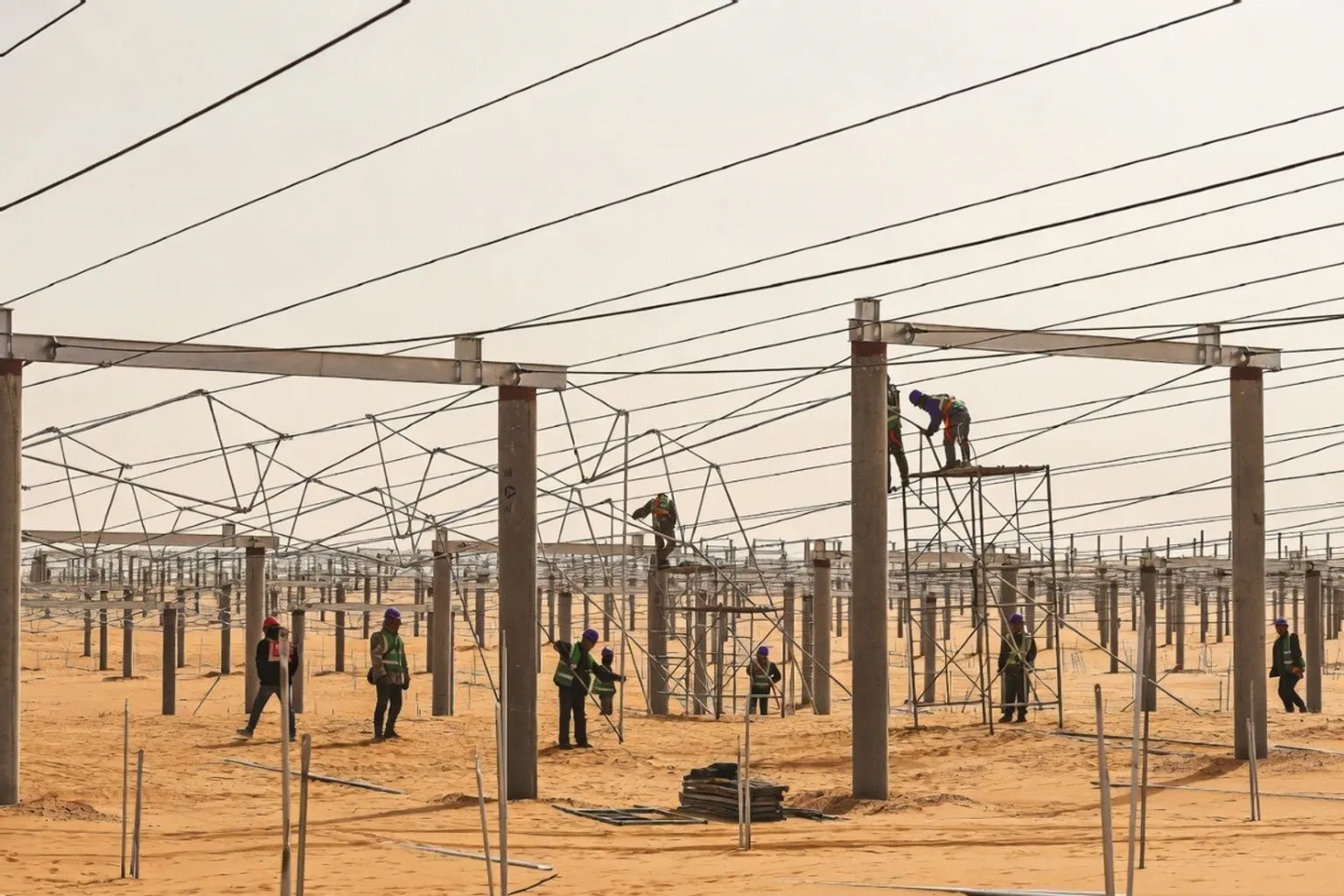
Once coal powered 80% of Inner Mongolia’s economy. Now, wind turbines and photovoltaic arrays are the dominant features reshaping its grid and GDP, a shift reported by China Daily as part of the nation’s carbon-neutrality mandate. This isn’t a gentle transition—it’s a systemic rewrite of a region’s industrial core, moving from resource extraction to managing intermittency at terawatt scale.
The Infrastructure Overhaul
The operational pivot involves more than swapping fuel sources. The report details the construction of vast wind and solar bases in arid, non-arable regions—the Kubuqi and Tengger Deserts are now energy provinces. Key projects like the Ulaanqab wind power base represent a new capex model: generation assets built ahead of retirements, a “build new before phasing out the old” approach designed to maintain grid baseload. The engineering challenge is clear: integrating diffuse, weather-dependent generation into a legacy system designed for centralized coal.
Beyond Megawatts: Integrated Land Use
The scale introduces a secondary grid and land-use equation. Projects are combining photovoltaics with desert control and wind farms with sand stabilization. In some installations, solar panels generate electricity above ground while livestock graze beneath them. This attempts to address two baseload concerns simultaneously: energy output and ecological preservation, turning passive land into a multi-output asset. It’s a pragmatic fusion of generation and remediation, though the agrivoltaic yield metrics remain unverified in the available data.
What’s Next: Scalability and Grid Realities
The core question for systems analysts is scalability. Inner Mongolia’s output is now transmitted cross-country, making it a critical node in national energy security. But large-scale renewable integration always runs into grid stability limits—voltage regulation, storage costs, and transmission line losses are the math behind the headlines. The reported development of an ecosystem around “hydrogen and storage” suggests the next phase of capex is already in the pipeline, aiming to solve the intermittency problem the region’s own wind and solar now create. The transition is active; its commercial and technical viabilities are still being computed.