Eritrea's Ministry of Energy and Mines has begun outlining a national push to expand renewable supply, and the raw math so far is modest: roughly 38 megawatts of installed solar capacity across three discrete sites — 34 MW in Dekemhare, 2 MW around Asmara, and 2.25 MW split between Areza and Mai-Dima. That is the entire documented grid-scale solar footprint the Ministry has cited. For context, a single utility-scale project in sun-belt markets routinely clears 100 MW; Eritrea's combined solar build-out is a rounding error on regional capacity registers.
What's actually being scaled
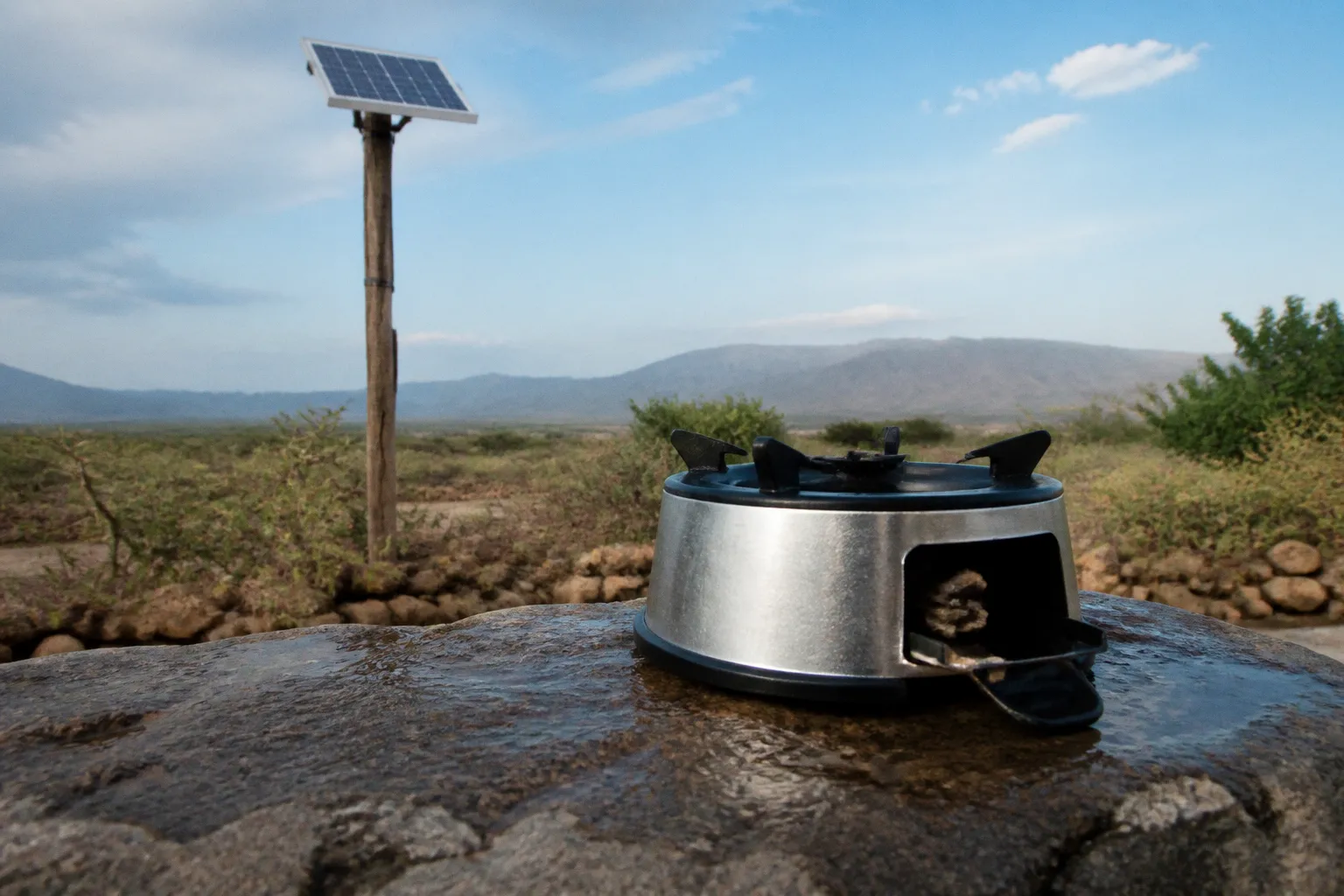
The Ministry's framing leans heavily on household and agricultural deployment rather than baseload grid expansion. According to remarks from Mr. Tesfay Gebrehiwet, the Ministry's Director of Renewable Energy, roughly 200,000 households now use smokeless ovens — a clean-cook initiative introduced by the Ministry of Agriculture in 2000 and now folded into the energy portfolio. That figure is meaningful: it represents a documented end-user base for a renewable thermal substitute, which is where Eritrea's program currently delivers the most measurable displacement of biomass and imported fuels.
The Ministry is also targeting a broader renewable mix — solar, wind, geothermal, green hydrogen, and bioenergy — with capacity-building training delivered by foreign and national experts. Smokeless-stove producers are receiving dedicated instruction. The intent is clear: distributed energy access first, utility-scale generation second.
The engineering bottleneck
Here is where the calculus gets unforgiving. Dekemhare's 34 MW solar site accounts for nearly 89% of cited solar capacity — a single-asset concentration that exposes the grid to classic intermittency risk without announced storage or balancing infrastructure. Solar capacity factor in the Horn of Africa typically runs 20–25%, meaning the Dekemhare plant delivers, on average, the equivalent of a roughly 7–8 MW baseload unit. That is not nothing, but it does not shift a national generation mix on its own.
Green hydrogen and geothermal are mentioned as part of the portfolio but carry capex profiles entirely detached from the current installation figures. Geothermal in particular requires confirmed reservoir data and deep drilling — neither of which appears in the Ministry's published numbers. Until those resources move from mention to megawatt, the practical ceiling on Eritrea's renewable expansion remains the household-segment displacement story already underway.
What to watch
Three indicators will determine whether this is a real scaling event or a portfolio statement: (1) any announced storage or firming infrastructure paired with the Dekemhare array, (2) the next round of MW figures beyond the existing 38.25 MW of solar, and (3) whether green hydrogen or geothermal projects advance from training-stage rhetoric to funded projects with commissioning dates.