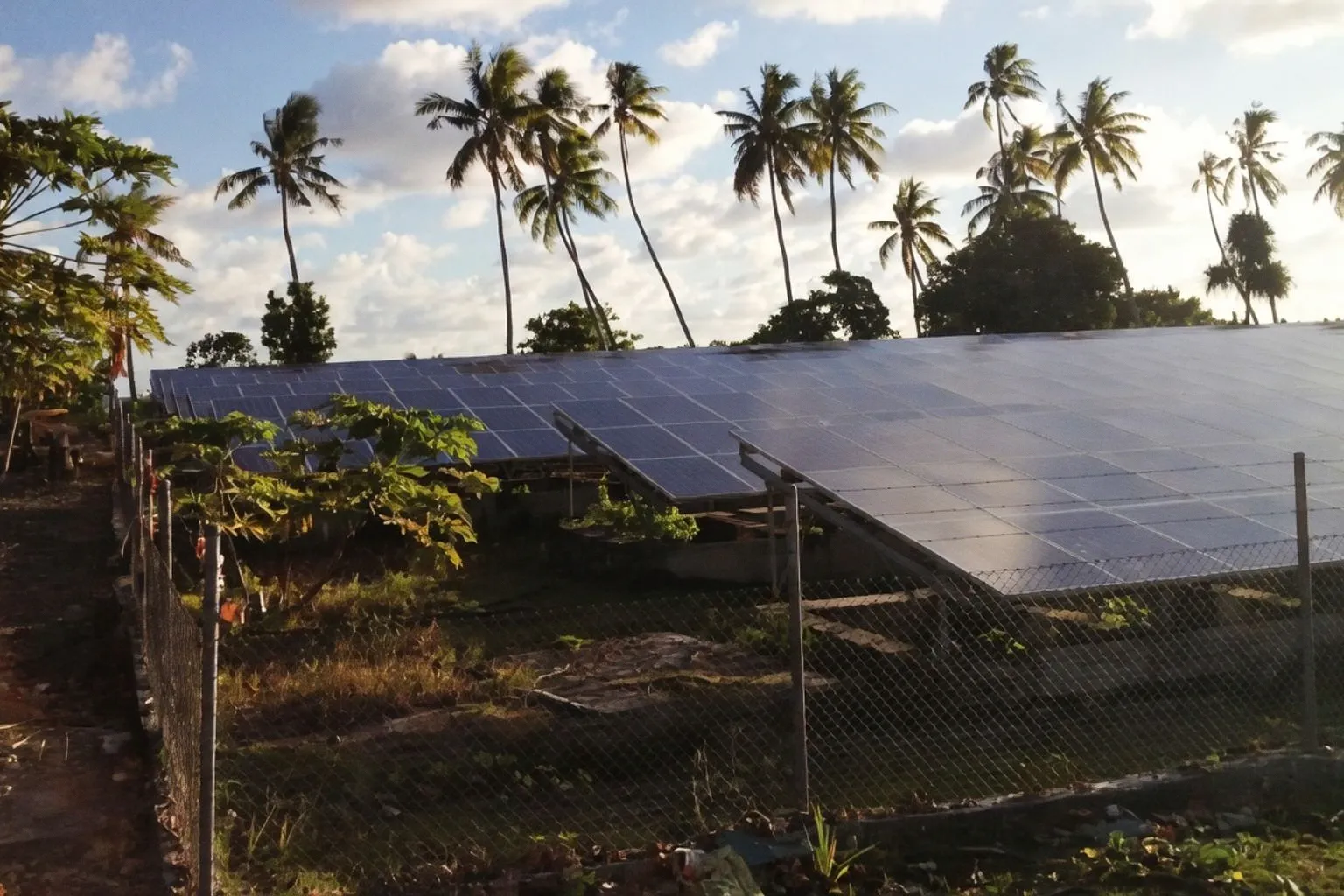
The clean energy transition needs land. Can it help restore it too?
UN News has surfaced a question grid and infrastructure planners can no longer defer: the energy transition's land footprint is non-trivial, and the next decade of utility-scale build-out will decide whether that footprint compounds as degradation or converts into restoration. The same news cycle — running through Clean Energy Wire's Italy guide, BigMint's industrial decarbonization note from India's MNRE, and the Arab Reform Initiative's analysis on sustainable energy and social protection — converges on a single engineering constraint: scalable clean capacity is, first and foremost, a land-use problem.
The land-intensity math
Utility-scale solar and onshore wind occupy orders of magnitude more surface area per unit of delivered energy than the thermal plants they replace. That is the trade-off most cost models still underweight. Land cost does not appear in standard LCOE calculations the way capex, fuel, and intermittency penalties do — yet it sits inside permitting timelines, grid-connection queues, and community-consent frameworks, all of which feed back into project IRR. UN News is flagging that the build-out's headline capex line is being shadowed by a land-use line that is starting to compound.
The regional read-outs make this concrete. Clean Energy Wire documents Italy advancing on its green transition while fossil ties remain tight — a reminder that policy intent and dispatch-stack reality still diverge. BigMint, citing India's Ministry of New and Renewable Energy, reports what it describes as phenomenal clean energy growth supporting industrial decarbonization. India's pace shifts the global marginal cost curve for solar manufacturing, which feeds directly into land-side economics wherever utility-scale projects bid for sites.
The social overlay
The Arab Reform Initiative's working paper on sustainable energy transitions and social protection in the Arab region introduces the framing of "green social protection" — linking access to affordable, reliable energy with broader social policy. The analysis connects energy poverty, indoor air pollution from traditional fuels, and the unequal distribution of transition benefits to a rights-based approach that treats energy access as social infrastructure. For analysts, the operational implication is straightforward: projects that ignore land-use equity and social licence are paying a hidden capex premium in delay, litigation, and rework.
What to check next
Three variables will determine whether the land question resolves as a restoration dividend or a degraded-permitting quagmire:
- Site-level land-use disclosure. Whether new utility-scale tenders publish hectare-per-MW ratios and overlap maps with agricultural, forested, and ecologically sensitive zones.
- Restoration accounting. Whether project finance stacks recognize co-located land restoration as an asset that lowers risk-weighted cost of capital, rather than treating it as a CSR line item.
- Social-protection linkage. Whether energy access programmes in low-income markets are designed as grid-extension build-out or as distributed capacity that reduces transmission land take.
The engineering reality is unchanged: clean electrons still need real estate. The question UN News has put on the table is whether that real estate becomes an externality — or an asset class in its own right.