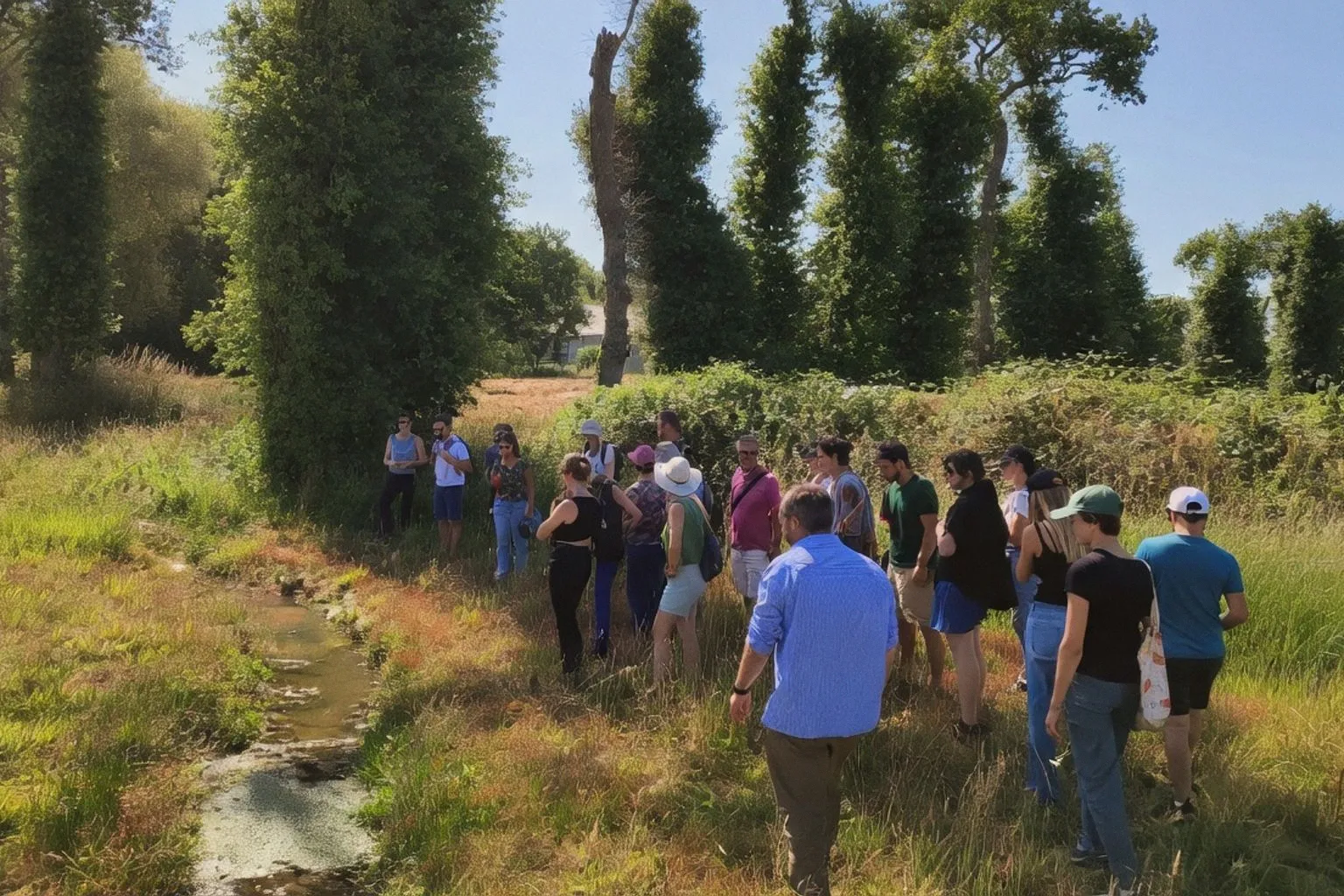
On the rewetted reaches of the Néal River in Brittany, a LIFE ARTISAN demonstration site is restoring aquatic and wetland corridors — and, according to a recent report from the European Climate, Infrastructure and Environment Executive Agency (CINEA), it has become a working argument against treating nature-based solutions as permanent pilots. The Adaptation & Nature Forum in Rennes on 7–8 July, organised by the French Biodiversity Agency (OFB), drew more than 450 policymakers, researchers, local authorities and practitioners to push that argument into policy, with this summer's heatwaves across Europe repeatedly cited as proof that the window for incremental work is closing.
What the projects are doing on the ground
Eva Radek, speaking for the LIFE ARTISAN organising team, told the forum that Europe must accelerate deployment of NbS "in cities, rural areas, corporate sites, and beyond," and that any further delay carries costs communities are already absorbing. The exhibition floor doubled as a map of where European ecosystems are being actively re-engineered for resilience. LIFE BiospherAdapt showcased ecosystem-based adaptation strategies developed alongside UNESCO Biosphere Reserves, designed to help entire territories — not single sites — prepare for shifting climate baselines. NL-NASCCELERATE presented integrated projects pushing climate adaptation policy forward at national and regional levels, aiming to bridge the gap between Brussels strategy documents and provincial planning offices. LIFE4ZOO demonstrated how constructed wetlands can close loops in water management, cutting draw on freshwater reserves and giving parched landscapes a buffer against drought.
Delegates also visited the Néal River site itself. Its value, organisers stressed, lies less in any single technique than in what it teaches about working with landowners, farmers, and municipal authorities who actually decide how land is managed. That social scaffolding — not the plantings themselves — is what determines whether restoration sticks.
Parallel tracks in the Balkans
Outside the EU framework, a parallel push is taking shape. As reported by UNDP Serbia, the agency has joined Serbia's Ministry of Environmental Protection to launch a call for innovative solutions aimed at restoring and connecting natural habitats, backed by the Kunming Biodiversity Fund. The framing — strengthening ecological resilience through connected habitat networks — echoes the EU's shift toward landscape-scale thinking, though the projects are still to be selected and few details have entered public reporting.
Taken together, the two tracks point in the same direction: away from isolated restorations and toward networks of functioning ecosystems that can absorb the shocks a warming climate is already delivering. The question hanging over both is whether funding cycles, ministerial turnover and land-tenure friction can keep up with the pace of the weather.