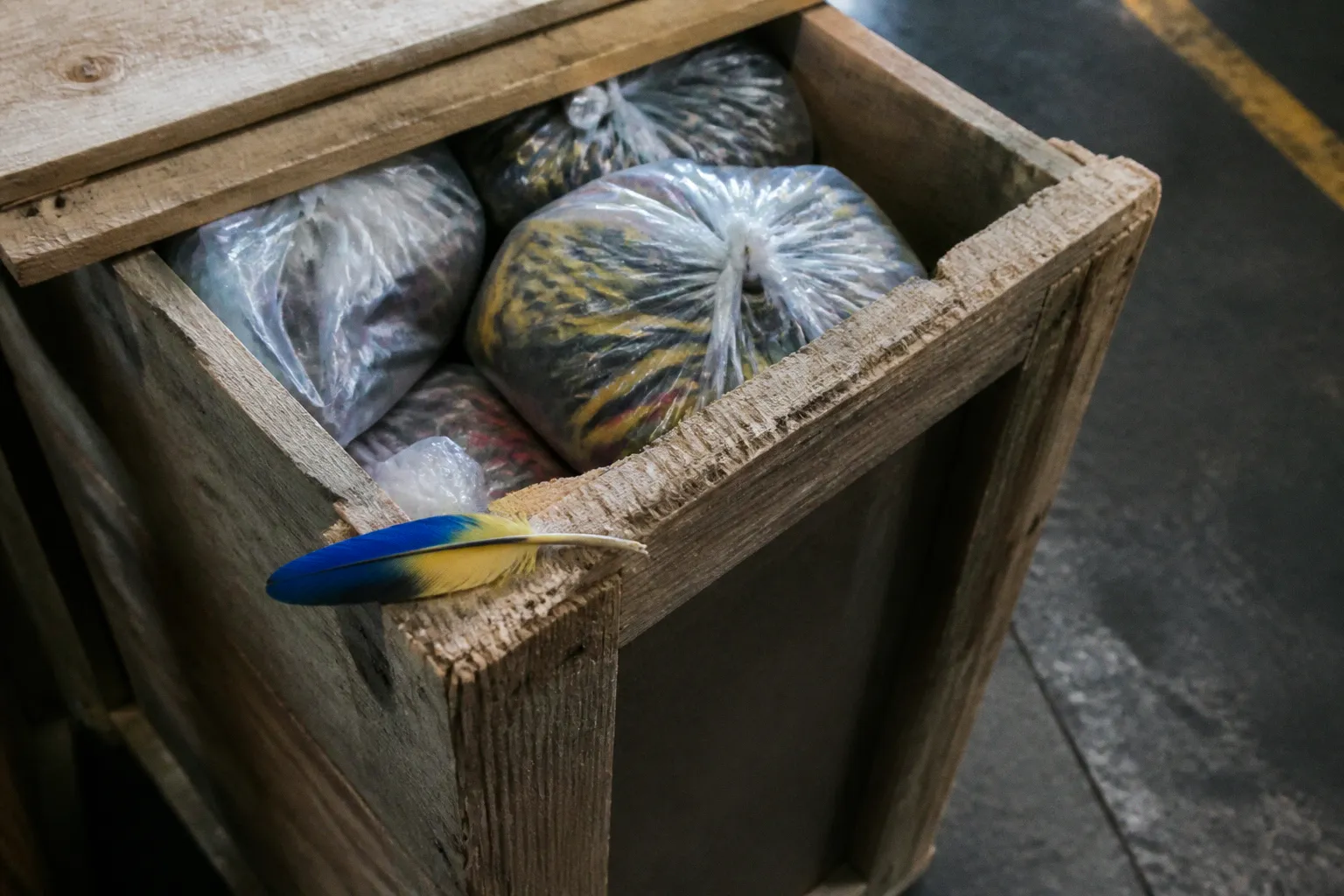
The operational problem is not simply that these listings exist. It is that investigators need usable intelligence: a complete URL, a screen capture, a location, a timestamp, and enough context to separate a credible lead from noise.
That is where wildlife trafficking online reporting tools matter. The strongest platforms convert a public observation into structured data that law enforcement agencies and conservation organizations can evaluate. They do not guarantee an arrest. They do not replace an investigation. They reduce the friction between detection and triage.
The distinction is important. A vague report about a suspicious seller is weak evidence. A preserved listing, exact web address, seller information, product description, photographs, and location data create an actionable package.
The bottleneck is intelligence quality, not public awareness
The illegal wildlife trade is often described through its estimated financial scale, commonly cited by conservation organizations at approximately $17 billion to $19 billion annually. That figure explains the commercial incentive. It does not explain why individual cases are difficult to prosecute.
Wildlife crime is distributed across several systems at once:
- online marketplaces and social networks;
- courier and freight channels;
- airports and transit hubs;
- ports, warehouses, and customs facilities;
- local intermediaries who source animals or products;
- payment and communication systems.
Each system produces fragments of evidence. A social media post may show the product but not the seller’s identity. A traveler may observe an animal being moved through an airport but lack a reliable species identification. A transport worker may have access to operational details but face retaliation if the report is not anonymous.
A reporting platform is useful when it preserves these fragments without forcing the public to conduct an amateur investigation. The reporter’s task is observation and documentation. The platform’s task is intake, security, categorization, and onward analysis.
This is a data pipeline. Its performance depends on input quality.
The useful report is not the most dramatic one. It is the one an investigator can verify, locate, and connect to other evidence.
For online wildlife trafficking, the minimum viable evidence is usually straightforward:
1. The full listing URL. A shortened link, account name, or screenshot without the address may be insufficient.
2. Screen captures. Preserve the product description, seller profile, price, images, and visible contact details.
3. The date and time of observation. Online listings can disappear quickly.
4. A neutral description. Record what is shown or offered. Do not present species identification as certain unless it is clear.
5. Relevant location data. This may refer to the seller’s stated location, delivery origin, pickup point, or the physical location where the observation occurred.
6. Any repeated pattern. Multiple listings, recurring account names, identical photographs, or the same phone number can be more valuable than a single isolated post.
The objective is not to confront the seller or test the transaction. That creates operational and personal risk while potentially contaminating evidence.
Platforms for reporting wildlife and forest crimes
Different platforms are designed for different threat environments. Treating them as interchangeable is a mistake. A public-facing form for online sales is not the same instrument as a secure whistleblower channel for corruption or organized wildlife crime.
Wildleaks: secure reporting for serious information
Wildleaks operates as a secure online platform for anonymous information and whistleblower tips concerning wildlife, marine, and forest crimes. Its function is closer to a protected intelligence channel than a standard public complaint form.
That distinction matters for people who possess information from inside a supply chain. A worker may know that protected timber is being moved through a particular route. A contractor may have documentation suggesting corruption. A person involved in a transport or trading operation may have evidence that cannot safely be submitted through an ordinary identity-linked channel.
The platform was launched in 2014 as a secure whistleblowing initiative. Its value is not measured by the number of submissions displayed publicly. The relevant question is whether the information can be assessed, corroborated, and routed without exposing the source unnecessarily.
A report to a secure platform should be factual and specific:
- identify the species, product, route, company, account, or facility if known;
- describe how the information was obtained;
- separate direct observation from assumption;
- attach relevant documents or images where safe to do so;
- explain whether the activity is ongoing;
- identify any immediate risk to people, animals, or evidence.
Do not exaggerate. A report that combines confirmed facts with speculation makes triage slower and may undermine the credibility of the entire submission.
Wildlife Witness: field observations with location data
Wildlife Witness is a mobile application developed by Taronga Conservation Society Australia in partnership with TRAFFIC. It allows users to photograph a suspected incident, pin the exact location, and submit the report for analysis by data specialists.
The app was launched in 2014. Its design addresses a basic field problem: the report is often generated by someone who sees a suspected wildlife crime while traveling, working, or moving through a public place. The observer may not know the relevant agency, jurisdiction, or species name. A mobile workflow can capture the incident before details are lost.
Location is the critical data point. A photograph without a reliable location may be difficult to operationalize. The exact position can help analysts identify recurring markets, transport corridors, roadside trade, or locations where animals are displayed or sold.
The strongest field report includes:
- the original photograph rather than an edited copy;
- the precise incident location;
- the date and time;
- a description of what was observed;
- the number of animals or products, if visible;
- the direction of movement or transport, if relevant;
- names, signage, vehicle details, or business information that were openly visible.
The reporter should avoid taking unnecessary risks to obtain a better image. Do not enter restricted areas, handle animals, provoke a vendor, or follow a suspected trafficker. The marginal value of a closer photograph is rarely worth the additional exposure.
Reporting from airports, airlines, and transport hubs
Transport infrastructure is a high-value observation point because trafficking requires movement. Animals and wildlife products must pass through airports, cargo terminals, baggage systems, courier networks, or other logistics nodes. Personnel working in these environments may see patterns that are invisible to the general public.
Wildlife Sentinel is an anonymous mobile application aimed at airport, airline, and aviation industry personnel. It is intended for reporting suspected wildlife trafficking and corruption in transport hubs.
This is a different reporting environment from a public listing. The observer may have access to baggage information, cargo procedures, internal terminology, or repeated operational patterns. The risk profile is also different. A report can implicate colleagues, contractors, passengers, or managers. Anonymity and controlled handling therefore become central design requirements.
A useful transport-sector report should focus on observable operational facts:
- flight or route details, where known;
- cargo, baggage, or shipment identifiers;
- dates and recurring time patterns;
- unusual declarations or packaging;
- repeated involvement of a company, route, or contractor;
- names and roles of personnel only when relevant and accurately recorded;
- indications of bribery, concealment, or procedural bypassing.
The report should not read like an accusation built from inference. If a shipment appears suspicious because of its packaging, state what was observed. If the concern is a repeated route pattern, document the pattern. Let investigators establish the legal characterization.
Why transport reports need precision
Air transport is a tightly scheduled system. A useful lead can decay quickly because cargo moves, staff rotate, and surveillance footage may be retained for a limited period according to local policy. That does not mean a reporter should assume an immediate response. Civilian reporting tools do not guarantee physical intervention or an arrest after submission.
It means that temporal detail has analytical value. A report filed with a route, date, shipment reference, and specific observation is more scalable for investigators than a general warning about trafficking at an airport.
The same principle applies to maritime and land transport. The more a report can be linked to a route, node, or transaction, the easier it becomes to compare with other incidents.
How to report illegal wildlife trade on websites and social media
Online sales create a persistent but unstable evidence problem. Listings can be edited, deleted, reposted under a new account, or moved between platforms. A screenshot captures appearance. The full URL captures location within the platform. Both are needed.
The Coalition to End Wildlife Trafficking Online provides a dedicated online form for reporting suspected illegal wildlife products or live endangered species offered for sale through e-commerce and social media platforms.
When reporting online animal sales, preserve the listing before interacting with it. Do not send messages designed to elicit additional evidence. Do not negotiate a purchase. Do not announce that the seller has been reported. These actions can remove the listing, change the account behavior, or create personal safety issues.
What to preserve from an online listing
A practical evidence package should contain the following elements:
- Full website address: Copy the complete URL from the browser or application where possible.
- Screen captures: Include the listing, seller profile, product images, description, price, and any visible date or location.
- Account details: Record the username, profile name, account URL, and platform.
- Transaction language: Note claims about delivery, origin, captive breeding, permits, or species rarity.
- Images: Preserve photographs that may identify the same animal, product, background, or seller across different listings.
- Contact information: Include telephone numbers, email addresses, payment handles, or other openly displayed identifiers.
- Timing: Record when the listing was observed and whether it remained active later.
- Pattern information: Link related listings only when the connection is visible and explain the basis for that connection.
Avoid downloading files from suspicious accounts or opening unfamiliar attachments. Online wildlife trade investigations can overlap with fraud, malware distribution, and identity harvesting. Evidence collection should not become a cybersecurity incident.
The species-identification problem
Online sellers often use misleading names. A listing may call a wild-caught animal captive-bred, use a trade name instead of a scientific name, or deliberately mislabel a product. A reporter does not need to resolve every taxonomic question before submitting a tip.
Describe the visible features and the seller’s wording. If the species is uncertain, say so. If an image appears to show a protected animal but the identification is not conclusive, report the suspected violation rather than claiming certainty.
False precision is a liability. A wrong species name can send analysts toward the wrong regulatory framework or jurisdiction. A careful description gives specialists room to assess the evidence.
A comparison of the main reporting channels
The appropriate platform depends on where the observation originates and what level of confidentiality is required.
| Reporting channel | Best suited to | Evidence it can capture | Main operational limitation |
|---|---|---|---|
| Coalition to End Wildlife Trafficking Online | Suspected illegal wildlife products or live endangered species listed online | URLs, screenshots, seller details, listing content | Listings may disappear or move before they can be reviewed |
| Wildlife Witness | Field observations by travelers and members of the public | Photographs, exact location, incident description | A photograph may not establish species or legal status by itself |
| Wildleaks | Anonymous information and whistleblower tips | Documents, operational details, identities, routes, forest or marine crime information | Reports require careful separation of verified facts from assumptions |
| Wildlife Sentinel | Suspected trafficking and corruption in aviation environments | Route, shipment, personnel, and operational observations | Internal information can create personal and employment risks |
| U.S. Fish and Wildlife Service digital reporting channels | Suspected violations within the relevant U.S. jurisdiction | Full URLs, screen captures, incident details | Jurisdiction and agency remit determine how the report is handled |
| TRAFFIC Wildlife Trade Portal | Research and analytical review of existing incidents | Open-source seizure and incident data | It is primarily an intelligence and coordination resource, not a universal emergency hotline |
For reports to the U.S. Fish and Wildlife Service concerning online wildlife sales, users are advised to provide full website URLs and screen captures of the illegal listings. The agency also publishes the reporting hotline 1-844-FWS-TIPS, or 1-844-397-8477.
That channel should not be confused with a guarantee of a reward. Financial incentives depend on the relevant agency policy and the outcome of an investigation. A report should be submitted because it may support enforcement, not because payment is assured.
Documentation is the capex of enforcement. Without the initial investment in usable evidence, the investigative system has nothing to scale.
From individual reports to detection networks
A single report rarely explains an entire trafficking operation. Its value increases when it can be compared with other records.
TRAFFIC maintains the Wildlife Trade Portal, an interactive resource containing open-source wildlife seizure and incident data. The portal supports law enforcement operations and inter-agency coordination by making patterns easier to examine across jurisdictions.
The portal also incorporates data from other initiatives. C4ADS open-source wildlife seizure data covering 2009–2021 has been integrated into the Wildlife Trade Portal. In 2021, ROUTES Dashboard data was transferred into the portal. These integrations matter because trafficking networks do not respect the boundaries between a marketplace listing, a cargo seizure, and a transport route.
Open-source data has limitations. Seizure records are not a complete census of trafficking. They reflect enforcement activity, reporting capacity, inspection priorities, and data availability. A region with more recorded incidents may have more trafficking, stronger enforcement, better reporting, or all three. A region with few records is not automatically low-risk.
The analytical value lies in correlation:
- Does an online seller’s location overlap with known seizure routes?
- Do several listings use the same photographs?
- Does a transport hub recur in unrelated incidents?
- Are the same species, products, or packaging methods appearing across jurisdictions?
- Does a company or intermediary surface repeatedly in open records?
- Are listings concentrated around a particular season or logistics cycle?
This is where digital reporting moves beyond individual vigilance. The goal is not to turn every member of the public into an investigator. The goal is to create enough structured observations for specialists to identify repeatable signals.
The economics of reporting infrastructure
Reporting platforms are relatively low-cost compared with the wider enforcement system, but their scalability is not automatic. More submissions can produce more intelligence. They can also produce more noise.
The processing burden grows when reports lack URLs, location, dates, or readable images. Analysts then spend time reconstructing basic facts instead of comparing cases. A platform with a high intake volume but poor data quality can become a queue rather than an intelligence asset.
The key performance variables are practical:
- intake security;
- evidence preservation;
- metadata quality;
- analyst capacity;
- inter-agency routing;
- feedback mechanisms;
- protection of anonymous sources;
- compatibility with existing case-management systems.
The public usually cannot see how many submissions lead to prosecutions, and the available fact base does not establish a global conversion rate from civilian tips to criminal cases. That uncertainty should be stated plainly. Reporting tools are components of enforcement infrastructure, not outcome machines.
What reporters should not do
The line between reporting and intervention is operationally significant. A civilian should not attempt to expose a suspected trafficker personally, arrange a purchase, enter a restricted facility, or confront a seller.
Several common mistakes reduce the value of a report:
1. Editing or annotating the original evidence. Marked-up images may help explain a submission, but retain the original files separately.
2. Relying on a platform search result instead of the full listing. Search results change. The underlying URL is more useful.
3. Guessing the species or legal status. Record the claim and visible characteristics. Leave expert identification to the receiving organization.
4. Contacting the seller. This can destroy evidence and create risk.
5. Posting the allegation publicly first. Public exposure may alert the seller and compromise a subsequent investigation.
6. Submitting the same material repeatedly to unrelated channels. Duplicate reporting can increase administrative noise. If a report is urgent, use the channel with the clearest jurisdiction and confidentiality controls.
7. Including personal information unnecessarily. Share only what the platform requires, particularly when anonymity is a stated concern.
8. Assuming the report has triggered immediate action. Processing times vary. The absence of visible action does not establish that a report was ignored, but neither does submission prove that intervention has occurred.
A report should be concise enough to process and detailed enough to verify. Long speculation is not the same as intelligence.
The practical value of online reporting tools
Wildlife trafficking online reporting tools address a specific weakness in conservation enforcement: information is widely distributed, while investigative capacity is concentrated. A traveler sees an incident. An airline employee sees a recurring route. A researcher finds a cluster of listings. A platform user notices protected species offered for sale. Without a structured reporting path, these observations remain isolated.
The available tools divide the problem by context. Wildlife Witness is designed for mobile field observations and location capture. Wildleaks provides a secure channel for anonymous information about wildlife, marine, and forest crimes. Wildlife Sentinel targets aviation personnel and transport-hub reporting. The Coalition to End Wildlife Trafficking Online focuses on suspected illegal listings. The U.S. Fish and Wildlife Service provides reporting channels for relevant violations. TRAFFIC’s Wildlife Trade Portal supports broader analysis of seizures and incidents.
None of these systems eliminates the constraints of enforcement. They cannot guarantee a seizure, arrest, prosecution, or immediate rescue. Their value is narrower and more durable: they make observations legible to institutions that can investigate them.
The commercial viability of the illegal wildlife trade will continue to depend on concealment, fragmented supply chains, and weak information exchange. Countering it requires better intelligence architecture, not just more public awareness. A complete URL, a reliable photograph, an exact location, and a disciplined account of what was observed may look modest beside the scale of the trade. In a distributed enforcement system, those details are the inputs that make larger interventions possible.