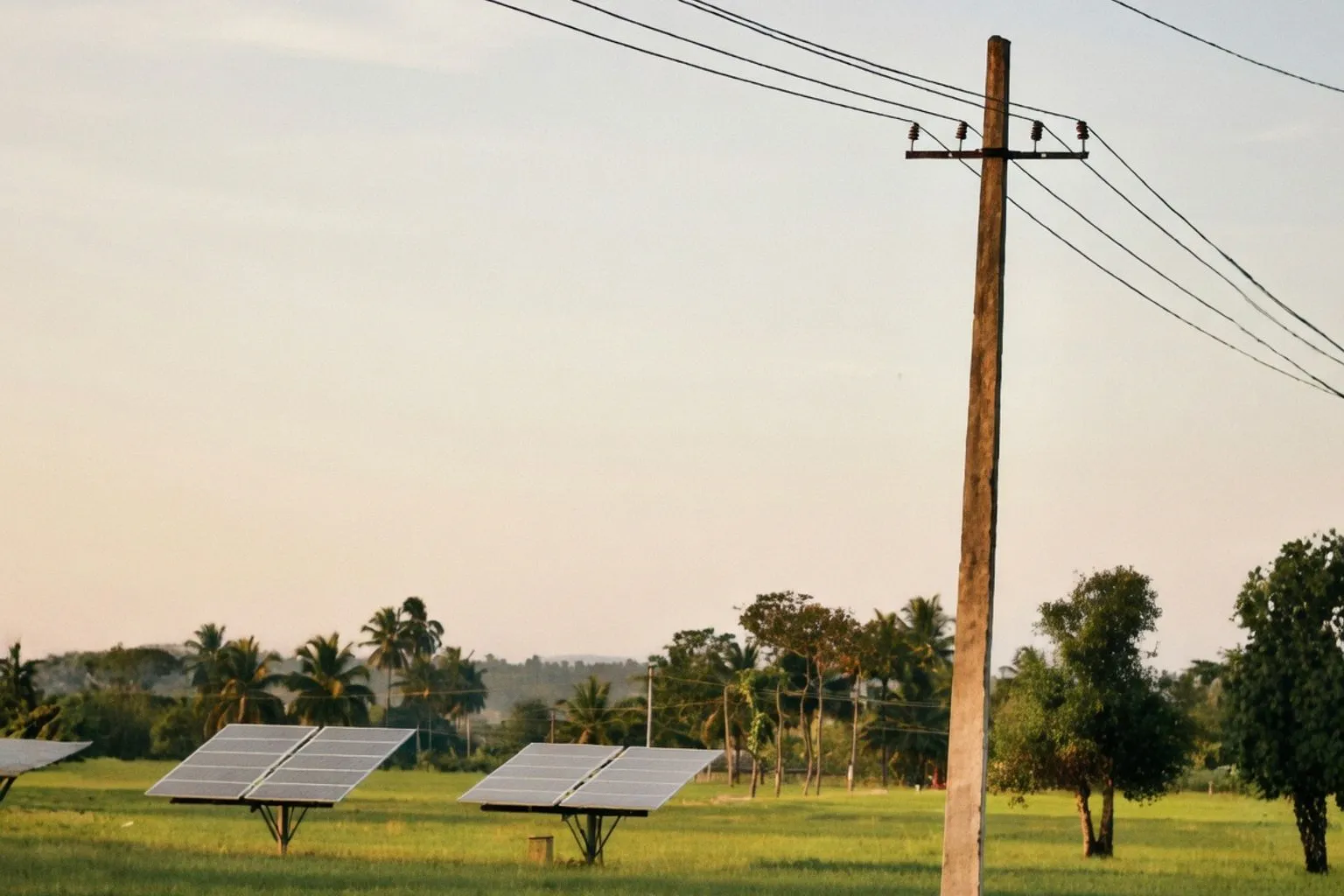
The state’s “Telangana Rising Vision 2047” links a proposed $1 trillion economy by 2034 and $3 trillion economy by 2047 to sustainable development, advanced manufacturing, electric mobility, climate-resilient infrastructure and digital technologies. The engineering constraint is clear: solar dominates the build-out, while coal still dominates the non-renewable fleet.
Solar is carrying the expansion
Telangana had 5,165.1 MW of installed solar capacity as of July 2026, according to the report. That represented about 64% of the state’s 8,030.58 MW of renewable capacity, excluding large hydro. Ground-mounted projects accounted for 4,360.49 MW. Rooftop systems, including installations under the PM Surya Ghar programme, contributed 795.9 MW, with another 8.71 MW from off-grid systems.
The generation profile is even more concentrated. Renewable sources produced 899.66 million units in June 2026, of which solar supplied 741.71 million units. This is the arithmetic of Telangana’s transition: rapid capacity growth, but a system increasingly exposed to solar intermittency and the need for balancing resources.
The state has begun widening the deployment base. Under the Model Solar Villages Programme, bids were invited for approximately 80.7 MW of rooftop solar across 80 villages, covering more than 40,000 households. Under PM-KUSUM Component C, Telangana initiated solarisation of nearly 126 MW across more than 16,800 agricultural pump sets.
Component A represents a larger decentralised opportunity. The state is targeting 4,000 MW of grid-connected solar plants, generally sized between 500 kW and 2 MW and located within 5 km of 33/11 kV substations. That design reduces the distance between generation and distribution assets. It does not remove the need for grid management, but it places projects closer to existing network infrastructure.
Storage is the real test
Telangana’s renewable fleet totals around 8 GW, with more than 5 GW of solar and 2.4 GW of large hydro, according to Renewable Watch. The state is also pursuing battery storage, pumped storage and green hydrogen projects. These technologies matter because adding daytime solar capacity is not equivalent to adding firm electricity supply.
The practical metric is therefore not only installed megawatts. It is how much power can be delivered when demand rises and solar output falls. The available evidence does not establish the scale, commissioning schedule or commercial structure of the announced storage and hydrogen projects. Their relevance is strategic, but their system value remains dependent on execution.
Rooftop deployment under PM Surya Ghar had reached 84,853 applications and 58,111 installations, with 74,061 households covered in the latest figures cited by the report. Installed rooftop capacity was listed at 213.84 MW, alongside Rs 3,424 million in released subsidy. Telangana is also examining floating solar, with reservoirs estimated to offer nearly 6,700 MW of potential.
Potential is not capacity. The distinction is material for investors, grid planners and industrial users. Floating solar still requires site screening, transmission access, project finance and an operating model. The same applies to decentralised agricultural plants and storage assets.
The fossil baseline has not disappeared
Telangana still had 14.5 GW of installed non-renewable generation, with almost 14 GW attributed to coal, according to the report. That fleet is larger than the state’s renewable capacity cited in the same assessment. The transition is therefore a diversification process, not a completed substitution of thermal generation.
Electricity access is also part of the state’s infrastructure agenda. Telangana serves nearly 1.98 million electricity consumers across domestic, agricultural, commercial and industrial categories. The Gruha Jyothi scheme provides eligible households with up to 200 units of free electricity each month. In 2025–26, more than 5.3 million households had benefited, while over 10.97 million zero-electricity bills were issued and subsidies exceeded Rs 3.9 billion.
For the 2047 strategy, the indicators worth tracking are straightforward: solar additions that become operating assets, storage capacity that reaches commissioning, distribution upgrades around decentralised projects, and whether new electricity demand from manufacturing and electric mobility can be served without increasing system stress.
Telangana’s approach is broader than a solar procurement programme. It combines generation, distribution, industrial policy and consumer subsidies. But the commercial test remains unforgiving. Until storage, transmission and demand growth are measured alongside capacity announcements, the state’s clean-growth proposition remains an infrastructure plan in progress—not yet a finished energy system.