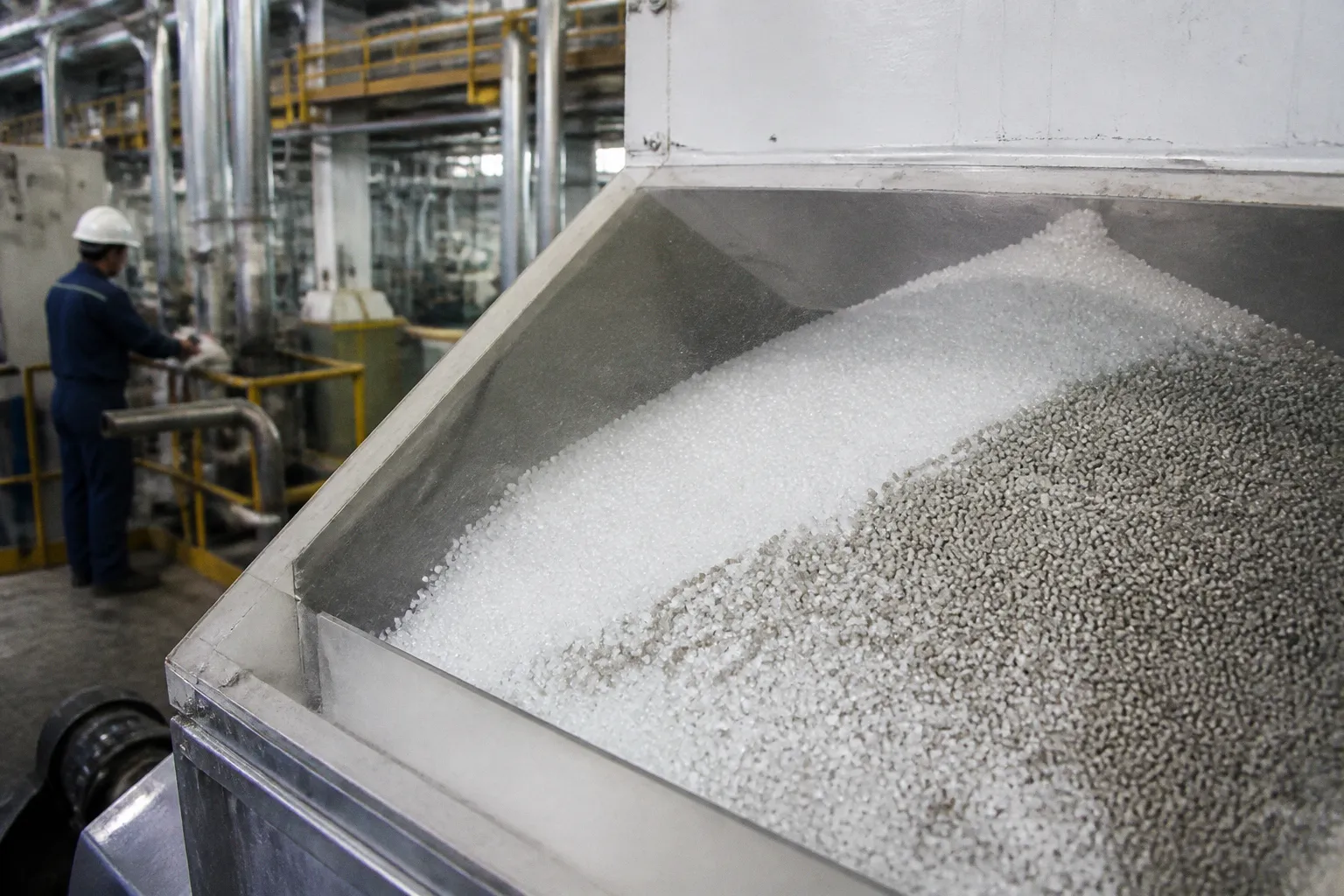
In chemical recycling, however, the path can be much less tidy. Recovered plastic waste may enter a large industrial plant alongside fossil feedstock, pass through shared equipment, and emerge as chemicals that are indistinguishable from those made through conventional production.
Compare car rental deals in United Kingdom
See available offersPartner link — DiscoverCars comparisonThis is where the mass balance approach in chemical recycling enters the story. It is not a machine, a recycling process, or a special type of plastic. It is an accounting system for tracking circular feedstock through a complex supply chain. Supporters see it as the practical bridge between small volumes of recovered material and existing industrial infrastructure. Critics see a system that can assign recycled-content claims more generously than the physical material actually moves.
Both concerns are reasonable. The question is not simply whether mass balance is real. It is whether the rules behind the accounting are strict enough to make the claim on the final package credible.
The mechanics of mass balance: what happens inside the loop?
Chemical recycling breaks plastic waste down into chemical building blocks. Depending on the technology, this may involve processes such as pyrolysis, which produces an oil-like feedstock, or other forms of chemical conversion that return polymers to simpler molecules. Those outputs can then be used as feedstock in manufacturing facilities that also process fossil-based materials.
The industrial advantage is straightforward. Existing plants are built around continuous flows, shared tanks, pipelines, reactors and separation equipment. Asking operators to keep every molecule of chemically recycled material physically separate from every fossil molecule can be technically difficult, expensive and, in some facilities, impossible without rebuilding the system.
Mass balance offers another route. A company records how much certified alternative feedstock enters the system, then allocates a corresponding amount of recycled-content credit to products leaving the system. The molecules in a particular package are not necessarily the same molecules that entered as waste-derived feedstock. The claim rests on controlled bookkeeping across the chain of custody.
That distinction matters because the word recycled can suggest a physical journey that has not necessarily taken place. Under mass balance, the system may demonstrate that a defined quantity of alternative feedstock was purchased, processed and connected to the production of a defined quantity of output. It does not guarantee that every individual bottle contains a physically identifiable portion of recycled molecules.
A simplified version of the journey looks like this:
1. Plastic waste is collected and converted into chemical feedstock.
2. The feedstock is delivered to a certified industrial site.
3. It enters a production system that may also contain fossil feedstock.
4. The site records the incoming quantities and outgoing products.
5. Recycled-content credits are allocated according to the applicable rules.
6. A converter or brand uses those credits to support a recycled-content claim.
The strength of the approach lies in the chain of custody. The weakness lies in the allocation rule. If the system allows a company to place recycled-content credits wherever it chooses, the accounting can move further away from the physical reality of the process.
Mass balance can make a complicated industrial loop workable, but the credibility of the loop depends on how honestly the credits are assigned.
Mass balance versus physical segregation
The central comparison is not between recycling and no recycling. It is between two ways of controlling and describing material flows.
Physical segregation keeps recycled and fossil feedstocks apart for as much of the production process as possible. The finished product can be linked more directly to a particular stream of recovered material. That makes the claim easier to explain, but it can also require separate storage, transport, production lines and quality-control systems.
Mass balance allows the feedstocks to move through shared infrastructure. The company tracks quantities through records, certificates and audits rather than preserving a separate physical stream all the way to the finished product.
| Approach | What is physically tracked | What the final claim means | Main advantage | Main concern |
|---|---|---|---|---|
| Physical segregation | Recycled and fossil materials remain separate through production | The product is directly connected to the recycled stream | Clearer physical link | More costly and difficult to scale in shared facilities |
| Proportional mass balance | Total certified input and output are reconciled proportionally | Recycled-content claims reflect the permitted share of certified input | Uses existing infrastructure while limiting over-allocation | Still does not identify recycled molecules in each item |
| Free or non-proportional allocation | Certified input is tracked, but credits may be assigned non-proportionally | A selected product may receive a larger recycled-content claim than its physical share | Helps target premium products and simplify market rollout | Can detach claims from the actual material balance |
| Fuel-exempt allocation | Certain outputs, such as fuel, may be excluded from the calculation | More recycled-content credit can be directed toward eligible plastic products | Supports chemical recycling economics | Risks allowing plastic waste converted to fuel to influence plastic claims |
The practical difference between proportional and non-proportional accounting is especially important. Imagine that a site processes a mixture containing certified alternative feedstock and fossil material. Under a proportional system, the recycled-content credit must broadly follow the share of certified input available to the relevant output. Under a free allocation system, the operator may be able to direct a larger share of the credit toward selected products, even when the physical output is mixed.
That does not automatically mean the material input is fictitious. It means the environmental claim may be stronger than the physical connection between the input and the particular product suggests.
For consumers, this is difficult to see on a label. Two packages may both carry a recycled-content claim while relying on different accounting rules behind the scenes. One may be based on proportional allocation; another may use a more flexible method. Without transparent information about the chain of custody, the label alone tells us less than it appears to.
From ISO 22095 to national and European rules
The mass balance debate is partly a debate about standards. A chain-of-custody system needs rules for defining inputs, measuring outputs, recording transfers and checking whether the claims match the material moving through the network.
ISO 22095:2020 provides a general chain-of-custody framework. In the context described here, the standard allows proportional credit allocation. That principle is important because it places a limit on how far accounting claims can be stretched: the credit should correspond to the certified material available within the system.
Other frameworks, including certification under ISCC PLUS, are used by companies handling alternative materials across industrial sites. The certification is site-specific, and certificates for handling alternative materials remain valid for 12 months. That short validity period does not by itself settle the greenwashing question, but it shows that certification is not a permanent badge detached from operations. The site, its processes and its records remain part of the claim.
There are also more specific rules and claims systems. The ISCC 208 Logos and Claims v1.3 framework includes a minimum threshold of 20% certified material for certain claims. EN 15343:2007 is another relevant reference in the broader field of recycled plastics and traceability. These details may sound dry, but they determine whether a statement on packaging is tied to a meaningful quantity of recovered material or merely to participation in a certified network.
Policy is moving at different speeds. On October 30, 2024, the UK government confirmed that businesses would be allowed to use a mass balance approach when calculating chemically recycled content for the Plastic Packaging Tax. That decision gives companies a recognised route for counting chemical recycling within a tax framework, but it also places pressure on the calculation rules to remain clear and auditable.
In the European Union, the issue has become more contested. In February 2026, the European Commission adopted an implementing decision under the Single-Use Plastics Directive allowing credit mass balance based on fuel-exempt rules for chemically recycled content in plastic beverage bottles. The decision creates a route for certain chemically recycled content claims while excluding some fuel outputs from the allocation calculation.
This is precisely where policy design begins to shape the meaning of recycling. A rule can encourage investment in chemical recycling by making projects easier to finance. It can also create an incentive to process mixed plastic waste in ways that produce fuels, while directing the environmental credit toward plastic products.
The proportionality conflict
The argument over mass balance greenwashing is often presented as a simple clash between industry and environmental groups. The reality is more useful than that. Industry has a genuine infrastructure problem: chemical recycling will not reach larger volumes if every facility must build a completely separate production route for every type of feedstock. Shared plants are how much of the chemical sector already operates.
But environmental claims have a material problem of their own. A recycling label is not only a statement about a company’s balance sheet. It is a statement about what happened to waste and what the product represents. If the accounting permits one unit of recycled input to generate several units of recycled-content claims, the system may reward a paper loop rather than a material loop.
ISO 22095’s proportional approach and industry-favoured free allocation therefore lead to different answers to the same question: how much recycled content can be credited to a product?
Under proportional allocation:
- credits remain connected to the amount of certified alternative feedstock entering the system;
- the same input cannot be assigned freely to whichever product offers the best commercial return;
- the relationship between input and output is easier to explain in an audit;
- product claims may grow more slowly, particularly while chemical recycling volumes remain limited.
Under non-proportional allocation:
- companies can direct credits toward specific products or customers;
- branded packaging may receive a recycled-content claim even when the production stream is highly mixed;
- the accounting may help early projects compete with established fossil feedstock;
- consumers and regulators face a harder task when comparing claims across products.
The most credible system is not necessarily the one that bans shared infrastructure. It is the one that makes the accounting visible enough to prevent the shared system from becoming a blank cheque.
That means keeping records at each stage, identifying the certified site, setting a defined accounting period, auditing the input and output quantities, and stating which allocation method was used. It also means distinguishing between a claim that refers to certified feedstock entering a production system and a claim that suggests the product itself contains physically recovered material.
The wording should not outrun the evidence.
The real test is not whether a product has passed through a certified system, but whether the claim tells you what that certification actually proves.
Fuel-exempt rules and the risk of leakage
Chemical recycling has never been only about making new plastic. Some processes can produce outputs used as fuel, and the economics of a facility may depend on several products leaving the same operation. That creates a difficult boundary: should fuel made from plastic waste contribute to the calculation of recycled plastic content elsewhere in the system?
Fuel-exempt rules say, in effect, that certain fuel outputs can be left outside the allocation calculation. This can increase the amount of recycled-content credit available to eligible plastic products. From an industry perspective, the approach may recognise that not every output should dilute the plastic claim. From a waste hierarchy perspective, it can raise a sharper concern: if plastic is converted into fuel, has it been recycled into new material, or has it simply been redirected into another form of disposal?
The distinction is not cosmetic. Turning plastic into a new chemical feedstock that replaces virgin fossil input in a polymer can support a material loop, even if the molecules are not kept separate. Turning plastic into fuel generally moves that material out of the loop. It may recover energy, but it does not preserve the plastic as a product resource.
When the fuel stream is excluded from the accounting, the system may make the remaining plastic output look more circular than the overall process is. That is the leakage risk identified by critics: waste-to-fuel activity could be connected to recycled-content claims without the fuel itself being counted as a loss from material recycling.
Environmental organisations including Zero Waste Europe and the Rethink Plastic Alliance have criticised non-proportional and fuel-exempt allocation rules on those grounds. Their objection is not that every form of chemical recycling is identical, nor that every mass balance claim is automatically false. It is that weak allocation rules can legitimise claims that are difficult to connect to actual material recovery.
A robust framework would therefore separate several questions that are often bundled together:
1. Was the original plastic waste genuinely collected and accepted by the process?
2. Was it converted into a feedstock suitable for new material production?
3. How much of that feedstock entered the certified production system?
4. What proportion of the output can reasonably be credited as recycled?
5. Were fuel and other non-material outputs treated as losses rather than quietly supporting plastic claims?
6. Can an independent auditor reconstruct the balance from records rather than relying on a brand statement?
If the answer to the last two questions is unclear, the claim deserves caution even when the facility itself is certified.
Can mass balance be credible?
Yes, but not by default. Credibility is earned through the combination of a real waste input, a controlled chain of custody, transparent allocation and claims that stay within the boundaries of the evidence.
The strongest case for mass balance is practical. Chemical plants are not kitchens with separate chopping boards for every ingredient. They are interconnected systems designed to run continuously and efficiently. If a small but genuine stream of recovered feedstock can enter those systems and displace an equivalent amount of fossil input, mass balance may help bring circular material into production without waiting for a completely separate global infrastructure.
The strongest case against careless mass balance is equally practical. Plastic already moves through a supply chain that is hard for the public to inspect. If accounting choices allow recycled credits to be shifted between products, or if fuel outputs are excluded in ways that inflate material claims, the system can become a sophisticated form of greenwashing. The paperwork may be accurate while the impression created for the buyer is misleading.
For buyers, the useful question is not simply whether a package says chemically recycled. Look for the shape of the claim:
- Does it describe certified content, or imply that the product contains physically identifiable recycled material?
- Is the allocation method explained?
- Is the claim attached to a specific product, site or chain of custody?
- Does the certification cover the relevant facility and period?
- Does the system count only material outputs, or does it also benefit from fuel-exempt treatment?
- Is the company clear about how much recovered feedstock entered the process?
For regulators, the task is larger. Rules need to prevent multiple claims from growing out of the same input, align terminology across markets, and distinguish material recycling from fuel production. The long-term relationship between European packaging rules, United States standards and ISO certification frameworks remains unsettled, so a claim that is accepted in one market may not yet carry the same meaning in another.
And for the companies building these systems, the most durable approach is to treat mass balance as a bridge rather than a destination. It can help reclaim value from difficult plastic waste, but it should not become a reason to delay better product design, reuse systems, mechanical recycling where appropriate, or a reduction in unnecessary packaging.
The accounting is part of the recycling system
Mass balance is neither a magic solution nor an automatic deception. It is a tool for managing shared industrial infrastructure, and like any tool, its value depends on how it is used.
A proportional, auditable system can make a modest quantity of chemically recovered feedstock count without pretending that every molecule has been separated and placed in a particular bottle. A loose system can do the opposite: preserve the appearance of circularity while allowing claims to drift away from the material moving through the plant.
We should not have to choose between practical industrial systems and honest environmental language. The better route is to insist on both. Recovered feedstock should be real, the allocation should be limited, fuel should not quietly masquerade as material recycling, and the final claim should explain the loop rather than decorate it.
That is the standard worth carrying forward: not perfect physical separation at any cost, but accounting strong enough that the story told on the package remains connected to the waste reclaimed at the beginning.