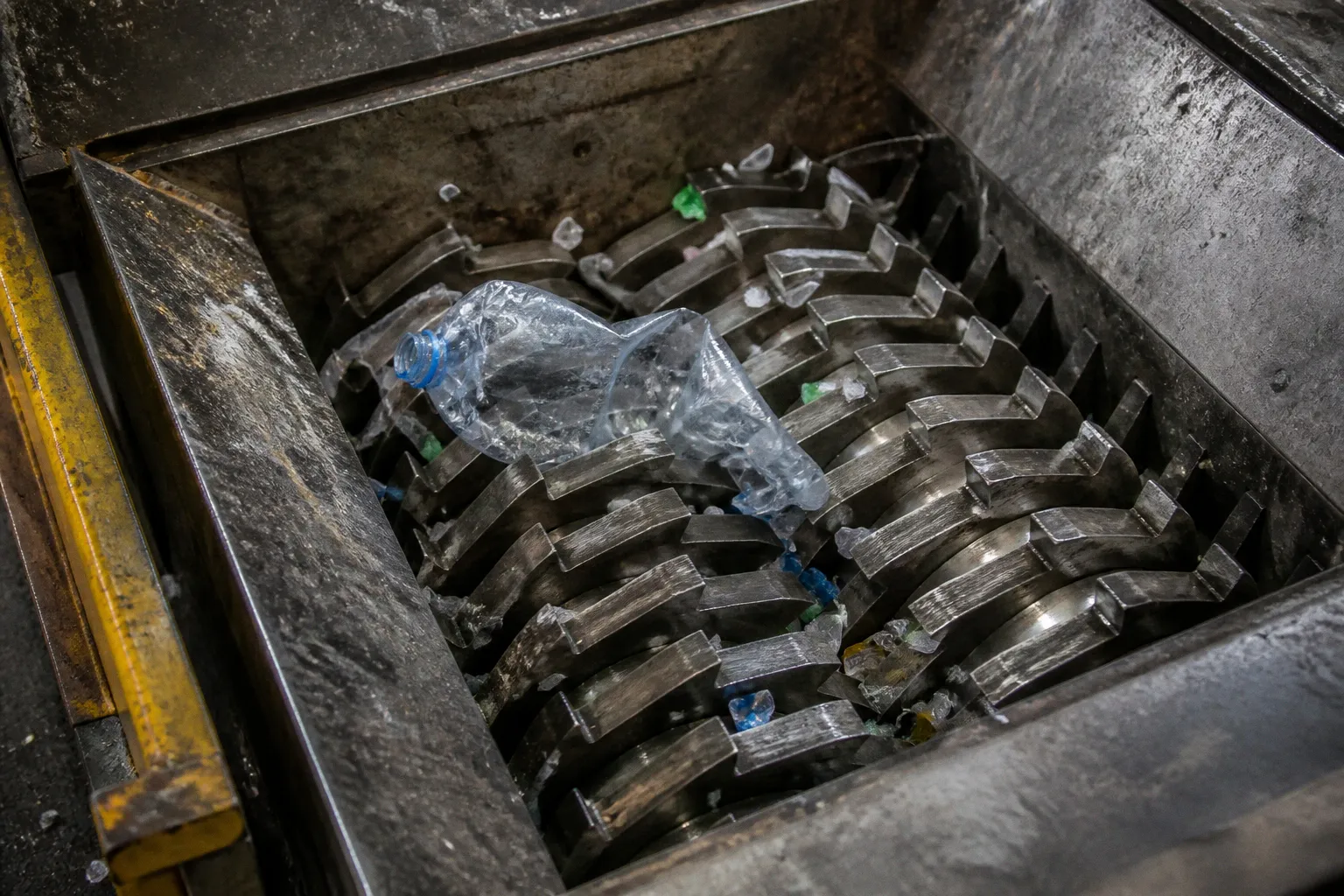
Most of us put these items into recycling hoping the loop closes — that they come back, eventually, as something useful. For decades, the answer has been mechanical recycling: sort, wash, grind, melt and reshape.
But a growing share of plastic waste is too mixed, too soiled or too degraded for that route. Multi-layer packaging combines materials that are difficult to separate. Food residue lowers the quality of the recovered material. Repeated heating and processing can weaken some polymers until the output is suitable only for lower-value applications, or not worth recovering at all.
That is where chemical recycling enters the conversation. Its promise is not simply to melt plastic again, but to break polymers down into smaller chemical components that can, under the right conditions, be used as feedstock for new plastics. The question that matters at the kitchen counter is whether this genuinely reduces pollution — or whether it gives a more attractive name to another way of burning fossil-based carbon.
Pyrolysis sits at the centre of that debate. It is often presented as a route from difficult plastic waste back to virgin-quality material. In practice, the technology produces several different outputs, and only some of them may become new-plastic feedstock. The environmental result depends on what happens to every fraction, not just the most marketable one.
The Mechanics of Pyrolysis: Breaking Down Polymer Chains
Pyrolysis heats plastic in an oxygen-limited environment, usually at temperatures in the broad range of roughly 300°C to 600°C. The absence of oxygen is important, but it does not make the process a sealed carbon loop. It changes the chemistry: instead of ordinary combustion taking place inside the reactor, heat breaks long polymer chains into smaller molecules.
Those molecules leave the reactor in several forms:
- Liquid output, commonly described as pyrolysis oil, which contains a mixture of hydrocarbons and usually requires additional treatment;
- Gaseous output, consisting of lighter hydrocarbons and other gases, some of which may be used to provide process heat;
- Solid residue, often called char, along with contaminants and other material that the process cannot turn into a useful hydrocarbon product.
This distinction matters because the word “output” can conceal several very different destinations. Pyrolysis oil is not automatically a drop-in replacement for petrochemical feedstock. It may need cleaning, separation, stabilisation and upgrading before it can be used in a refinery or petrochemical process. Even then, the resulting feedstock may be blended with conventional fossil inputs rather than replacing them entirely.
The gas fraction can help power the plant, reducing the need for purchased energy. It can also be flared or used as fuel. The solid fraction may have a potential use in some systems, but contamination can limit that option. Depending on its composition and the rules that apply, it may require treatment or disposal. None of these outcomes is equivalent to converting waste directly into a new plastic product.
Pyrolysis does not produce a single clean stream waiting to become a bottle. It produces a mixture, and the environmental case depends on where every part of that mixture goes.
The chemistry also varies with the feedstock. Polyethylene and polypropylene are common targets because they can generate hydrocarbon-rich products. PVC is more difficult because chlorine can create corrosive compounds and complicate the treatment of both liquid and solid outputs. PET behaves differently again and is often better considered through depolymerisation routes rather than the same pyrolysis pathway used for polyolefin-rich waste.
This is why descriptions of chemical recycling as a universal answer to “unrecyclable” plastic are too broad. A facility may accept a mixed stream, but accepting it is not the same as turning all of it into useful new-plastic feedstock. Labels, adhesives, inks, additives, food residues and other polymers all affect the composition of the product and the burden placed on downstream equipment.
The temperature window matters as well. It must be high enough to break the relevant chemical bonds, but the reactor still needs a controlled supply of heat. That energy has a climate impact whether it comes from grid electricity, natural gas, process gas or another source. “Oxygen-free” describes the reactor environment; it does not mean that the entire industrial system operates without combustion or emissions.
The most important accounting question is therefore not whether carbon enters the reactor as plastic. It is whether a meaningful share of that carbon leaves as a material that displaces new fossil feedstock. Carbon that leaves as process fuel, is burned elsewhere, remains in contaminated residue or is lost during upgrading has a different environmental outcome.
Why the feedstock is harder than the sales pitch
Chemical recycling is often associated with the waste that mechanical systems cannot handle: flexible films, multi-layer pouches, mixed packaging and material with too much contamination for conventional sorting. That is a legitimate technical target, but it also creates a difficult starting point.
A dirty, mixed feedstock demands more preparation. It may require sorting, shredding, drying and the removal of metals or other non-plastic components. The more diverse the input, the less predictable the output. A process designed around a relatively consistent stream may perform very differently when supplied with material that contains PVC, PET, paper, aluminium layers or large amounts of organic contamination.
There is also a difference between accepting waste and accepting it without consequences. A plant can process a broad range of material while still producing a smaller quantity of saleable oil. The remaining fraction does not disappear. It becomes gas, residue, rejected material or an additional treatment requirement. Any serious assessment of pyrolysis efficiency has to follow those streams to their final destinations.
This is the point often lost in the phrase “plastic back to plastic”. It describes the intended route for one part of the process, not necessarily the fate of the entire input.
Carbon Footprint Metrics: Comparing Pyrolysis to Incineration
The most useful comparison is not pyrolysis versus an imaginary world in which plastic waste creates no burden. It is pyrolysis versus the realistic alternative for the same material. In many regions, that alternative may be incineration with energy recovery, landfill, export or a combination of disposal routes.
Compared with incineration, pyrolysis can show a lower greenhouse-gas impact when its products are used as substitutes for virgin petrochemical feedstock. Existing assessments illustrate how wide the range can be:
| Comparison scenario | Reported GHG reduction | Source context |
|---|---|---|
| Pyrolysis of unsorted DKR-350 mixed plastic versus incineration | 28–31% | Life-cycle assessment; 876 kg CO₂ equivalent per 1,000 kg of waste processed |
| Pyrolysis of sorted mixed plastic waste versus incineration with energy recovery in Germany | 60–94% | Life-cycle assessment; result depends on energy mix and system boundaries |
| Virgin-grade LDPE/HDPE produced from pyrolysis oil versus fossil feedstock | 18–23% | Argonne National Laboratory analysis |
These figures are not a universal performance rating for the technology. They describe particular systems, inputs and assumptions. A result can change substantially depending on whether the assessment credits the process for replacing virgin polymer, replacing fuel, generating electricity or avoiding another waste-management route.
Several variables carry disproportionate weight:
- The quality of the input. Cleaner and more homogeneous plastic generally requires less preparation and can produce a more consistent output.
- The energy source. A reactor powered with low-carbon electricity has a different footprint from one relying heavily on fossil energy.
- The fate of the liquid product. Feedstock used to make new polymer is not equivalent to oil burned for heat.
- The fate of gas and char. Using process gas on site may reduce external fuel demand, but it still produces emissions when burned. Solid residues may require disposal.
- The avoided product. Replacing virgin plastic gives a different credit from replacing a fuel or generating electricity.
- The boundary of the analysis. Some studies include collection and sorting; others begin at the plant gate. Some include the manufacture of the replacement product; others stop earlier.
A reported reduction of 28% against incineration is not meaningless, but it is a very different proposition from claiming that chemical recycling solves the plastic problem. At the other end of the range, a large reduction under favourable assumptions may show that a particular configuration has potential, not that every facility or every mixed-waste stream will deliver the same result.
The term “chemical recycling carbon footprint” should therefore be treated as a question, not a single number. The meaningful figure is attached to a defined feedstock, a defined process, a defined energy supply and a defined product destination.
The baseline changes the story
Incineration is a particularly important comparison because it gives pyrolysis a relatively clear opportunity to show an advantage. Both systems involve high-temperature processing, but they preserve carbon in different ways and produce different products. Incineration converts most of the plastic’s carbon into combustion emissions while recovering some energy. Pyrolysis can direct part of the carbon into an intermediate material that may replace fossil feedstock.
That potential benefit disappears or narrows when the output is burned. It also becomes less persuasive if the process requires substantial fossil energy, if a large share of the input becomes residue, or if the recovered oil replaces material that would otherwise have come from another low-carbon source.
The baseline also matters beyond incineration. Mechanical recycling usually avoids the need to break and rebuild the polymer from scratch. If a clean stream could have been mechanically recycled, sending it to pyrolysis may add energy demand without delivering a corresponding environmental gain. Chemical recycling looks strongest when it is compared with the disposal route that would otherwise receive genuinely unsuitable waste — not when it is used to displace a functioning mechanical system.
The Plastic-to-Fuel Controversy and Regulatory Definitions
The phrase “chemical recycling” covers several processes, and their outputs are not interchangeable. Some approaches aim to recover monomers or chemical building blocks that can be used to manufacture polymers. Pyrolysis usually produces a complex oil and gas mixture that must be upgraded before it can serve as petrochemical feedstock.
In many proposed or operating systems, part of the output is used as fuel. The gas may supply heat to the reactor. A lower-quality liquid fraction may be burned in an industrial furnace, cement kiln or refinery. That can be preferable to simply sending the waste to an uncontrolled disposal route, but it is not the same as material recycling. Once the carbon is burned for energy, it has left the materials loop.
This distinction is central to the question, is chemical recycling greenwashing? The answer cannot be determined by the technology’s name. It depends on what the facility accepts, what it produces, how much of the output becomes new material and how the rest is managed.
Organisations including GAIA have argued that turning plastic outputs into fuel does not meet the definition of recycling under the EU Waste Framework Directive. Under that framework, recycling involves reprocessing waste into products, materials or substances, for the original purpose or another purpose. Using waste-derived output as fuel falls under recovery or disposal rather than material recycling.
The legal classification does not settle every environmental question, but it prevents an important category error. Waste-to-fuel can have a different impact from landfill or conventional incineration, yet it should not be presented as though it were a closed loop from packaging to packaging.
If a pyrolysis output ends up in a furnace rather than becoming new polymer, the process may still have a waste-management role — but it is not closing the material loop in the way the label implies.
For households, the practical consequence is frustratingly simple: a claim that packaging is recyclable through “advanced” or “chemical” technology says little on its own. The relevant questions are whether the local collection system sends that material to a suitable facility, whether the facility is actually operating at the required scale and whether the claimed output is used to make new plastic rather than fuel.
For regulators and buyers, the questions are more demanding. A credible claim should make it possible to trace the material from collection through sorting, processing, upgrading and final use. It should distinguish between the mass entering the reactor and the mass that becomes a qualified feedstock. It should also disclose the fate of rejected material, process residues and outputs used to generate heat.
Without that information, “recyclable” becomes a statement about a possible pathway rather than a description of what normally happens to the product.
Assessing the Blind Spots in Current Life Cycle Analyses
Greenhouse gases are essential to the climate discussion, but they are not the whole environmental impact. Existing life-cycle assessments of chemical recycling do not always cover human health, ecotoxicity or local pollution in comparable detail. An analysis led by the Natural Resources Defense Council found that fewer than one-third of the assessments it reviewed included impacts on human health or ecotoxicity.
That limitation does not prove that every pyrolysis plant is unsafe. It shows that a carbon-only comparison cannot answer every question communities and regulators need answered.
A fuller assessment would examine:
- Air emissions beyond CO₂, including volatile organic compounds, particulate matter and pollutants associated with contaminated feedstock or combustion of process gases;
- Worker exposure, particularly during waste sorting, shredding, handling and the upgrading of pyrolysis oil;
- Water demand and effluent, including wastewater from preparation and cleaning stages;
- Chlorine and other contaminants, especially when PVC or mixed packaging enters the process;
- Solid residues, including char, filters, catalysts and contaminated material that cannot be sold as a product;
- Transport, because a dispersed waste stream may travel considerable distances to reach a specialised facility;
- Product quality and displacement, since the environmental credit depends on what the recovered material actually replaces.
The feedstock problem returns here. Plastic waste is not a pure hydrocarbon resource. It can contain additives, pigments, flame retardants, metals, adhesives and traces of food or household chemicals. Heating does not erase those substances. It redistributes them across the liquid, gas and solid fractions, and the plant must control them through reactor design, filtration, upgrading and waste treatment.
This is particularly important when a process is described as handling “mixed” or “hard-to-recycle” plastic. Those terms can refer to packaging that is merely inconvenient to sort, or to material whose composition creates a serious treatment challenge. The environmental burden is not the same.
Nor should plant efficiency be measured only by the volume of oil sold. A facility may report a high conversion rate while still requiring substantial energy for upgrading, producing a contaminated residue or using part of its own output as fuel. A more useful measure follows the material through the full chain: how much enters, how much becomes a usable feedstock, how much is burned, and how much requires disposal.
Why system boundaries matter
Life-cycle assessment is not a magic label that turns an uncertain process into a certain answer. It is a method whose result depends on the system being studied. If an analysis starts with sorted plastic at the factory gate, it may omit the environmental cost of collection and sorting. If it credits pyrolysis oil for replacing virgin polymer, it needs to establish that the oil really enters production and performs the claimed function.
The treatment of co-products can also change the result. Suppose process gas supplies heat inside the plant. The assessment may credit the system for avoiding another fuel, but it must still account for the emissions from burning that gas. If solid residue is assigned a useful application, the analysis needs to consider whether it genuinely replaces another material or simply shifts a waste problem elsewhere.
The same caution applies to “mass balance” claims in petrochemical production. A certified allocation system may allow a company to attribute a portion of a mixed output to recycled feedstock. Such accounting can support the use of difficult waste streams, but it does not mean that every molecule of a particular package has been tracked into a new package. The environmental value depends on transparent rules, credible chain-of-custody systems and an assurance that recycled inputs are not being counted repeatedly.
Carbon accounting can be rigorous and still leave these questions unanswered. That is why the strongest claims are narrower: a defined process, a defined input, a defined output and a comparison with a defined alternative.
Mechanical vs. Chemical Recycling: Navigating the Circular Hierarchy
The comparison between chemical recycling and mechanical recycling is not a contest between an old technology and a new one. The two routes address different material streams, and the sensible question is which route preserves the most value with the least environmental burden.
Mechanical recycling generally has the advantage when the plastic is clean, sorted and compatible. It keeps the polymer largely intact rather than breaking it down into smaller molecules and rebuilding it. Washing, shredding, melting and remoulding still require energy and water, and the material may lose quality over repeated cycles, but the process usually avoids the high-temperature chemistry and extensive upgrading associated with pyrolysis.
Its limits are familiar. Food contamination, mixed polymers, multi-layer structures and degraded material can make mechanical recycling technically difficult or economically unattractive. The output may be discoloured, brittle or unsuitable for demanding packaging applications. In those cases, chemical recycling may offer a route to recover some value that would otherwise be lost.
| Factor | Mechanical recycling | Chemical recycling through pyrolysis |
|---|---|---|
| Main operation | Sorting, washing, shredding, melting and remoulding | Heating plastic in an oxygen-limited reactor and upgrading the outputs |
| Best-suited feedstock | Clean, sorted mono-materials such as suitable PET or HDPE streams | Selected mixed, soiled or multi-layer waste that cannot be mechanically recycled |
| Energy profile | Usually lower than pyrolysis for suitable feedstock | High-temperature process with additional energy often required for upgrading |
| Main product | Recycled polymer flakes, pellets or moulded material | Liquid oil, gas and solid residue; only part may become new-plastic feedstock |
| Quality limits | Polymer degradation and downcycling can occur | Oil composition and contaminants determine whether it can enter petrochemical production |
| Climate comparison | Often favourable when the stream is suitable and displacement is real | Can perform better than incineration, but results vary widely by system |
| Main risk | Using material that is too contaminated or mixed for a viable output | Counting fuel, process energy or theoretical capacity as material recycling |
| Appropriate role | First option for clean, recoverable plastic | Backstop for residual streams with no credible mechanical route |
The hierarchy that follows is not complicated, even if industrial incentives make it difficult to enforce.
First, reduce unnecessary plastic and design packaging that can be collected and processed in existing systems. A package that uses fewer materials, avoids inseparable layers and is easy to identify has a better chance of remaining in a mechanical loop.
Second, improve collection and sorting. Chemical recycling should not become an excuse to leave basic infrastructure underfunded. If a clean bottle or container can be mechanically recycled, sending it into a high-temperature process is difficult to justify environmentally.
Third, use chemical recycling for residual streams where it can demonstrate a genuine material outcome. That means more than announcing capacity. It means showing the proportion of input that becomes a feedstock, the quality of that feedstock, the energy used to produce it and the destination of the other fractions.
Finally, count fuel as fuel. It may have a place in a waste-management system, but it should not be allowed to inflate recycling rates or create the impression that a one-way combustion route is equivalent to repeated material use.
What a credible facility would need to show
A serious assessment of a chemical recycling project should move beyond the existence of a reactor and ask how the system operates in practice. The relevant evidence includes:
- the composition and contamination limits of the accepted feedstock;
- the share of material rejected before processing;
- the quantities of liquid, gas and solid outputs produced;
- the proportion of liquid output that is refined into new-plastic feedstock;
- the proportion used as fuel or process energy;
- the treatment and final destination of char, wastewater and contaminated residues;
- the energy source for the reactor and upgrading stages;
- the product that the recovered feedstock displaces;
- independent monitoring of air emissions and water impacts;
- a life-cycle assessment that includes collection, sorting, transport, processing and final use.
This is not bureaucracy for its own sake. It is the minimum information needed to distinguish a material-recovery process from a fuel-production process dressed in circular-economy language.
What This Means for the Loop We Are Trying to Close
For all the attention pyrolysis attracts, the largest climate gains remain upstream of the recycling plant. They sit in product design, purchasing decisions, reuse systems and waste prevention. Reducing the amount of plastic entering the waste stream shrinks the problem faster than any reactor can. Making the remaining packaging easier to sort keeps more material in the lower-energy mechanical route.
Chemical recycling has a narrower but potentially legitimate role. It may help deal with plastic that is genuinely unsuitable for mechanical recycling, particularly when the alternative is incineration or another form of disposal. But that case depends on disciplined boundaries. The process must be judged by its complete output profile, not by the most optimistic destination of its liquid fraction.
The question is not whether pyrolysis can produce an oil that resembles petrochemical feedstock. It can. The question is how much of the original waste becomes usable feedstock after sorting, conversion and upgrading, and what happens to everything else. A process that produces new polymer feedstock from a difficult residue can contribute to circularity. A process that mainly produces fuel is better understood as a waste-to-energy route with a different set of emissions and accounting assumptions.
Chemical recycling is not a silver bullet and not automatically greenwashing. It is a conditional tool whose value rises or falls with the fate of its outputs.
That conditional answer is less satisfying than a promise of infinite recycling, but it is more useful. Mechanical recycling should handle the streams it can process efficiently. Chemical recycling should be reserved for material that has no credible mechanical route. Regulators should separate polymer-to-polymer recovery from fuel use. Companies should publish enough information to show whether their claims describe actual operations or only technical possibility.
The most sustainable kilogram of plastic is still the one never produced. The next best outcome is to keep a suitable polymer in the material loop with as little processing as possible. Chemical recycling belongs after those options — not as the foundation of the circular economy, but as a carefully measured backstop for the residue that remains.