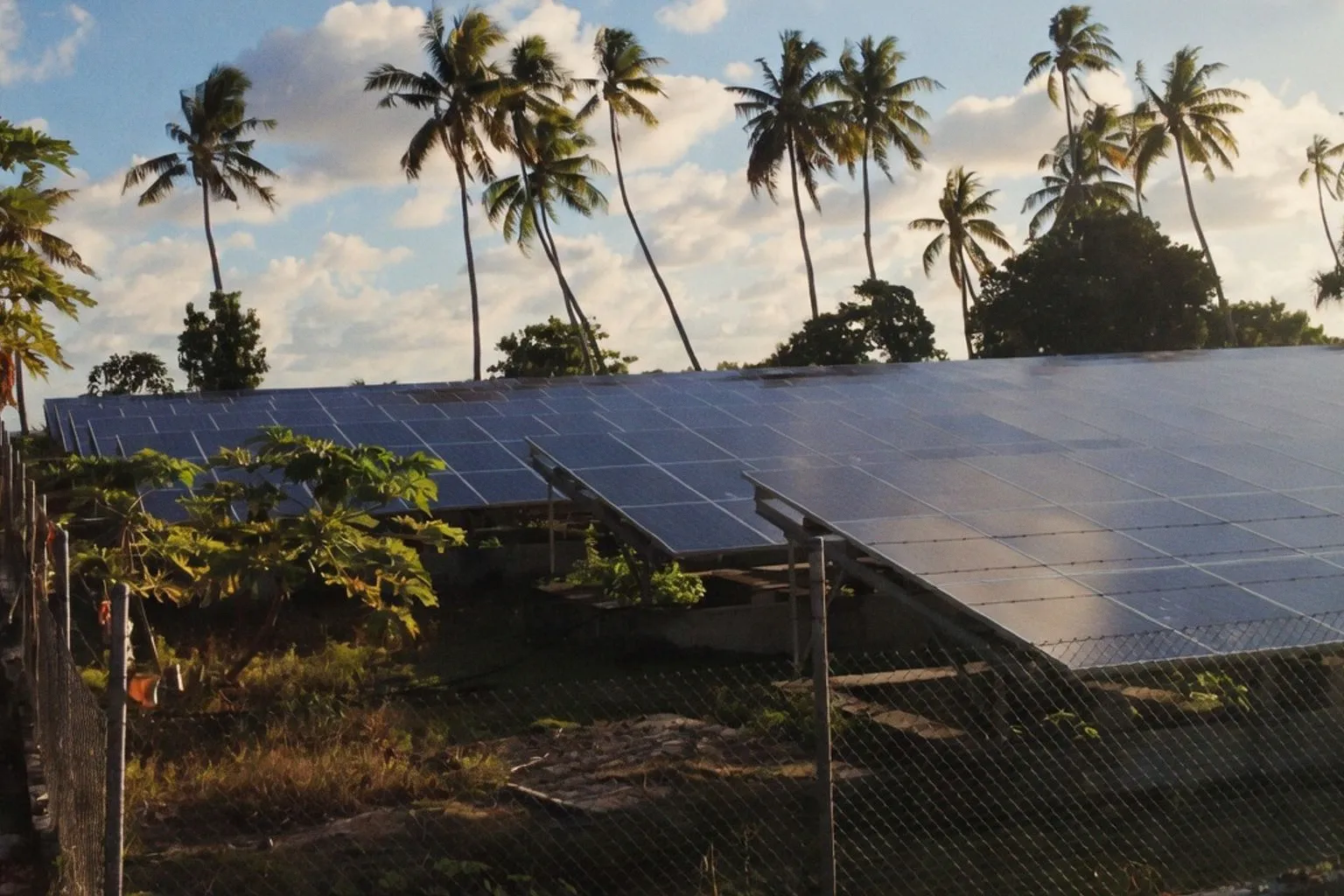
According to UN reporting from the summit, experts spent sessions mapping how utility-scale renewables can co-exist with land protection and restoration rather than displace it.
The land math nobody wants to do
Solar, wind, and the grid infrastructure connecting them consume ground at industrial scale. Restoration economics run in the opposite direction: soil recovery, biodiversity offset, watershed rehydration. The Ulaanbaatar agenda asked whether these two capex lines can share a footprint, or whether one quietly eats the other. Early signals point to co-location: agrivoltaics, dual-use grazing, siting on degraded rather than productive land. None of this is free. The arithmetic depends on permitting speed, grid proximity, and whether restoration credits carry a defensible price. Land that is cheap to acquire is cheap because something is already wrong with it — degraded soils, former brownfield sites, retired extraction zones — and those are the same plots where restoration budgets go furthest per hectare.
What's actually being tested
Japan is mobilizing meteorologists, researchers, businesses, and professional footballers around an extreme-heat message aimed at forcing stronger climate policy. Soft intervention, but it signals political pressure building ahead of harder siting decisions. Egypt is moving heavy civil engineering: 75 km of eco-defenses along the Nile Delta, folded into national adaptation planning. That is baseload coastal protection, paid for in concrete and dredged material. On the supply side, S&P Global Energy is taking its critical-minerals dataset to African Mining Week in Cape Town next month, including new Platts spot-price assessments for rare earths sourced from non-Chinese "alternative supply chains" in Angola, Madagascar, Mozambique, Nigeria, South Africa, and Tanzania. Africa holds roughly 30% of the world's mineral reserves; the open question is whether extraction throughput scales faster than the land-use frameworks meant to govern it.
What to watch
Two fault lines are forming simultaneously. On the supply side, critical-minerals pricing transparency is shifting from opaque bilateral contracts toward benchmarked spot markets — a structural change that will reroute which projects get financed. On the political side, US clean-energy opposition is reportedly gaining traction at the primary level, per Inside Climate News; if that signal holds, permitting and land-use fights will get louder before they quiet down. For anyone underwriting, siting, or supplying into this transition, the practical move is to lock land rights and restoration credits early. Both are about to get more contested.