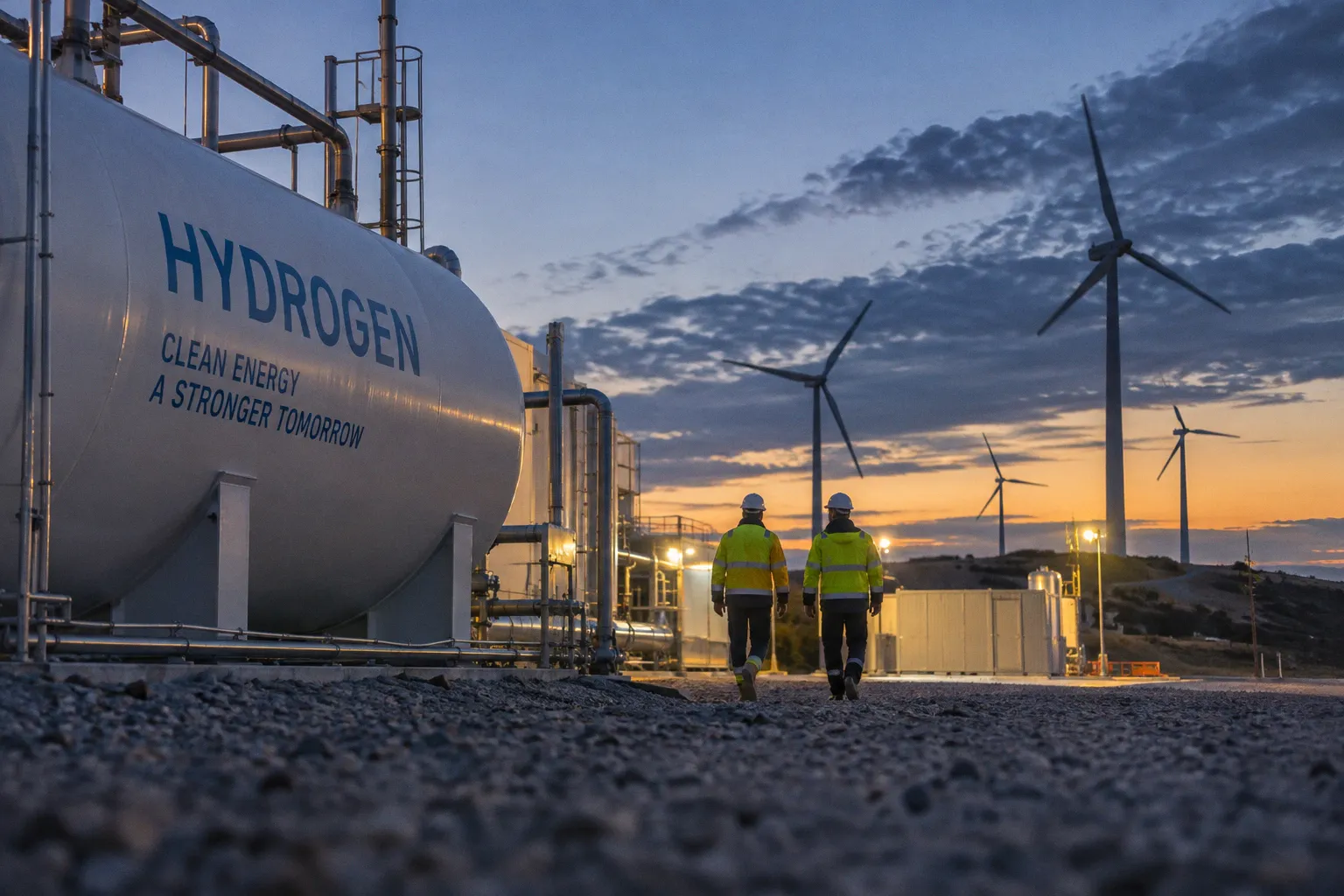
According to new analysis from the International Institute for Sustainable Development, public support for renewables and electrification is projected to deliver measurable import savings for major energy buyers — sharpening the commercial case for clean energy ahead of the next fossil price shock.
Where the savings land
The IISD analysis covers Germany, Türkiye, China, and India — economies that together represent roughly 40% of global oil imports and 27% of gas imports. Germany and Türkiye alone are projected to generate a combined $39 billion in net savings from avoided gas imports in 2026. Germany accounts for $28 billion of that total, driven by renewable electricity displacing imported gas and reducing exposure to price volatility. Türkiye adds $11 billion, primarily through domestic renewables displacing gas-fired generation.
For comparison, the same two countries generated an estimated $38 billion in combined net savings from avoided gas imports during the 2022 energy crisis, when fossil fuel prices spiked.
Longer arcs
China's projected savings are larger in absolute terms but stretched across decades: $1.9 trillion by 2050 if solar and wind displace coal to meet growing electricity demand. India sits at the consumer end of the equation — electric vehicle support is projected to save consumers $7.8 billion and reduce crude oil imports by $2.5 billion by 2035.
These are macro import figures, not capacity deployment plans. Whether they translate into operational grid gains depends on transmission build-out, interconnection timelines, and the balancing costs that come with intermittent supply — variables the IISD report does not quantify.
The G20 context
The analysis was released ahead of the G20 Energy Abundance Ministerial in Houston, scheduled for September 14–16, where ministers are expected to discuss deregulation, faster permitting, and expanded energy production under an "energy abundance" framework. IISD frames clean energy as an energy security policy: every fossil price shock hits importing countries twice — through higher import bills, and then through the cost of shielding households and businesses from those prices. Public support for renewables and electrification, the analysis argues, is what reduces exposure to both.
Parallel coverage of hydrogen developments across major sectors continues from Off Grid Energy Independence and IDTechEx. For grid analysts, the near-term watchlist is straightforward: whether the Houston ministerial outcomes shift permitting timelines enough to compress the capex gap between projected savings and delivered capacity.