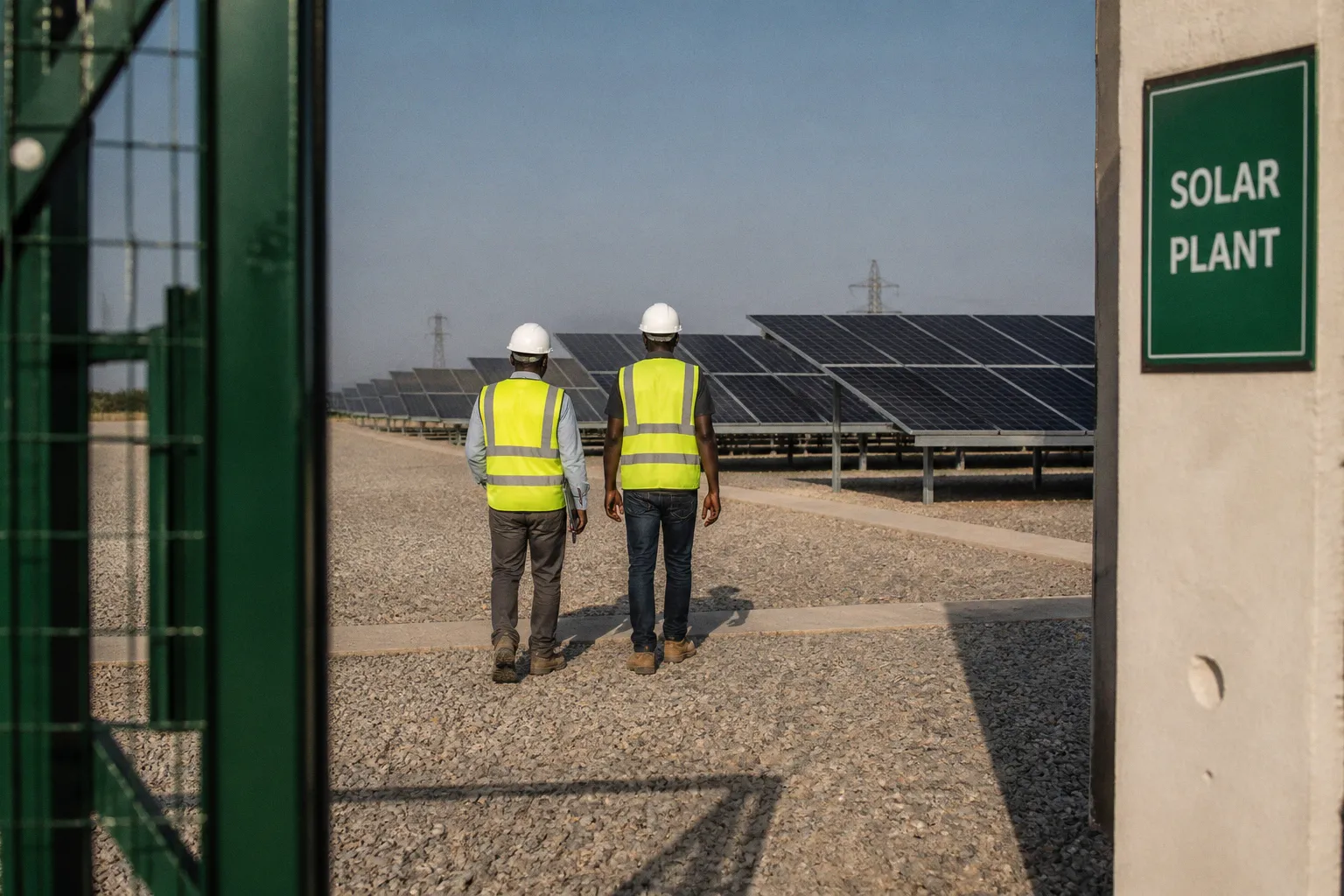
Africa Sustainability Matters reports that sustainability investment is moving from corporate commitments into financing, resource management and infrastructure decisions, with aviation, artificial intelligence and natural-capital markets exposing the practical constraints. For African markets, the relevant question is not whether low-carbon technologies exist. It is whether they can be financed, connected and operated at commercial scale.
The constraint is infrastructure, not ambition
The transition is unfolding against infrastructure deficits, constrained climate finance and mounting pressure on water and other resources. That changes the investment equation. Renewable generation alone does not create a functioning energy system; projects also require transmission, dependable electricity, industrial supply chains and long-term capital.
The same logic applies across sectors. Aviation is difficult to decarbonise because batteries and direct electrification are not yet suitable for most long-haul commercial flights. Sustainable aviation fuel is therefore one of the main pathways under consideration. But the technology is only one part of the equation. Production would also require feedstock supply chains, infrastructure, certification systems, reliable electricity and financing capable of supporting projects over a long development cycle.
Africa Sustainability Matters identifies Kenya, South Africa, Ethiopia and Morocco as countries with growing aviation sectors and significant renewable-energy resources that could potentially support future low-carbon fuel production. That is a potential industrial opportunity, not an established market. The missing variable is bankability: whether a project can demonstrate commercial operation at scale and attract lenders and investors.
The reported framework agreement between Syzygy Plasmonics and the International Finance Corporation illustrates that financing institutions are becoming part of the technology pathway. The initiative will explore sustainable aviation fuel projects across Latin America using Syzygy’s light-driven technology, while also examining project development and financing opportunities. Its relevance to Africa is structural. Development-finance institutions can help move climate technologies from technical development toward projects that investors can assess.
AI adds a baseload problem
Artificial intelligence introduces a different pressure point. Data centres require continuous electricity, while their operators face demands from investors and customers to reduce emissions. A renewable power purchase agreement can address part of the electricity problem, but it does not remove the need for firm supply, transmission capacity or water.
The source reports that ENGIE signed a 48-megawatt solar power purchase agreement with data-centre operator QTS in Texas. Power from the Lubio Solar project will support QTS’s expanding infrastructure. The arrangement demonstrates how long-term renewable contracts are being used to manage electricity demand and emissions in data-centre operations.
It does not, however, make intermittency disappear. Solar generation and continuous computing loads are not the same engineering profile. Data centres also consume water for cooling and can increase pressure on local transmission infrastructure and other utilities. For African markets seeking to attract digital infrastructure, the practical screening questions are therefore broader than renewable capacity: available grid connections, continuity of supply, cooling requirements and local utility constraints all matter.
What to track in African projects
The useful test for new energy-transition announcements is whether they contain the components of a financeable system. Watch for confirmed power supply, transmission access, feedstock availability, certification arrangements, water requirements and a credible capital structure. Corporate climate commitments are weaker signals when these details are absent.
Natural-capital markets are also entering the same investment discussion, alongside sustainable aviation fuel and renewable power for data centres. The common thread is resource accounting. Emissions, energy security, water availability and ecosystem value are increasingly being treated as commercial considerations rather than separate environmental issues.
That shift is important, but it is not proof of deployment. Africa’s opportunity lies in converting renewable resources and rising demand into investable infrastructure. The commercial outcome will depend on execution, grid reliability and financing discipline. In this market, the decisive metric remains scalability—not the promise attached to the project.